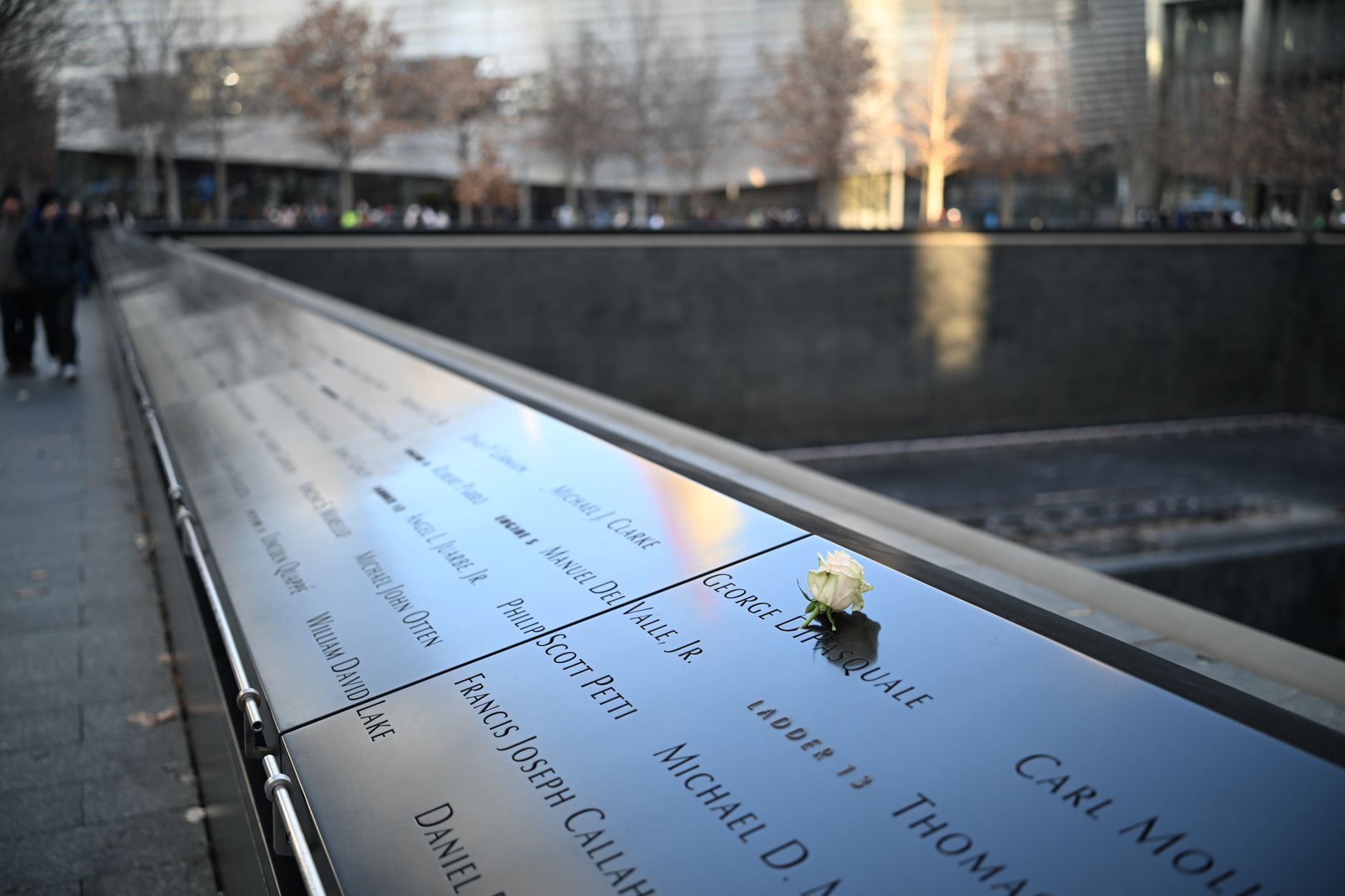
Friday marks 25 years since the September 11, 2001 attacks, and this year’s remembrance program at the National September 11 Memorial & Museum in Lower Manhattan includes something new: a seventh moment of silence. In past years the ceremony has observed six pauses, marking when each World Trade Center tower was struck and when each fell, the time of the attack on the Pentagon, and the crash of Flight 93 in Pennsylvania. The new, seventh moment of silence honors people who have died from 9/11-related illness and injury in the years since the attacks.
The Ground Zero program begins at 8:30 a.m. ET on September 11, on the Memorial plaza, with the first moment of silence observed at 8:46 a.m. — the moment the first hijacked plane hit the North Tower in 2001. Plaza access for 9/11 family members opens at 7 a.m.; the ceremony itself is reserved for credentialed family members, and the plaza does not reopen to the general public until after the ceremony concludes and security restrictions are lifted.
As in past years, the heart of the ceremony is a name-by-name reading, delivered in person by family members chosen through a lottery that closed on August 2. They will read aloud victims’ names from the 2001 attacks and the February 1993 bombing of the World Trade Center.
President Trump will mark the anniversary at the Pentagon this year rather than attending the Ground Zero ceremony. This is his second consecutive year observing the day at the Pentagon — he last attended the Ground Zero ceremony in 2024, before he began marking the anniversary at the Pentagon instead. Vice President JD Vance is expected to travel to New York and attend the Ground Zero ceremony in his place. Reports also say former Presidents Barack Obama, Bill Clinton and George W. Bush are expected to attend the Ground Zero ceremony.
About 100 miles west of the Pentagon, the Flight 93 National Memorial in Shanksville, Pennsylvania, holds its own observance for the 40 passengers and crew members killed when the hijacked plane crashed into a field there. A morning program runs from 8:30 to 10:30 a.m. ET near the memorial’s Wall of Names, and an afternoon ceremony from 1 to 2:30 p.m. includes a reading of the 40 names. This year’s program is themed “the next generation,” with children and teenagers performing “Taps” and “Hallelujah” and a chorus made up of students from Somerset County schools. A separate Luminaria Ceremony follows on September 12 at 7:30 p.m.
New York’s commemorations extend beyond the plaza ceremony. St. Patrick’s Cathedral hosts a Memorial Mass at 5 p.m. on Sept. 10, led by Archbishop Ronald A. Hicks and Bishop Robert J. Brennan. The next day, the New York Philharmonic — under incoming music director Gustavo Dudamel — performs at the Perelman Performing Arts Center near the World Trade Center site.
Ahead of the anniversary, New York City’s government, under Mayor Zohran Mamdani, opened a new public portal releasing roughly 170,000 pages of city records tied to the 9/11 response that had previously been withheld. The release covers four distinct categories of previously-withheld material: the so-called Harding Memo; a separate set of “68 boxes” of records discovered in 2025; World Trade Center 7 documents; and air-quality and health records from the aftermath of the attacks. The release came alongside the settlement of a multi-year lawsuit brought by the advocacy group 9/11 Health Watch over access to those health and air-quality records. The city’s fiscal year 2027 budget sets aside $34 million to maintain the portal, and city officials say part of the goal is helping people exposed to Ground Zero contamination find and use the federal Zadroga Act’s health and compensation programs.
A quarter-century later, the ceremony adds one new silence and the city opens records it had kept closed — two small acknowledgments, on the same day, of what the attacks are still costing people.
Sources and further reading
- September 11 Observance
- Mayor Mamdani to Declare Sept. 11th an Official “Day of Remembrance and Service,” Strengthen City Emergency Preparedness
- 25 Years Later, Mamdani Administration Opens City’s 9/11 Records to the Public and Settles Multi-Year Legal Battle
- 25th Anniversary Commemoration
- Marking the 25th Anniversary
- Webcast – Pentagon Marks 25th Anniversary of 9/11