A federal jury in Los Angeles began deciding rapper Lil Durk’s fate on Wednesday, September 9, 2026, the morning after both sides finished closing arguments in his murder-for-hire trial. No verdict has been reached. Deliberations are still underway, and there is no set date for when the jury will return one.
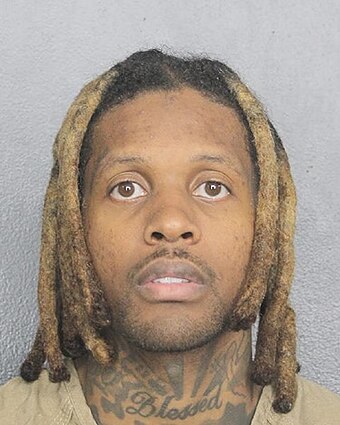
Durk — whose legal name is Durk Banks — is being tried in the U.S. District Court for the Central District of California, before U.S. District Judge Michael W. Fitzgerald, alongside two co-defendants, Deandre “OTF DeDe” Wilson and David “Browneyez” Lindsey. (“OTF” is short for Only the Family, Durk’s record label and collective; the initials turn up again in a cooperating witness’s nickname below.) All three declined to testify in their own defense; the defense rested its case without putting any of the three defendants on the stand.
Key facts
- Trial: Lil Durk (Durk Banks) is tried alongside co-defendants Deandre “OTF DeDe” Wilson and David “Browneyez” Lindsey
- Court: U.S. District Court for the Central District of California, before Judge Michael W. Fitzgerald
- Charges: Five federal counts in this trial, including murder-for-hire resulting in death
- Maximum penalty: Life in federal prison if convicted on the counts tied to Robinson’s death
- Victim: Saviay’a “Lul Pab” Robinson, 24, killed August 19, 2022 near the Beverly Center mall in Los Angeles
- Alleged intended target: Rival rapper Quando Rondo (Tyquian Bowman)
- Status: Jury began deliberating Wednesday, September 9, 2026; no verdict has been reached
What prosecutors say happened
The case centers on a shooting near the Beverly Center mall in Los Angeles on August 19, 2022, that killed Saviay’a “Lul Pab” Robinson, 24, who was riding that day with cousin and rival rapper Quando Rondo (Tyquian Bowman). Prosecutors say the target was Bowman, not Robinson. Her death, they allege, was the unintended result. They allege the plot was retaliation for the November 2020 killing of Durk’s friend and label artist King Von, whose death prosecutors say Durk blamed on Quando Rondo’s circle, and that Durk orchestrated it. The defense disputes that Durk was involved in any such plot.
Durk, Wilson and Lindsey face five federal counts in this trial: conspiracy to commit stalking; stalking Bowman with a dangerous weapon; stalking resulting in Robinson’s death; conspiracy to commit murder-for-hire using interstate commerce facilities; and murder-for-hire resulting in death. If convicted on the counts tied to Robinson’s death, Durk faces a statutory maximum sentence of life in federal prison. Wilson and Lindsey are being tried on the same core stalking and murder-for-hire charges; prosecutors allege Lindsey was one of the shooters and that Wilson helped surveil Bowman and Robinson before riding in a vehicle that picked up the shooters afterward. A fifth man originally charged in connection with the case, Asa “Boogie” Houston, is not one of the three defendants on trial here. A separate, broader racketeering case tied to alleged Chicago-based conduct was split off from this trial and is being handled on its own.
Cooperating witnesses at the center of the case
Three men connected to the case pleaded guilty and testified for the government: Kacey “OTF Jam” Hester, who testified he was “one of the shooters”; Keith Jones; and Kavon Grant, who testified that when asked why he took part, “Durk told us to.”
The closing arguments
In the prosecution’s closing, Assistant U.S. Attorney Ian Yanniello told jurors Durk “had his shooters on speed dial,” calling the episode “surveillance, it was stalking, and it was premeditated murder.” He said Durk “used his money, power and influence to stalk and kill his biggest opp,” and cited text messages he said showed Durk was “elated” when he learned Robinson had been killed.
Durk’s defense team included Christy O’Connor and Marissa Goldberg, while Brian Steel and Drew Findling argued the government’s case was “replete with reasonable doubt” and rested largely on cooperating witnesses who pleaded guilty and have an incentive to implicate Durk to avoid life sentences of their own — attorneys called them “snitches, corroborators and rats.” Findling also argued that an LAPD detective and prosecutors had cast Durk as a “gangster with money” by pulling from his songs, interviews and social media. The defense closed by telling jurors, “He is not a prize in a carnival. He is a human being.”
The legal question the jury has to resolve
A central issue for jurors is a legal theory called Pinkerton liability. Under Pinkerton, a member of an alleged conspiracy can be held responsible for a crime committed by another member of that conspiracy, as long as the crime was a foreseeable result of the plan — even without personally carrying it out. It matters in this case because Robinson, not Bowman, was the person killed. The defense argued the jury shouldn’t be allowed to hold Durk responsible for Robinson’s death on that theory alone, since he wasn’t the alleged intended target. Judge Fitzgerald ruled he could not remove the instruction, citing binding precedent, but preserved the defense’s objection for a possible appeal.
What happens next
The jury began deliberating Wednesday morning after selecting a foreperson, and could keep going for as long as it takes to reach a verdict — or to be declared deadlocked. No verdict had been reached as of press time.