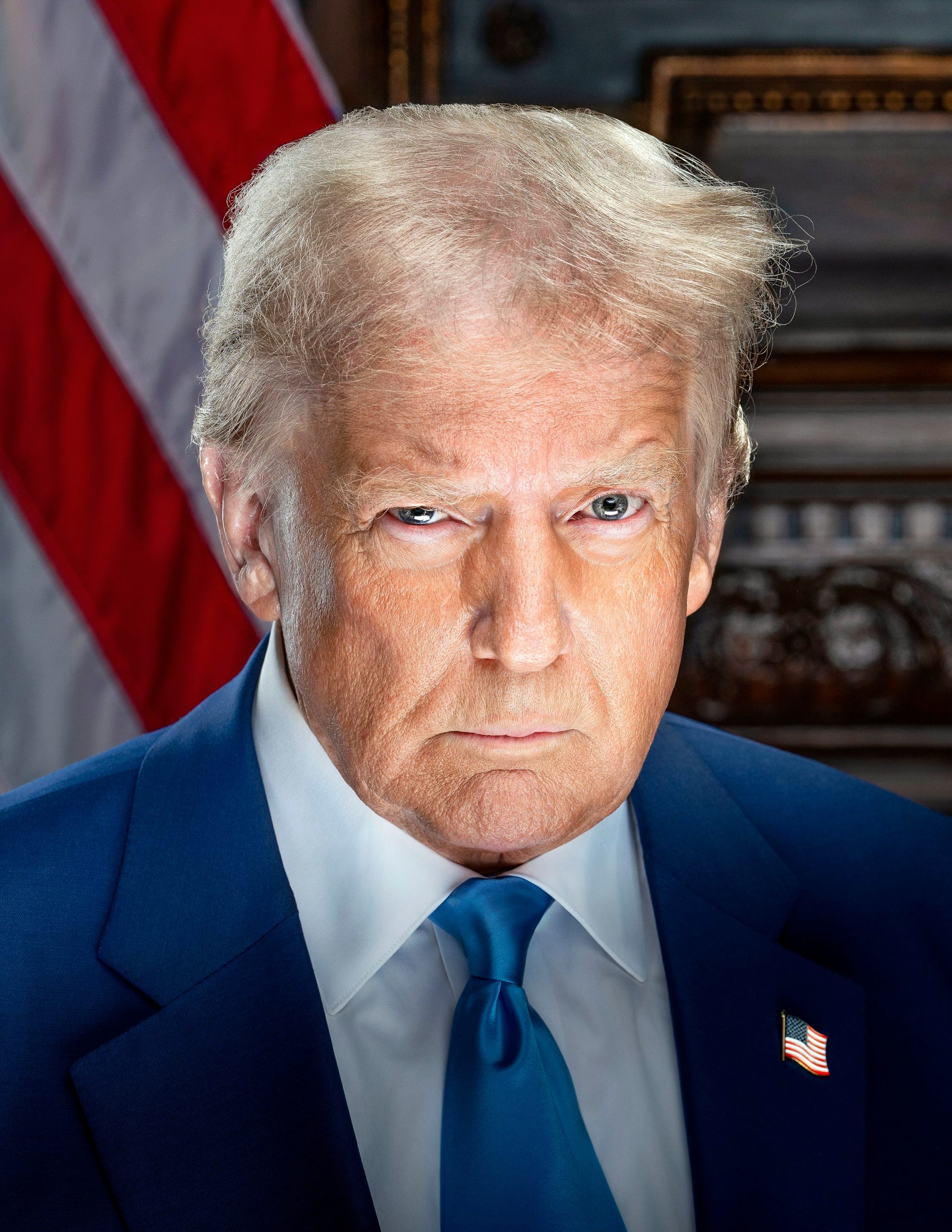
President Donald Trump told a Republican Party crowd at the Republican National Committee’s (RNC) midterm convention in Dallas, Texas, on the night of September 9, 2026, that he would send a $5,000 payment — which he and the White House are calling the “Trump Dividend” — to every adult U.S. citizen. There is one condition attached: Republicans have to keep control of both the House and the Senate in the November 3, 2026 midterm elections, which are still ahead.
Key facts
- The pledge: a one-time $5,000 payment — the “Trump Dividend” — to every adult U.S. citizen
- The condition: Republicans must keep control of both the House and the Senate in the November 3, 2026 midterms
- Announced: at the RNC’s midterm convention in Dallas, Texas, on September 9, 2026; made official in a White House release the next day, September 10, 2026
- Proposed funding source: tariff revenue
- Tariff revenue estimate: the Congressional Budget Office estimates total tariff revenue at roughly $167 billion for the fiscal year ending September 30, 2026
- Estimated program cost: about $1.2 trillion, per the Committee for a Responsible Federal Budget, based on a Census Bureau count of roughly 240 million adult U.S. citizens
- Legal status: no bill authorizing the $5,000 payment has been introduced in Congress
- A separate, earlier pledge: a smaller $2,000 “tariff dividend” promised in November 2025 has not been paid out
Timeline
- November 2025: Trump pledges a separate, smaller $2,000 “tariff dividend” that excludes high earners
- September 9, 2026: Trump promises a $5,000 “Trump Dividend” at the RNC’s midterm convention in Dallas, conditioned on Republicans keeping the House and Senate
- September 10, 2026: The White House publishes an official release confirming the pledge and the win-both-chambers condition
- November 3, 2026: Midterm elections take place; the outcome decides whether the condition for the payment is met
What the White House confirmed
The White House made it official the next day, publishing a release titled “Trump Dividend: America Is Winning — and Americans Should Win With It” that confirmed the pledge and the win-both-chambers condition. What the release does not do is say how the payments would be funded, when they would go out, or which agency would run the program. Trump himself has not filled in those blanks either. He has said the money would have to be spent inside the United States — he mentioned not wanting people to spend it in Canada, China or Germany — but he has not explained how that rule would be enforced.
Who would qualify
As Trump has described it, every adult U.S. citizen would qualify. No formal eligibility rules, income cutoff or application process has been published. Vice President JD Vance said afterward that wealthy Americans could end up getting less money or none at all, but he did not name a dollar threshold, and neither he nor the White House has adopted one.
Where the money would come from
Where the money would come from is the biggest open question. Trump has pointed to tariff revenue as the funding source, comparing the payment to a company distributing profits to shareholders; Vance has also cited tariff revenue but did not repeat that comparison. But tariff revenue currently falls well short of what the plan would cost. The funding picture is further complicated by a February 20, 2026, Supreme Court ruling that said the International Emergency Economic Powers Act (IEEPA) did not authorize the administration’s tariffs; legal analyses said those tariffs had generated more than $160 billion and made up roughly 70% of the administration’s tariff structure. The Congressional Budget Office estimates total tariff revenue at roughly $167 billion for the fiscal year set to end September 30, 2026 — a fiscal year still under way as of September 11, 2026, not yet closed out. The Committee for a Responsible Federal Budget, a nonpartisan budget watchdog, puts the cost of a one-time $5,000 payment to every adult citizen at roughly $1.2 trillion, based on a Census Bureau count of about 240 million adult U.S. citizens. A CNBC report also cited economists who warned that sending out that much cash in a lump sum could push up prices, potentially blunting the payment’s intended boost to household spending.
The legal question
There’s also a legal question that has not been settled. Sending out federal money at this scale normally requires an appropriation — a spending bill Congress specifically passes to authorize it — and legal analysts and multiple news outlets say this plan would need one too. Trump disagrees. Asked by CBS Texas whether he needs congressional approval, he said, “We think not.” No bill authorizing the $5,000 payment has been introduced in Congress. One senator, Bernie Moreno of Ohio, has said he is drafting legislation to create the program after the midterms, funded through what he calls a “market access fee” — a structural tariff, in his description — rather than general tax revenue — but that bill does not yet exist either.
Vote-buying claims
Some critics have called the pledge’s timing, just ahead of an election, a form of vote-buying — a description at least one former Republican House member, Bob Good, used directly, calling it a “socialist vote-buying scheme” that would cost nearly $1 trillion. A fact-check found claims that the pledge itself violates federal vote-buying law to be mostly false, since the relevant statute bars paying someone in exchange for a specific vote, while Trump’s proposal is framed as a benefit for every adult citizen regardless of how — or whether — they vote; the fact-check addressed that narrow legal question, not the broader political label of “vote-buying.” Separately, a former federal prosecutor told Newsweek that the plan’s structure and timing could still resemble conduct covered by that same statute, and that presidential immunity might not shield it — a legal opinion and risk assessment, not a criminal charge or a court ruling.
Reaction
Reaction has not split cleanly along party lines.
Republican reaction
Among Republicans, Moreno has backed the idea and pledged to write legislation for it; Good and Rep. Chip Roy of Texas have criticized it, with Roy warning that “dependency is evil and soul-sucking in all its forms.” Some Republican officials and at least one GOP (the Republican Party) voter at the Dallas convention voiced skepticism over inflation and the federal deficit — one attendee, Christine Gardner, a retired intellectual-property lawyer from Texas, put it bluntly: “I thought: ‘He’s buying votes.'”
Democratic reaction
Among Democrats, California Rep. Robert Garcia dismissed the idea as something “no one in the country” believes will actually happen, and Rep. Ted Lieu mocked it on social media, joking that if Democrats won instead, everyone would get “a $10,000 dividend, and a pony, and free ice cream for life.” A White House spokesman, asked to defend the funding math, pointed to a list of other administration accomplishments rather than detailing a funding mechanism for this specific payment.
The earlier $2,000 pledge
This is not the first time Trump has promised a cash payment tied to tariffs. In November 2025, he pledged a separate, smaller $2,000 “tariff dividend” that explicitly excluded high earners. Those checks have not been sent, no legislation authorizing them has passed, and betting markets have moved accordingly — odds on the Polymarket prediction platform that the $2,000 payment would happen reportedly fell to about 3%, down from 14% a week earlier. The $5,000 pledge announced in Dallas is a distinct promise from that earlier one, not the same program.
What happens next
For now, none of it is guaranteed. The payment depends first on the outcome of the November 3, 2026 midterms and — according to legal analysts and multiple outlets — on Congress passing a law to authorize it regardless of who wins. Readers who want to track whether this moves forward have a clear marker to watch for: an actual bill introduced in Congress, since as of September 11, 2026 none has been.