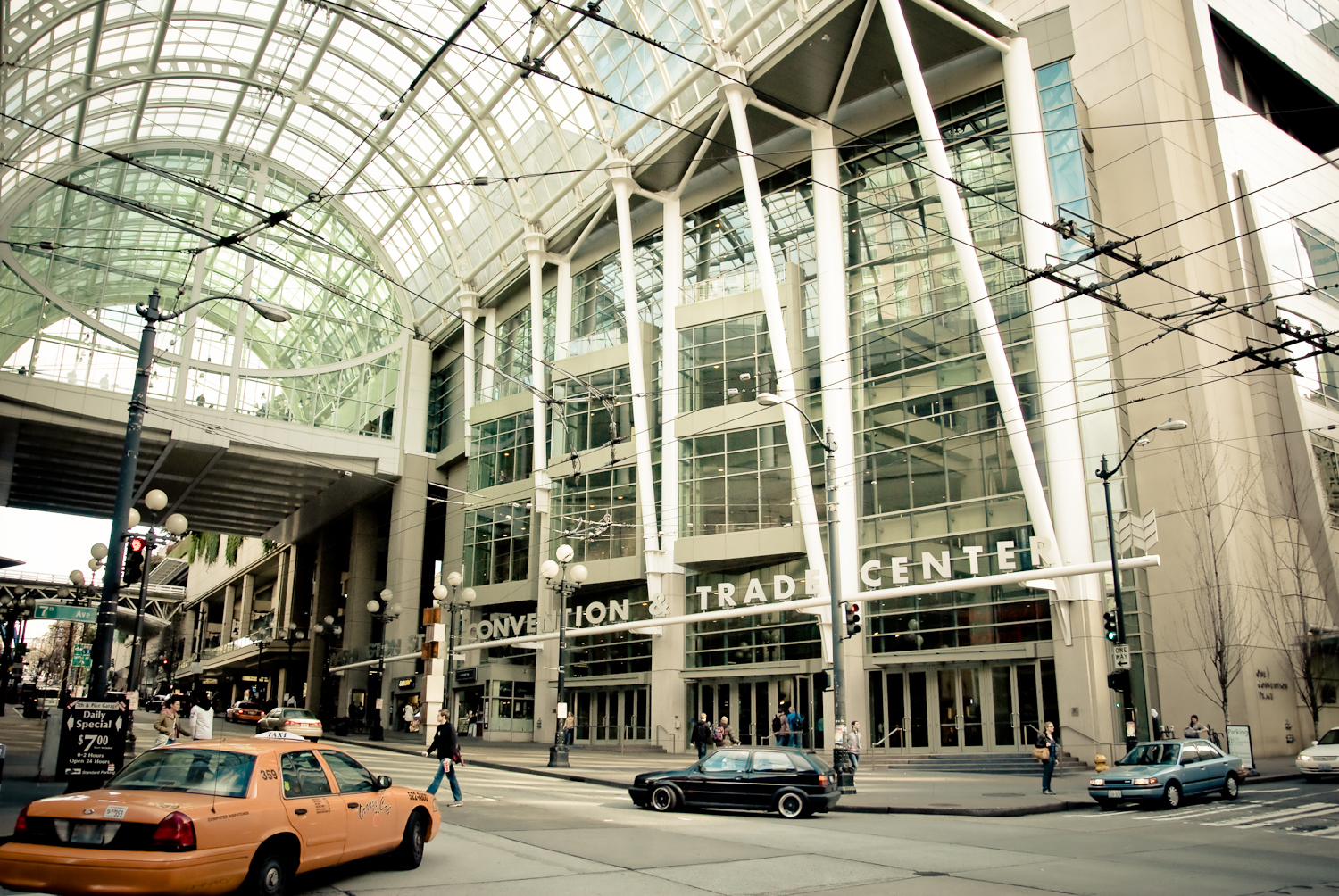

For four days in early September, one way to buy Nvidia’s top graphics card, the RTX 5090, at its original $1,999 price was to find a specific Nvidia employee at a gaming convention in Seattle. He didn’t hand over a card on the spot — he handed over a purchase code redeemable on Nvidia’s own web store.
Key facts
- Event: Nvidia ran “Verified Priority Access IRL” at PAX West in the Seattle Convention Center, September 4-7, 2026.
- Who handed out codes: Nvidia’s GeForce Evangelist, Jacob Freeman, working the venue’s Skybridge.
- What attendees got: a code good for a Founders Edition RTX 5090 at $1,999, an RTX 5080 at $999, or an RTX 5070 at $549.
- Sold out early: One outlet reported Freeman sold through his RTX 5090 and RTX 5080 stock by the third of the four days.
- Retail prices elsewhere: Micro Center around $4,200, Newegg at $4,999, Best Buy near $5,500, one price tracker at $5,799.99 (September 8), and a premium ROG Astral card at $6,000.
- Stated cause: a shortage of GDDR7 memory, the type the RTX 5090 uses, per memory-market research firm TrendForce.
- Nvidia’s reported move: a reported roughly $300 wholesale price increase to board-partner manufacturers, citing GDDR7 costs — via trade-press reporting on an internal notice, not a public Nvidia statement.
- Current status: as of September 12, Nvidia’s U.S. store still lists the RTX 5090 at $1,999 but shows it out of stock.
Timeline
- 2022 — Nvidia launches Verified Priority Access, an online purchase queue for Founders Edition cards, for the RTX 40-series.
- 2025 — Verified Priority Access returns for the RTX 50-series.
- Earlier in 2026 (QuakeCon) — The in-person “IRL” version of Verified Priority Access debuts at QuakeCon, ahead of PAX West.
- September 4-7, 2026 — Nvidia runs “Verified Priority Access IRL” at PAX West in Seattle.
- September 8, 2026 — A price tracker lists the open-market RTX 5090 at $5,799.99.
- September 12, 2026 — Nvidia’s official store still lists the RTX 5090 at $1,999 MSRP but shows it out of stock.
The PAX West giveaway
Nvidia ran the event, called Verified Priority Access IRL, at PAX West at the Seattle Convention Center from September 4 to 7, 2026. That employee was Nvidia’s GeForce Evangelist, Jacob Freeman, working the venue’s Skybridge; attendees who found him could get a code good for a Founders Edition RTX 5090 at its official $1,999 list price, an RTX 5080 at $999, or an RTX 5070 at $549.
It wasn’t a one-time stunt: Nvidia’s Verified Priority Access purchase system, an online lottery-style queue for buying Founders Edition cards directly from Nvidia, dates back to 2022 for the RTX 40-series and returned in 2025 for the RTX 50-series. This in-person “IRL” version — handing out codes at a convention instead of through that online queue — had already shown up earlier in 2026 at another convention, QuakeCon, before PAX West. Demand for the deal outpaced supply: coverage of the event reported that Freeman sold through his RTX 5090 and RTX 5080 stock by the third of the four days.
Retail prices dwarf Nvidia’s official price
The reason that was newsworthy at all: everywhere else, the RTX 5090 costs far more than $1,999. A spot-check of the open market in early-to-mid September found the RTX 5090 selling well above that everywhere checked. Micro Center had it around $4,200, a Newegg listing showed $4,999, Best Buy was near $5,500, one price tracker put it at $5,799.99 as of September 8, and a premium ROG Astral card ran $6,000. That’s roughly two to three times the sticker price, on a card Nvidia still officially prices at $1,999. As of a September 12 check, Nvidia’s own U.S. store still listed the RTX 5090 at that $1,999 MSRP — but showed it as out of stock.
Why prices are so high
The price has climbed so far above what Nvidia says the card should cost for one main reason: a shortage of GDDR7, the video memory type the RTX 5090 uses, according to the memory-market research firm TrendForce. The explanation: memory manufacturers have been shifting factory capacity toward high-bandwidth memory for AI data-center chips, which pays better than the GDDR7 used in gaming cards, squeezing the supply left over for products like the 5090. The RTX 5090 is especially exposed because it carries 32GB of GDDR7 — twice what the RTX 5080 uses — and memory now makes up a large share of what the card costs to build. Nvidia itself has not made any public statement explaining or acknowledging the price surge. The one reported pricing move on Nvidia’s side is a wholesale increase of roughly $300 that it passed on to its board-partner manufacturers, citing GDDR7 costs — but that surfaced through trade-press reporting on an internal notice to partners, not a company announcement. Neither Nvidia nor the analysts tracking the shortage have given a timeline for when the GDDR7 supply squeeze might ease.
Who’s driving the markup
One executive has publicly pushed back on where the blame belongs. Jese Martinez, the CEO of PowerGPU — a system integrator, a company that buys parts like graphics cards and builds them into finished gaming PCs to sell — has said publicly that distributors are quoting his company more than $3,000 per RTX 5090, and that he’s passing on a distributor-level markup rather than scalping the cards himself. Nvidia has not responded to that claim directly.
What happens next
For anyone still hoping to buy at MSRP, the PAX West event has already ended, and Nvidia’s own store currently shows the card as out of stock at $1,999. The in-person Verified Priority Access IRL format has now worked twice this year, at QuakeCon and again at PAX West, and catching it the next time Nvidia brings it to a convention is the only method that has worked so far — though Nvidia hasn’t said if or when that will happen again. Separately, the online version of Verified Priority Access that Nvidia has run since 2022 is a different, ongoing purchase queue rather than a convention appearance; this article did not confirm whether it’s currently open to new sign-ups.