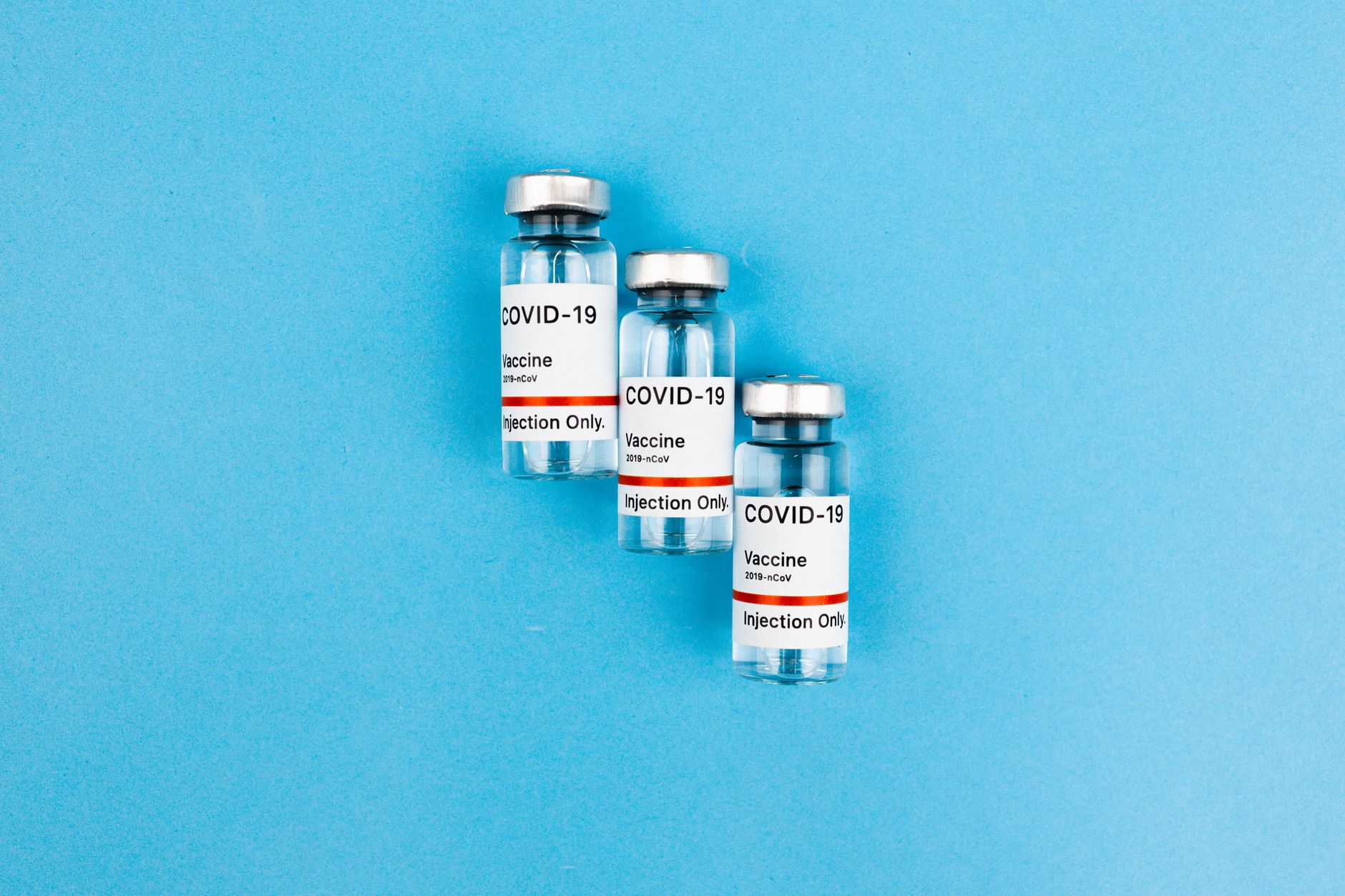
The FDA approved four updated COVID-19 vaccines under an acting commissioner more than three months after the official who led the agency through the original restrictions resigned, and the CDC’s own guidance page still hasn’t been updated to match.
The approval, in plain terms
On Aug. 27, 2026, the Food and Drug Administration approved four updated COVID-19 vaccines for the 2026-2027 respiratory virus season, all reformulated to target the JN.1-lineage XFG variant; Moderna’s and Pfizer’s prior-season shots had targeted a different variant, LP.8.1. The four are Comirnaty XFG, made by Pfizer and BioNTech; Spikevax and mNEXSPIKE, both made by Moderna; and Nuvaxovid, the protein-based vaccine developed by Novavax and marketed in the U.S. by Sanofi Vaccines US, Inc.
None of the four is approved for the general public. Comirnaty XFG is authorized for people 65 and older, or people 5 to 64 with an underlying condition that puts them at higher risk from COVID-19, according to Pfizer’s own release. Spikevax’s approval covers ages 65 and up, or 6 months to 64 with a qualifying risk factor. mNEXSPIKE and Nuvaxovid are both approved for people 65 and older, or 12 to 64 with a risk factor.
That restriction is not new this year. It is the same eligibility framework the FDA set for the 2025-2026 season, one that took shape through the FDA’s own approval actions beginning as early as May 2025, when the agency first limited who could receive that season’s shots.
Who signed off
The Aug. 27 approval came under Acting FDA Commissioner Kyle Diamantas, not Dr. Marty Makary, the commissioner who led the FDA when the original restricted-eligibility policy took shape in 2025. Makary resigned on May 12, 2026, roughly three and a half months before this year’s vaccines were approved. Diamantas, who had been the FDA’s deputy commissioner for food, stepped into the acting role afterward.
President Trump commented on Makary’s departure at the time: “He’s going to go on and he’s going to lead a good life. He was having some difficulty. He’s a great doctor.”
Neither the FDA nor the Department of Health and Human Services issued a public statement quoting Diamantas, Kennedy or any other official specifically about the Aug. 27 approval.
A government not fully in sync
Three weeks after the FDA narrowed eligibility for this season’s vaccines, the Centers for Disease Control and Prevention’s own guidance page had not caught up. As of Thursday, Sept. 17, 2026, the CDC page titled “Staying Up to Date with COVID-19 Vaccines” still read: “CDC recommends a 2025-2026 COVID-19 vaccine for people ages 6 months and older based on individual-based decision-making.” That page was last updated Nov. 19, 2025, before this year’s narrower approval existed, and it does not reference the 2026-2027 season at all.
That gap runs deeper than a stale web page. The last time the Advisory Committee on Immunization Practices, the CDC panel that votes on vaccine recommendations, took up COVID-19 was Sept. 19, 2025 — and it did not vote to restrict the shot. HHS said the committee unanimously recommended vaccination “based on individual decision-making” for everyone six months and older, with added emphasis on people at higher risk, rather than a rule limiting the vaccine to older or higher-risk people alone. A recommendation becomes part of the CDC’s official schedule only if the CDC director adopts it. The committee is not scheduled to meet again until Oct. 21-23, 2026, according to its own meetings page; its March and June 2026 sessions were both cancelled, which the CDC’s page attributes to “ongoing litigation” — a detail reported elsewhere but not independently verified against a court filing.
None of this means the CDC has rejected or adopted the FDA’s restriction. It means that, for the moment, the FDA’s approval limits the shot to older adults and people with qualifying conditions, while the government’s own vaccine advisory panel last recommended leaving that choice to patients and their doctors — and neither position has been reconciled with the other since.
Why now, in plain numbers
The timing follows a real, if uneven, rise in COVID-19 activity. The CDC’s respiratory-virus data, current as of Sept. 11, 2026, describes the picture this way: “COVID-19 activity is elevated and increasing nationally, but hospitalizations remain low.” The agency no longer publishes national raw case counts, so it tracks the virus through estimated transmission trends and hospital admissions instead.
Those two measures are pulling in different directions. By the CDC’s most recent estimate, as of Sept. 9, 2026, infections were growing or likely growing in 35 states, declining or likely declining in 8, and holding steady in 7 — a narrower spread than the 47 states the agency had reported as growing around late August. At the same time, the agency’s forecasting center projects hospital admissions will keep climbing, from roughly 3,500 in the week that ended Sept. 5 to roughly 4,400 in the week ending Sept. 19, with a possible range of 2,600 to 6,100. Put plainly, the virus appears to be spreading in fewer states than it was a few weeks ago, even as the number of people it puts in the hospital keeps rising.
One local data point stands out, though it describes only one city, not the country. Hoodline reported more than 500 COVID-related hospital admissions across New York City’s five boroughs between Aug. 30 and Sept. 5, along with 12 COVID-related deaths in the first week of September — the city’s highest weekly hospitalization total since early October 2025, according to that report. No comparable national death total was confirmed for this current wave.
Two years of the same restriction
This is the second consecutive season the FDA has approved COVID-19 vaccines only for older adults and younger people with a qualifying health condition, rather than for the public generally. Read together, the facts form a pattern: the same age-and-risk cutoff two years in a row, and an annual reformulation aimed at matching whichever variant is currently circulating. The pattern looks less like a temporary emergency measure and more like a vaccine schedule the government has settled into without ever describing it that way. That reading is this article’s own observation drawn from the facts above, not a framing the FDA, the CDC or Kennedy has stated outright.
Moderna’s chief executive, Stéphane Bancel, made the case for continued vaccination in the company’s Aug. 27 release: “COVID-19 remains a serious public health threat, responsible for up to 2.3 million outpatient visits and 250,000 hospitalizations in the U.S. last year alone.” He added: “Our updated COVID-19 vaccines help protect those at high risk of severe disease, and we are proud to help ensure Americans have access to the latest protection against currently circulating SARS-CoV-2 strains this respiratory virus season.” Pfizer’s own release did not include a comparable quote from an executive.
Some physicians outside the vaccine makers have said the same. Dr. Ronald G. Nahass, president of the Infectious Diseases Society of America, said on Sept. 3: “The latest evidence firmly supports our continued strong recommendation for COVID-19, influenza and RSV vaccination. Getting vaccinated early this fall remains one of the most effective ways to prevent severe illness.” He added: “At a time when patients and physicians cannot always look to the federal government for clear and timely vaccine guidance, it is especially important for the medical community to work together in a coordinated and transparent way to provide recommendations grounded in the best available evidence.” Dr. William Schaffner, an infectious disease specialist at Vanderbilt University, put the yearly update in context for Healthline: “COVID (and influenza) vaccines are updated each fall in order to provide the best match with the version of the viruses that will be dominant during the coming winter.” He added that the shots should perform well: “The mRNA technology can respond rapidly to changing strains, so the updated vaccines will result in good protection against getting seriously ill.” He told AARP separately that “the COVID vaccine and the flu vaccine do their best job in keeping us out of the hospital.”
What it means for readers
Eligibility comes down to two groups: people 65 and older, and younger people — starting as young as 6 months for Spikevax, 5 for Comirnaty XFG, or 12 for mNEXSPIKE and Nuvaxovid — who have an underlying condition that raises their risk from COVID-19. There is no approval this season covering healthy people outside those groups.
Cost should not be a barrier for most people who do qualify. AHIP, the insurers’ trade group, told ABC News that member health plans will cover the updated vaccines with no cost-sharing, which the group described as consistent with “a 2025 commitment to cover all CDC-recommended vaccines through the end of 2027.” Medicare Part B and Medicaid also cover the shots. People without insurance can expect to pay out of pocket, with reported prices somewhere in the $150-to-$250 range depending on the product and the pharmacy.
CVS said in a Sept. 3 release that the updated vaccines are available nationwide at CVS Pharmacy and MinuteClinic locations, seven days a week, including evenings and weekends. The company also said it is monitoring state-level vaccination requirements specifically in Arizona, Louisiana and Oregon, a reminder that availability and rules can vary by state even under one federal approval. Readers who qualify and want a shot should check with a local pharmacy or a doctor’s office to confirm what is in stock and what, if anything, their state requires.
Sources and further reading
- ACIP Meeting Information
- COVID-19 Vaccines (2026-2027 Formula) for Use in the United States Beginning in Fall 2026
- Nuvaxovid product page
- ACIP Recommends COVID-19 Immunization Based on Individual Decision-making
- Staying Up to Date with COVID-19 Vaccines
- Moderna Receives U.S. FDA Approval for Updated 2026-2027 COVID-19 Vaccines
- Pfizer and BioNTech Receive U.S. FDA Approval for XFG-adapted COVID-19 Vaccine