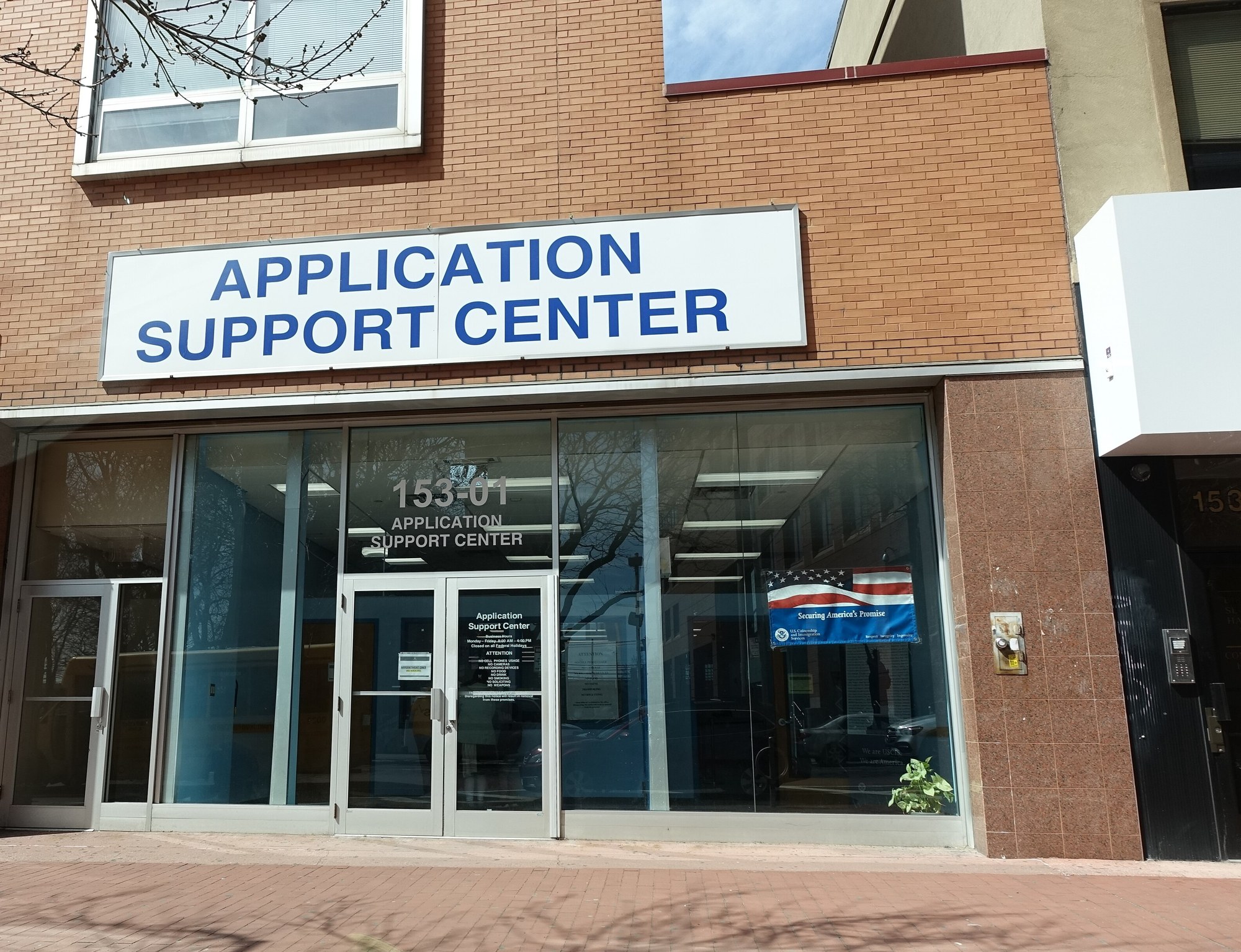
A new federal rule governing how immigration officers weigh a green card applicant’s use of public benefits takes effect Friday, Sept. 18, 2026. Public charge is a “ground of inadmissibility” under immigration law — an applicant an officer decides is likely to become a public charge can be denied a green card. Vermont Attorney General Charity Clark’s office put the stakes directly: the rule lets the government “deny green cards based on use of public benefits.” It applies to Form I-485 applications to adjust status — the process of applying for a green card from inside the United States — that are postmarked or filed electronically on or after today, and also to applications for admission made on or after today, such as people seeking to enter the country as immigrants. It lets officers consider a far wider range of benefits than before.
What changes
The Department of Homeland Security and U.S. Citizenship and Immigration Services published the final rule, “Public Charge Ground of Inadmissibility,” on July 20, 2026, in the Federal Register, following a Nov. 19, 2025 proposed version. It rescinds the 2022 Biden-era regulation and removes the codified definitions, determination framework and exemption list that rule had written into federal regulations.
The practical change is in what counts. For benefits received before today, USCIS says it will still consider only “public cash assistance for income maintenance and long-term institutionalization at government expense” — the narrower 2022 standard. For means-tested benefits received on or after Sept. 18, the agency says it will “consider any and all benefits.” USCIS’s own alert lists examples of what that now can include: “cash assistance for income maintenance, housing assistance, food stamps, financial aid for college, or any other similar benefit.”
Officers will keep weighing the five statutory factors USCIS lists — “age; health; family status; assets, resources, and financial status; and education and skills.” Beyond widening which benefits can be weighed, the rule lets officers consider “any other individualized case-specific factors” and “any empirical data relevant to an alien’s self-sufficiency,” restoring what the rule’s own text calls “broader discretion for DHS officers.”
One filing detail applicants should know: USCIS says “older versions of Form I-485 postmarked or submitted electronically on or after the effective date will not be accepted.”
Who is not affected
The rule does not apply to U.S. citizens. It concerns people applying for permanent residence or admission to the country. USCIS guidance continues to exempt certain groups from the public charge test. Refugees and asylees are among them. Several other statutory categories are exempt too, even though the specific list the 2022 rule had written into regulatory text was removed along with the rest of that rule.
Why DHS says it’s necessary
DHS’s rule text argues the 2022 regulation “was not the best implementation of the statute. It was inconsistent with congressional intent, unduly restrictive, and hampered DHS’s ability to make accurate, precise, and reliable determinations.” USCIS spokesman Zach Kahler put it more bluntly in the agency’s news release: “The Trump administration is upholding the rule of law and protecting American taxpayers from subsidizing aliens who may become dependent on public benefits.”
DHS’s own regulatory analysis estimates the reduction in government transfer payments could be approximately $13.05 billion a year — about $7.71 billion federal and $5.34 billion state — as people disenroll from or forgo enrolling in public benefit programs. DHS notes that separate Medicaid and SNAP changes in H.R. 1 complicate the estimate.
DHS received 8,846 public comments on the proposal, “the majority of which opposed the rule,” and issued the final rule “as proposed.”
The lawsuits
The rule already faces legal challenges. On Sept. 14, a coalition of roughly 20 state attorneys general, along with the District of Columbia and Pennsylvania’s governor, sued in federal court in New York, alleging the rule violates the Administrative Procedure Act as “arbitrary and capricious” — a legal standard meaning an agency acted without reasoned justification — and that it exceeds DHS’s statutory authority. New York City and other local governments filed a separate suit challenging the rule. No court has issued a ruling, temporary restraining order, injunction or set a hearing date as of today.
Vermont Attorney General Charity Clark said: “No person should fear being punished for accessing public benefits they are legally entitled to.” Massachusetts Attorney General Andrea Campbell said: “Access to basic necessities like food, healthcare, and housing should never be used as a weapon against immigrants.” Immigration attorney Jeannie Kane described the rule’s core effect this way: “The main thing for this regulation is to essentially give officers unbridled discretion to take into consideration pretty much any factor that they decide is relevant in determining public charge.”
Chilling effect
The rule arrives against a backdrop that researchers were already tracking before it existed. A KFF survey conducted with the New York Times, published Nov. 18, 2025, found that the share of immigrant adults who said they avoided applying for a government program that helps pay for food, housing or health care in the past 12 months, because they did not want to draw attention to their own or a family member’s immigration status, rose from 8% to 12% between 2023 and 2025, and from 11% to 18% among parents.
Children’s benefits, and what’s still unclear
USCIS’s policy guidance issued Aug. 18 addresses one question directly: benefits received by an applicant’s relatives, including children, are not counted as the applicant’s own receipt, and applying for a benefit on a child’s behalf is not held against the applicant. But if a child, or another relative or household member the applicant is legally obligated to support, receives benefits because the applicant’s own income or assets fall below a certain level, officers consider that low income or assets under the assets, resources, and financial status factor. The same guidance says earned benefits such as Social Security and Medicare, and unemployment insurance, are not means-tested public benefits. What remains genuinely open is the litigation: because it is unresolved, whether the rule survives court review — and in what form — is not yet known.
Immigrant-rights advocates at the Immigrant Legal Resource Center advise applicants to consult an immigration attorney or a Department of Justice-accredited representative before filing.