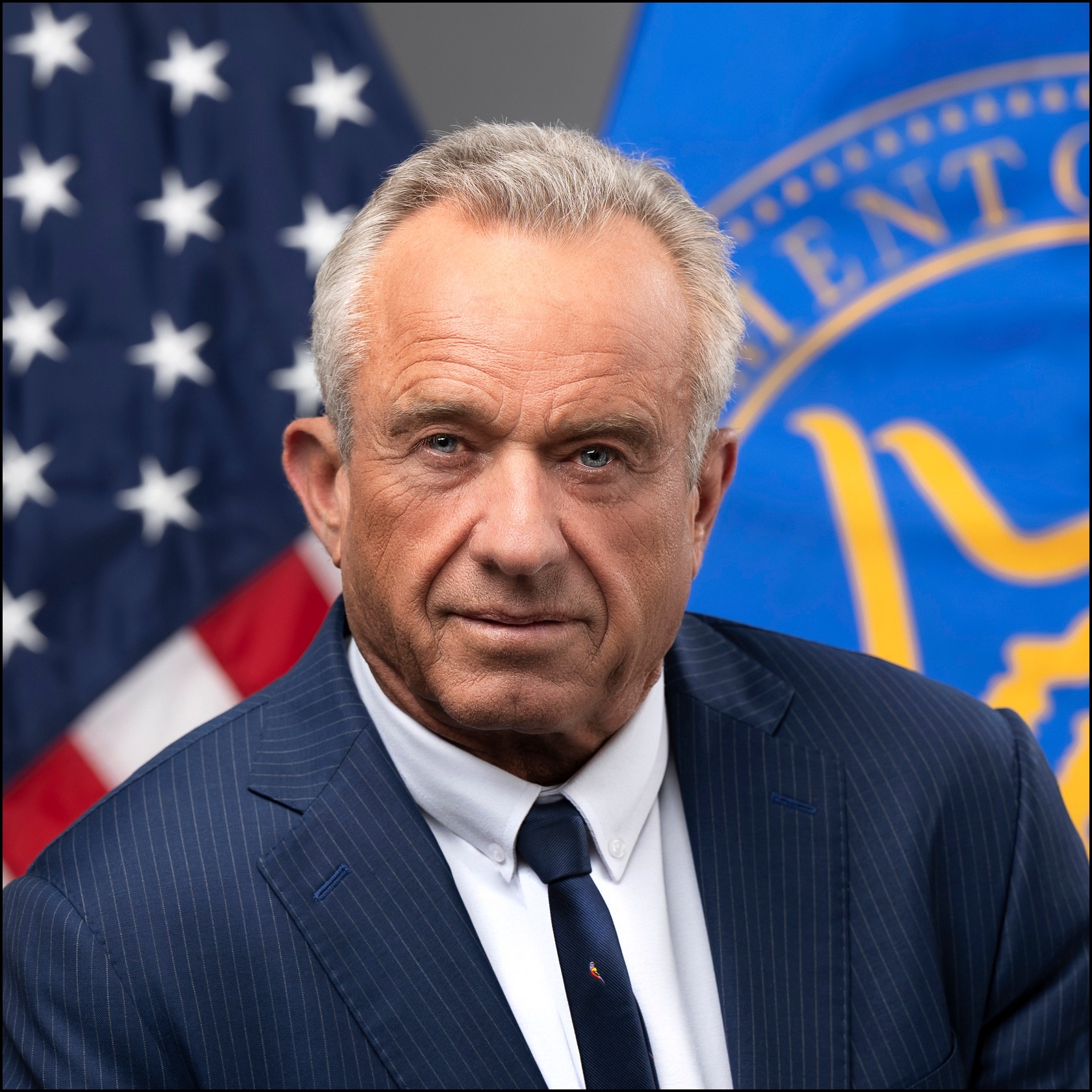
HHS Secretary Robert F. Kennedy Jr. delivered the keynote address at a Children’s Health Defense conference in Washington, D.C., on Thursday, Sept. 17 — his first appearance at a Children’s Health Defense conference since becoming HHS secretary. “Let me be clear: You have a strong and steadfast friend at the White House,” he told the audience, according to STAT. For parents trying to sort the speech from the policy, the more practical question is what, if anything, changed this week for a child due at the pediatrician’s office.
The short answer: nothing announced Thursday altered a vaccine schedule, a school requirement, or what’s available on pharmacy shelves. The policy changes already in motion — an executive order signed weeks earlier, a court order that has frozen a prior schedule revision, and a federal measles count still climbing — predate the speech and continue on their own timelines.
What he said
Kennedy framed his appearance as vindication for parents who have questioned vaccine guidance. “President Trump will not allow the government to treat parents who question vaccine orthodoxies as lepers,” he said, according to CNN’s report as carried by KVIA. He argued that access has not been curtailed: “We have not taken vaccines away from anyone. We have preserved access, but we have started asking the questions that you and millions of American parents have been asking for years,” he said, according to CNN as carried by KVIA. He also raised the subject that has defined much of his tenure at HHS: “The question is: Should we be looking at the potential that some of these chronic illnesses are associated with vaccines?” according to STAT. “I intend to stay in this fight as long as I am able,” he told the crowd, according to CNN as carried by KVIA.
Kennedy devoted part of the speech to the hepatitis B vaccine. As an image of the vaccine’s package insert, which describes adverse-reaction data from 147 infants and children in three clinical trials, appeared on screens, he told the audience: “They were monitored for only five days, and there was no placebo.” “There’s no way any other product would get FDA approval with that few people,” he said, according to STAT. STAT’s own reporting complicates that claim: the FDA’s original approval drew on that trial “alongside data from thousands of babies vaccinated with an older version of the hepatitis B shot,” and later trials involving thousands more children added further evidence. STAT also noted that Kennedy mentioned measles only once during the speech, saying, “We care about every child who dies from measles. They get headlines.”
Kennedy joined the board of Children’s Health Defense in 2015 and later became its chairman; he took leave in April 2023 to run for president and resigned as chairman before becoming HHS secretary, according to the group; STAT describes it as “an anti-vaccine nonprofit he helped start.” Sens. Ron Johnson of Wisconsin and Rand Paul of Kentucky were also on the conference’s speaker list. HHS did not immediately respond to ABC News’ request for comment, and a White House representative did not respond to the Associated Press.
What’s actually in effect
The policy backdrop to Thursday’s speech is an executive order President Trump signed Aug. 10, “Delivering Gold Standard Childhood Vaccine Recommendations for Americans,” which set a universal list of 11 childhood immunizations — for measles, mumps, rubella, diphtheria, tetanus, pertussis, polio, Hib, pneumococcal disease, HPV and varicella. As PlainlyNow reported at the time, the order did not itself rewrite the CDC’s vaccine schedule or any state’s school requirements.
One provision gets cited often without its own condition attached: the order calls for measles, mumps and rubella eventually to be “administered in three separate single-disease shots once such products are domestically available.” Right now, none are. The CDC’s own measles vaccine page lists just two combination options licensed for use in the U.S. — MMR and MMRV — with no standalone shot for any of the three diseases. Merck, which once supplied single-disease measles, mumps and rubella vaccines in the U.S., stopped selling them years ago, and the company has said new single-disease versions could take years to develop, according to Medical Daily.
A separate, unresolved fight concerns the schedule itself. On March 16, 2026, a federal court in Massachusetts, ruling in AAP v. Kennedy — a case brought by the American Academy of Pediatrics — stayed, meaning paused while the case proceeds, a January 2026 revision to the CDC’s childhood immunization schedule, along with the reconstitution of the CDC’s vaccine advisory committee and that committee’s votes, according to Georgetown’s Center for Children and Families. The government has appealed. As of Sept. 18, the CDC’s live schedule page is still headed as the 2025 schedule.
The backdrop
Measles cases are climbing against that backdrop of paused federal action. The CDC had counted 3,471 confirmed measles cases nationwide this year as of Sept. 17, 2026 — already more than the 2,289 reported for all of 2025. STAT reported the outbreak has contributed to at least four deaths in Pennsylvania; Kennedy has disputed the cause of those deaths.
School vaccination rates have moved in the opposite direction. CDC’s SchoolVaxView data for the 2025-26 school year, published Aug. 17, 2026, shows the kindergarten exemption rate rose to 4.2%, up from 3.6% the prior year, while coverage fell for every vaccine the agency tracks, from 92.0% for DTaP to 92.4% for MMR and polio.
What happens next
The August executive order requires the HHS secretary, through a task force, to present plans within 90 days of the order. The Massachusetts court case remains on appeal. Until either one moves, CDC’s schedule page still shows the 2025 schedule, and the stayed 2026 revision remains out of force while the stay stands.