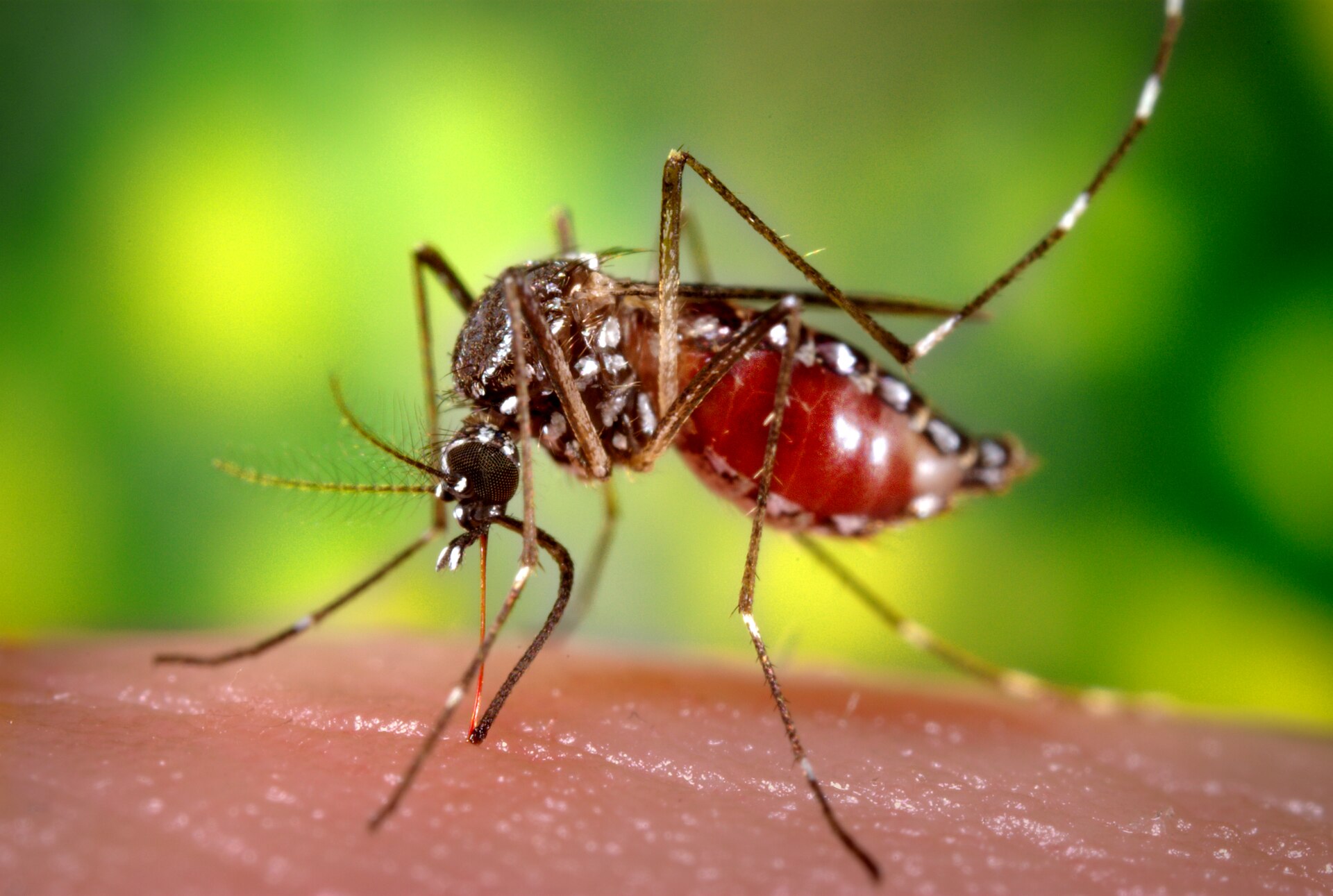
Hillsborough and Pinellas counties have declared states of emergency over a dengue fever outbreak that state health officials say has grown to 190 locally acquired cases across Florida this year, most of them in the Tampa Bay area. “Locally acquired” means the person caught dengue from a mosquito bite in Florida, not while traveling; the state separately counts 212 travel-related dengue cases so far this year.
The numbers
The Florida Department of Health’s arbovirus surveillance report for the week of Sept. 13-19 counted 38 new locally acquired dengue cases that week alone. As of that report, the state has recorded 190 locally acquired dengue cases across six counties for the year.
Hillsborough County accounts for the large majority: 170 of the 190 cases. Miami-Dade and Pinellas each have 7, Orange has 3, Pasco has 2, and Palm Beach has 1. DOH-Hillsborough’s mosquito-borne illness alert update on Aug. 12 was issued for the county’s eighth confirmed local case. Five weeks later, the state’s count for the county stood at 170.
Of the cases the state has been able to type by lab test, 169 are the DENV-2 serotype — one of four dengue virus types — and 2 are DENV-3. The report’s summary counts 17 dengue-positive mosquito pools — batches of trapped mosquitoes tested together — this year, while its county tables list 17 in Hillsborough plus one in Pasco, collected Sept. 16.
CBS Miami reported Sept. 18 that the state’s largest annual total on record was “nearly 200” cases in 2023; the current total of 190 is now approaching that mark.
Florida Department of Health officials confirmed a death tied to the outbreak on Sept. 18, according to reporting by CBS Miami and the Tampa Bay Times, which first reported the death. The Tampa Bay Times described the person as an elderly Tampa woman who died Sept. 4. State health officials did not release further details, including her age or cause of death.
The emergency declarations
Hillsborough County Administrator Bonnie Wise signed an executive order effective Thursday, Sept. 24. The order lasts up to seven days unless it is rescinded or extended, and it lets county officials “quickly take certain actions to ensure the health, safety, and welfare of the community.” It also opens the door to federal reimbursement for certain outbreak-related expenses.
Pinellas County adopted Resolution No. 26-76, declaring a “Dengue Fever State of Local Emergency” as of 3:52 p.m. on Sept. 24, with no fixed end date; the county administrator may extend it, and it authorizes mosquito control spending.
Pasco County also declared an emergency around Sept. 23, according to local news reports.
A Hillsborough County spokesperson, Chris Wilkerson, told CBS Miami: “This is wildly unusual for us.”
How dengue spreads
The CDC says dengue viruses are usually spread to people through the bite of an infected Aedes mosquito, Aedes aegypti or Aedes albopictus. These mosquitoes bite during the day and at night and lay eggs in containers that hold standing water. Dengue does not spread through casual person-to-person contact, with rare exceptions such as mother to baby during pregnancy or through blood transfusions. DOH-Hillsborough’s own guidance is direct on the everyday point: “Dengue fever is not contagious.”
Symptoms and warning signs
The CDC says dengue typically causes fever along with pain behind the eyes, muscle, joint or bone pain, nausea, vomiting, or a rash, with symptoms usually lasting two to seven days. DOH-Hillsborough guidance says symptoms of dengue “will appear within 15 days after being bitten” by an infected mosquito. About one in four people infected with dengue get sick, according to the CDC — so reported cases can undercount infections.
The CDC lists warning signs of severe dengue that call for emergency care: belly pain or tenderness, vomiting at least three times in 24 hours, bleeding from the nose or gums, vomiting blood or blood in the stool, and feeling extremely tired or restless. These warning signs typically show up 24 to 48 hours after a fever breaks. A blood test is the only way to confirm dengue, but the CDC says laboratory confirmation is not required for doctors to manage the illness.
Anyone in Hillsborough County with symptoms can call the DOH-Hillsborough symptom line at 813-307-8010.
What residents can do
Health officials recommend an EPA-registered insect repellent and wearing long sleeves and pants outdoors. Keeping window and door screens in good repair, and using air conditioning, also cuts down on mosquito exposure indoors.
Because Aedes mosquitoes breed in standing water, the state’s “Drain and Cover” guidance urges residents to drain water from buckets, pool covers and flowerpots, discard unused tires, and empty birdbaths and pet water bowls at least twice a week.
What is not known
The state’s surveillance report does not say how many of the 190 locally acquired cases required hospitalization, or how severe those cases were. Officials have not released the age or other details of the woman who died. This article provides general health information and is not medical advice; anyone with dengue symptoms should contact a health care provider.
Sources and further reading
- Symptoms of Dengue and Testing
- Florida Arbovirus Surveillance, Week 37: September 13-19, 2026
- Dengue fever prompts Hillsborough County to declare state of local emergency
- DOH-Hillsborough County Issues Mosquito-Borne Illness Alert Update
- Dengue Fever State of Local Emergency, Resolution No. 26-76
- Preventing Dengue