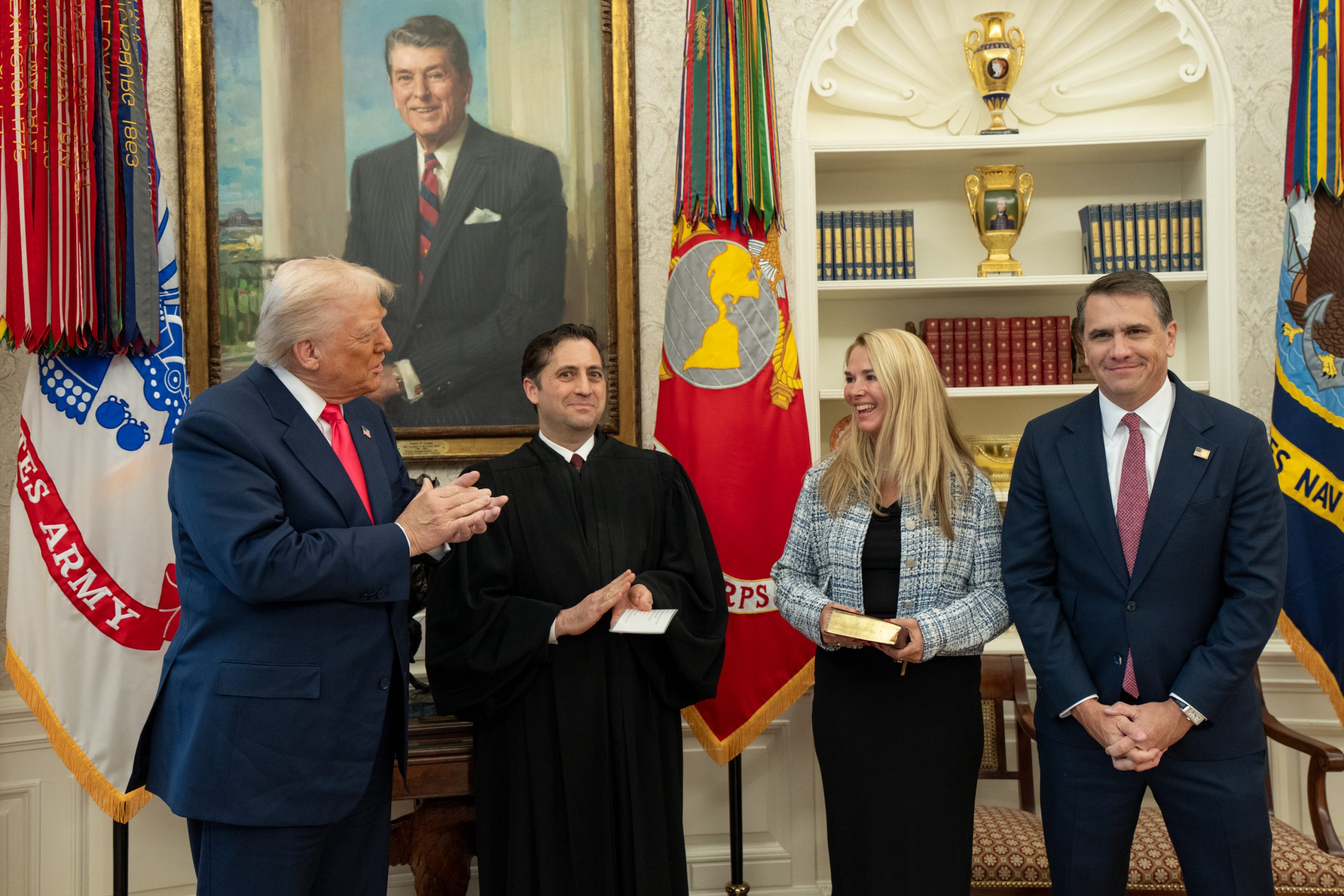
Todd Blanche, the man President Trump picked to run the Justice Department, spent Sunday night undoing one of Trump’s own initiatives — an apparent effort to clear a roadblock to his nomination.
Blanche, who has served as acting attorney general since April 2026, signed an order late Sunday, August 2, 2026, formally killing the “Anti-Weaponization Fund,” a $1.8 billion pot of money Trump’s administration had set up in May to compensate political allies who said they’d been unfairly targeted by the federal government. The order states the fund “is rescinded and shall have no force or effect.”
The move came just hours after Trump himself, speaking to reporters aboard Air Force One, defended the fund and warned that if the Senate didn’t confirm Blanche, he’d “put it back on the table.”
Key facts
- Confirmed: The Senate confirmed Blanche 50-49 on Aug. 8, 2026, and he was sworn in as the 88th U.S. Attorney General on Aug. 10, 2026
- Before that, Acting Attorney General Todd Blanche rescinded the $1.8 billion “Anti-Weaponization Fund” late Sunday, August 2, 2026
- The fund came from a May settlement of Trump’s lawsuit against the IRS (Internal Revenue Service) over disclosure of his tax returns
- Trump himself received only a formal apology from that settlement, no money
- Republican Sens. John Cornyn and Thom Tillis had blocked Blanche’s confirmation vote over the fund
- The same order also narrowed IRS audit immunity for Trump and his family
- The Senate Judiciary Committee advanced Blanche’s nomination 12-10 along party lines on Tuesday, August 4, 2026, sending it to the full Senate
Why an attorney general would cancel his own boss’s fund
The fund traced back to a lawsuit Trump filed against the IRS, accusing the agency of unlawfully disclosing his tax return information. The Justice Department settled that case in May, agreeing that Trump, his two sons, and the Trump Organization would get a formal apology — no money — but that a separate $1.8 billion fund would be created to pay out other people who claimed similar mistreatment by the government. In other words, Trump himself walked away from his own lawsuit with an apology and nothing else, but the settlement he signed opened the door for other people to file claims against that $1.8 billion pot. Critics quickly pointed out that could include participants in the January 6, 2021, Capitol riot, and the plan drew criticism from both parties.
Two Republican senators on the Judiciary Committee, John Cornyn of Texas and Thom Tillis of North Carolina, became the holdout votes blocking Blanche’s confirmation over it. They wanted written assurances the fund would never actually pay out. A vote on Blanche’s nomination that had been planned for late July was postponed after the two senators demanded more from the administration.
Sunday’s order was Blanche’s answer. According to a Justice Department statement issued alongside Sunday’s order, the order makes clear that no members were ever appointed to run the fund, no money was transferred, no claims process was created, and no claims were paid. Cornyn spokesperson Natalie Yezbick confirmed the senator “has reached an agreement with the Department of Justice,” which she said would issue “a formal order permanently terminating the anti-weaponization fund.” Tillis had not said as of Sunday night whether the move was enough to win his support.
The same order also narrowed a separate piece of the settlement: broad immunity Trump and his family had been given from IRS tax audits. Under the new language, that protection only covers claims that were already open when the settlement was signed — it does not shield the president from being audited on future tax filings.
Is the fund really gone for good?
Not entirely. Here’s why the fund isn’t necessarily gone for good. Blanche’s order cancels the May directive that actually put the fund into motion — the paperwork that would have let it start operating. But it doesn’t rewrite the underlying settlement itself, which still contains a clause requiring the attorney general to create such a fund.
Think of it this way: the May order was the mechanism that would have put the fund into operation. Blanche rescinded that order, but the settlement clause requiring the attorney general to create the fund remains in place. Erasing that clause would take a written agreement from everyone who signed the settlement — something that hasn’t happened yet. So for now, the operating order is gone, but the legal obligation behind it technically still exists on paper.
Trump’s own comments add to the uncertainty. As recently as Saturday, August 1, he posted on Truth Social threatening to push Congress to codify a version of the fund into law if Cornyn and Tillis kept blocking Blanche. One senator on the Judiciary Committee, John Kennedy of Louisiana, said on NBC’s “Meet the Press” that if any such legislation moves forward, he would insist Jan. 6 rioters be explicitly excluded from it.
Separately, U.S. District Judge Leonie Brinkema, who has overseen related litigation over the fund, extended a court block on it in June 2026, ruling that DOJ’s earlier assurances the fund wasn’t moving forward weren’t enough. In her rulings on the case, she has also suggested the underlying settlement looked less like a real legal dispute than an agreement between parties that were never truly on opposing sides.
What happened next
The Senate Judiciary Committee voted 12-10 along party lines on Tuesday, August 4, 2026, to send Blanche’s nomination to the full Senate, after an earlier vote was postponed in late July. Cornyn and Tillis both voted to advance him once the fund was rescinded and the scope of the IRS immunity agreement was clarified. The full Senate then confirmed him 50-49 in an early-morning vote on Saturday, Aug. 8, 2026, ahead of the planned recess, and he was sworn in as the 88th Attorney General on Aug. 10, 2026.
The committee’s advancement of Blanche’s nomination sent it to the full Senate, which confirmed him 50-49 on Aug. 8, 2026 — only Republican Sens. Susan Collins of Maine and Lisa Murkowski of Alaska voted against him, joining all Democrats, while Cornyn and Tillis both voted yes after the fund’s rescission. He was sworn in as the 88th U.S. Attorney General on Aug. 10, 2026, ending the acting role he’d held since Trump removed then-Attorney General Pam Bondi in April 2026. Trump had formally nominated him for the permanent post in June.
Blanche is a familiar face to Trump: before joining the Justice Department, he was Trump’s personal defense attorney, representing him in the hush-money trial and two other criminal cases in 2023 and 2024. He later served as deputy attorney general before stepping into the top job.
For now, the fund is off the books — but the legal and political door to reviving some version of it hasn’t been shut, since the underlying settlement clause requiring a fund still exists on paper. Blanche is now confirmed and serving as Attorney General, so the open question going forward is whether that clause is ever formally erased.
Sources and further reading
- Roll Call Vote 119th Congress, 1st Session – Confirmation: Todd Blanche, Deputy Attorney General
- Todd Blanche – Office of the Attorney General – Department of Justice
- Justice Department Announces Anti-Weaponization Fund
- The Nomination of the Honorable Todd Blanche to be Attorney General of the United States
- PN12-5 – Nomination of Todd Blanche for Department of Justice
- SDFL Settlement, Trump v. IRS
- Nomination Sent to the Senate