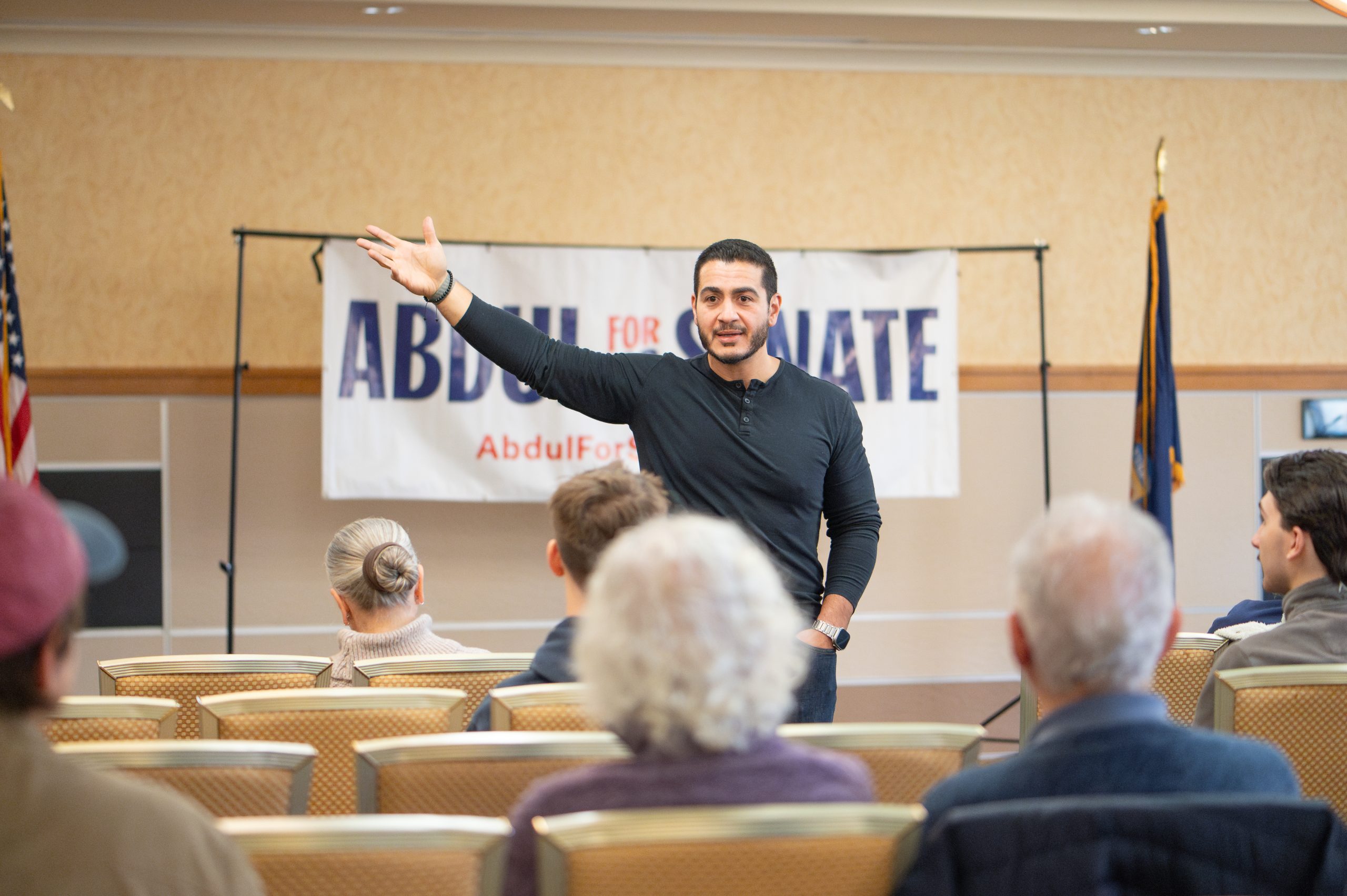
Abdul El-Sayed has won Michigan’s Democratic primary for the state’s open U.S. Senate seat, edging out Rep. Haley Stevens in one of the most expensive Democratic Senate primaries in American history.
The Associated Press called the race for El-Sayed at 9:56 a.m. Wednesday, and Stevens telephoned him that morning to concede, saying she was proud to support him against Republican Mike Rogers in November. With 99 percent of ballots counted, El-Sayed’s margin was about 15,000 votes out of nearly 1.5 million cast — roughly one percentage point.
He won despite being massively outspent: more than $60 million in outside money was aimed at stopping him. Overnight, before the count filled in, the outcome was genuinely unsettled — no network but NBC had called it, and Bridge Michigan was still describing the race as too close to call at 1:30 a.m.
Key facts
- The Associated Press called the race for El-Sayed at 9:56 a.m. Wednesday, August 5, 2026, after NBC News projected him the winner overnight.
- With 99 percent counted, El-Sayed led by about 15,000 votes out of nearly 1.5 million cast — roughly one percentage point.
- Stevens conceded by telephone on Wednesday morning and said she would back El-Sayed in the general election.
- Outside spending against El-Sayed: more than $60 million by Al Jazeera’s tally, nearly $65 million by NBC News’ count.
- The Democratic nominee faces Republican Mike Rogers on November 3, 2026.
How close it stayed through the night
On every count reported overnight, El-Sayed’s edge stayed under about two percentage points, and it narrowed as the count grew. On an interim count with 65.6 percent of precincts reporting, he led Stevens by about 23,600 votes — 721,862 to 698,241, roughly 49 percent to 47 percent. By the most complete count available early Wednesday, with roughly 92 percent of ballots tallied, Associated Press figures cited by the Jewish Telegraphic Agency put it at 48.8 percent to 47.2 percent. The lead narrowed but held, and the morning’s count settled it.
Neither candidate treated the night as settled. Addressing supporters around 1 a.m., El-Sayed told the crowd, “I wish I could tell you I was declaring victory right about now.” Stevens told hers, “We knew that this was going to be a close race, and that’s exactly what we’ve got.” The call came the next morning, and the concession followed within hours.
The county map was split. In the early counts, El-Sayed ran strongest in Washtenaw and Kent counties, while Stevens led in Oakland and held a commanding early lead in Wayne County, home to Detroit.
Mallory McMorrow, a state senator, suspended her campaign in July 2026 but stayed on the ballot, and the roughly 4 percent she drew was larger than the gap between the two front-runners. And Rep. Debbie Dingell, another name in Michigan’s election-night coverage, was on Tuesday’s ballot only for her own U.S. House seat in the state’s 6th District — she was never part of the Senate race.
One of the most expensive Democratic Senate primaries on record
El-Sayed, a former Detroit public health official, ran as a progressive on Medicare for All and getting big money out of politics, with backing from Sen. Bernie Sanders and Rep. Alexandria Ocasio-Cortez. Stevens, a sitting congresswoman from Michigan’s 11th District endorsed by Gov. Gretchen Whitmer, ran as the establishment-backed moderate.
The money followed those battle lines. Outside spending aimed against El-Sayed totaled more than $60 million by Al Jazeera’s tally and nearly $65 million by NBC News’ count, with Al Jazeera reporting that most of it came from pro-Israel groups. The biggest single outside spender was the United Democracy Project, a super PAC affiliated with the pro-Israel group AIPAC, which put more than $30 million behind Stevens; the ad tracker AdImpact, measuring that same United Democracy Project spending, put it at just over $31 million. All told, Stevens and her allies out-advertised El-Sayed’s side by nearly nine to one, per NBC News — which is what would make the projected result remarkable.
What happens next
The Democratic nominee will face Republican Mike Rogers, a former congressman who won his party’s Senate primary unopposed, in the general election on November 3, 2026. If El-Sayed’s projected primary win stands and he then wins in November, he would become the first Muslim senator in U.S. history, according to Al Jazeera’s reporting.
The count that decided it is effectively complete at 99 percent, and the loser has conceded, so the primary is settled in practice. Michigan’s official canvass, not a network projection or an early tally, remains what formally certifies the result.
Frequently asked questions
Has the winner officially been declared?
Yes. The Associated Press called it for El-Sayed at 9:56 a.m. Wednesday, and Stevens conceded that morning. Overnight, before the count filled in, only NBC News had projected a winner.
How close was the race?
About one percentage point. With 99 percent counted, El-Sayed’s margin was roughly 15,000 votes out of nearly 1.5 million cast. Through the night it was tighter still: on an interim count with 65.6 percent of precincts reporting he led 721,862 to 698,241.