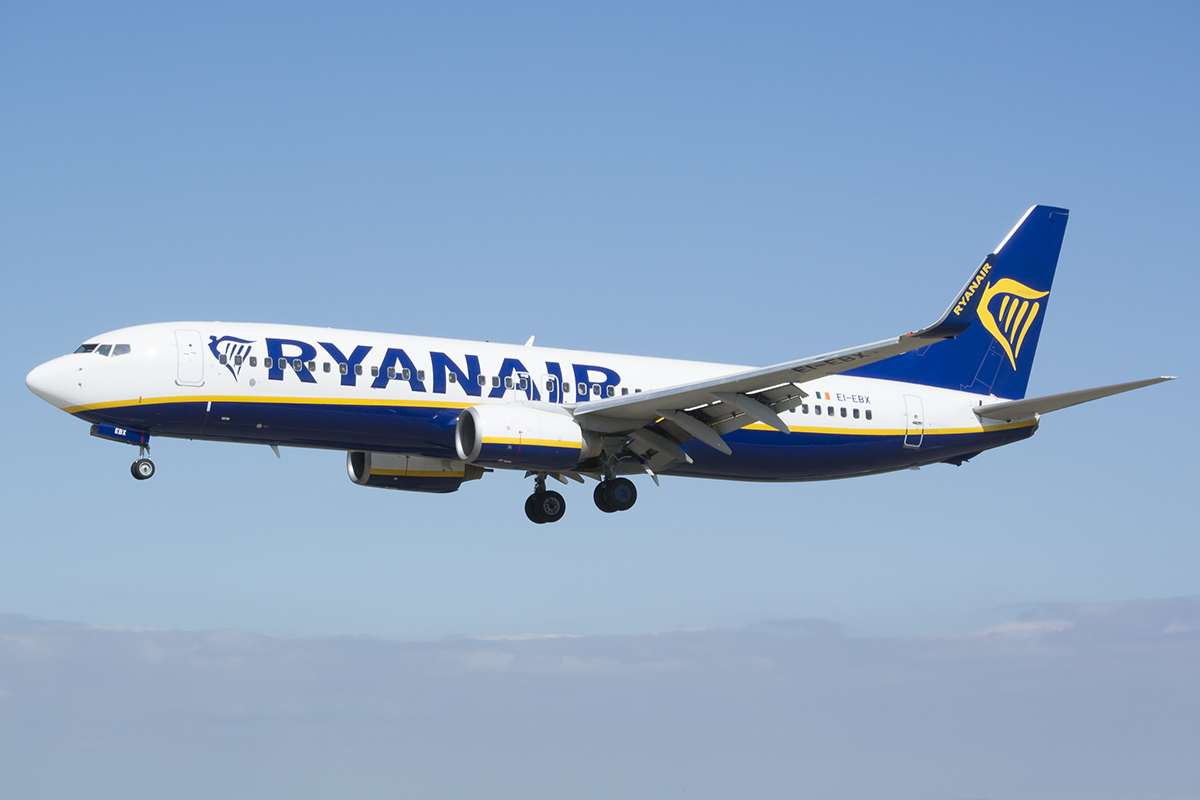
On July 10, 2026, a fan blade broke off the right engine of a Boeing 737-800 operated by Malta Air, a Ryanair Group subsidiary, as it climbed through about 16,000 feet over northern Greece, roughly ten minutes after takeoff from Thessaloniki, bound for Memmingen, Germany. The impact punctured the fuselage, left a dent near row 8, damaged the horizontal stabilizer, and caused the cabin to rapidly depressurize. Debris from the engine tore into the fuselage and shattered a cabin window in row 11, and the passenger seated next to it, 61-year-old Ljubisa Karovic, a Serbian entrepreneur, was partially pulled through the opening before his wife and others nearby pulled him back inside. Pilots first noticed a high-vibration warning from the engine, and about two minutes later heard a loud bang as the autopilot disengaged; they then leveled off, shut down the damaged engine, and turned the plane back to Thessaloniki, landing safely about 20 minutes later. No one on board died; Karovic was the only passenger seriously hurt among the 149 passengers and six crew, and no other passenger or crew member was reported physically harmed.
Key facts
- When: July 10, 2026, about 16,000 feet over northern Greece, roughly 10 minutes after takeoff from Thessaloniki, bound for Memmingen, Germany
- What happened: a fan blade broke off the right engine of a Ryanair Group (Malta Air) Boeing 737-800; debris shattered a cabin window in row 11
- Injured: passenger Ljubisa Karovic, 61, was partially pulled through the window and suffered neck, shoulder, and spine-related injuries and friction burns; he has since been discharged from the hospital
- On board: 149 passengers and six crew; no deaths, no other injuries reported
- Outcome: pilots shut down the damaged engine and landed safely back in Thessaloniki about 20 minutes later
- NTSB (National Transportation Safety Board) report: released Thursday, August 13, 2026 — the failed part was fan blade number 10 in the right-side CFM56-7B26 engine
- Findings so far: about 37% of the fracture surface showed signs of metal fatigue; bird remains and feathers were also recovered from the engine
- Investigation status: case DCA26FA274 remains open; no cause has been determined
What investigators found
More than a month later, the U.S. National Transportation Safety Board released a preliminary report on the accident on Thursday, August 13, 2026. It does not yet say what caused the blade to fail, but it lays out two possible explanations investigators are weighing.
The failed part was fan blade number 10 in the plane’s right-side CFM56-7B26 engine, which fractured near its root. The NTSB’s report says roughly 37% of the broken surface showed features consistent with metal fatigue — gradual weakening from repeated stress that engineers test for. The report doesn’t say what the rest of the surface showed. Separately, investigators recovered bird remains and feathers from inside the same engine and sent them to the Smithsonian’s Feather Identification Lab for analysis. Flight crews had logged several suspected bird strikes involving that engine over the previous year, and remains were found after some of those earlier incidents as well. The engine’s fan blades had passed ultrasonic inspections, which check for hidden cracks, in November 2025 and again in May 2026, with no damage found either time.
Investigation status
The NTSB has not said whether fatigue, a bird strike, or some combination of the two caused the blade to break. Case DCA26FA274 remains open, and the report released this week is preliminary; a final report with a determined cause has not been issued. Greece’s civil aviation authority handed the investigation to the NTSB on July 16, 2026, with the FAA (Federal Aviation Administration), Boeing and GE Aerospace taking part as technical parties.
Ryanair’s CEO clashes with NTSB
That hasn’t stopped Ryanair Group chief executive Michael O’Leary from offering his own read on the cause. He said initial indications suggested the damage looked like “foreign object damage” — industry language for something like a bird strike hitting the engine. NTSB Chair Jennifer Homendy pushed back, saying the agency has made no such determination. In a letter to O’Leary reported by media, Homendy said his comments violated the NTSB’s rules on public disclosure of investigative information.
The passenger’s account versus Ryanair’s statement
Ryanair’s own public statement described the incident in milder terms than the passenger who lived through it. The airline said a passenger window “dislodged inflight,” that the aircraft “landed normally,” and that one passenger received medical assistance on the ground; a replacement aircraft left for Memmingen later that same morning. In interviews with journalists, Karovic has since described his injuries — to his neck and shoulder, along with friction burns and spine-related injuries — and said the experience left him with lasting psychological trauma, including panic attacks. He has since been discharged from the hospital.
A broader safety gap
The accident has also drawn attention to a broader safety gap — one involving the housing around the engine, not the blade itself. In 2025, following the 2018 Southwest Airlines Flight 1380 accident — in which a CFM56-7B fan blade fractured from metal fatigue and cowl debris fatally struck a passenger through a window — the FAA acted on the resulting NTSB safety recommendations and ordered airlines to reinforce the fan cowls, inlet cowls and exhaust-nozzle brackets — protective housing and hardware that wraps around the engine. That housing is built to contain debris if a blade breaks apart; it isn’t designed to stop a blade from breaking in the first place. The order covers roughly 2,000 U.S.-registered Boeing 737 Next Generation jets — the whole 737 NG family — powered by CFM56 engines. Airlines have until July 31, 2028 to finish the retrofits. The Ryanair-operated jet involved in the July 10 accident had not yet been retrofitted, but that 2028 deadline had not passed — the plane broke no FAA rule by flying without it.
A fake photo debunked
Separately, a widely shared photo claiming to show the damaged cabin has turned out to be fake. The fact-checking group Full Fact examined the image and found signs it was artificially generated rather than photographed; genuine photos and video from a passenger on the flight exist and circulated separately, showing damage that looks different from the fabricated image.
What happens next
What comes next is a final NTSB report, which typically follows months after a preliminary one and is expected to state a probable cause. Until then, the question of exactly what broke that blade — wear, a bird, or some mix of both — remains open.