Alaska held its statewide primary on August 18, 2026, and the early numbers show Democrat Mary Peltola ahead of Republican incumbent Sen. Dan Sullivan, a crowded governor’s field currently led by two Democrats, with the top four in the Senate race still unsettled. AP has reported that Nick Begich and Bill Hill advanced in the House race, that Jonathan Kreiss-Tomkins and Tom Begich advanced in the governor’s race, and that voters approved the ballot measure to limit campaign donations. None of this is officially certified yet. With more ballots still to count and certification not scheduled until later this month, every figure below is preliminary and could still move.
Key facts
- Senate: Peltola leads with 63,364 votes (48.04%); Sullivan has 56,510 votes (42.84%)
- Fourth Senate spot: David Leslie (1,491 votes) vs. Gerald Heikes (1,468) — a 23-vote gap
- House: Nick Begich III leads with 59,750 votes (46.15%); Bill Hill has 40,076 (30.95%) — AP reports both have advanced to the general election
- Governor: Jonathan Kreiss-Tomkins (~22%) and Tom Begich (~20%) lead a 17-candidate field — AP reports both have advanced to the general election
- Ballot Measure 1 (donation limits): approved, per AP — 90,749 to 35,466 in the count, about 72% support
- About 94% of precincts statewide had reported in the most recent tally
- Certification: the published timeline lists August 31, 2026 for official certification
How Alaska picks its candidates
Alaska does elections its own way, and it trips up first-time watchers every cycle: there’s no separate Republican primary or Democratic primary here. Every candidate for an office — Republican, Democrat, independent or otherwise — appears together on one ballot, and the four candidates with the most votes advance to the general election in November, regardless of party. That general election is decided by ranked-choice voting: voters rank the four finalists in order of preference, and if no one has a majority, the last-place finisher is dropped and those votes go to whichever candidate their supporters ranked next. The process repeats until someone crosses 50%. So the August 18 primary didn’t produce a winner in any race — it narrowed each contest to four names ahead of the fall vote.
Senate: Peltola ahead, with two Dan Sullivans on the ballot
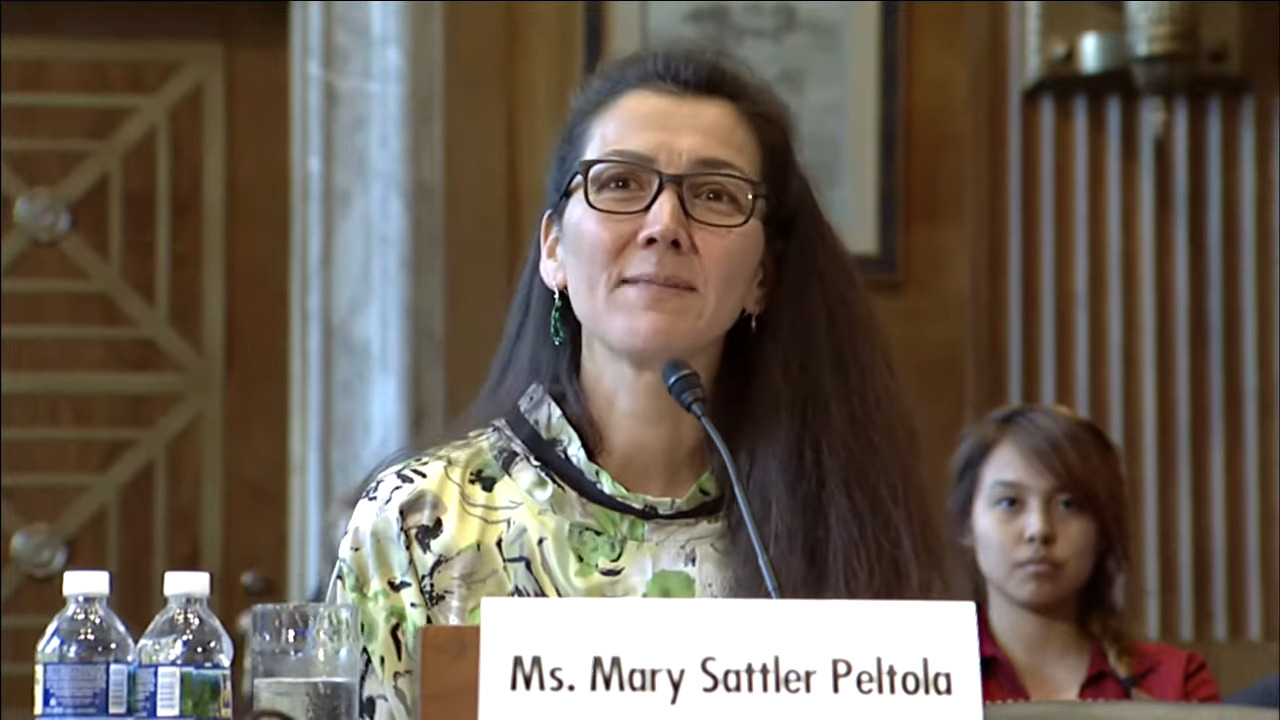
As vote-counting continued through the night of August 18 into August 19, Peltola led with 63,364 votes (48.04%), and incumbent Sen. Dan Sullivan followed with 56,510 votes (42.84%). AP reported both had begun their general-election campaigns, though it was still too early to call all four Senate finalists. Peltola served as Alaska’s U.S. Representative from 2022 to 2025 before running for Senate, and Sullivan is seeking a third term with President Trump’s endorsement — a matchup national outlets have described as a competitive race for the seat.
The race also includes an unusual wrinkle: a third candidate who shares the senator’s name. Daniel J. Sullivan, a retired teacher from the Southeast Alaska town of Petersburg with no known relation to the incumbent, sat in a clear third place with 3,222 votes, about 2.4% of the vote. His candidacy became a fight of its own this summer — critics, including the incumbent’s campaign, have called him a “decoy” meant to confuse voters, which he denies. The concern is that two Republican candidates with the same surname could split the party’s vote. Republicans challenged his ballot eligibility over the name similarity, but a state judge and the Alaska Supreme Court both allowed him to stay on the ballot. The dispute has since escalated: NBC News reported Aug. 18 that the Justice Department has issued grand jury subpoenas as part of an investigation into whether his candidacy was intended to confuse voters. An investigation is not a finding of wrongdoing, and no charges have been filed; Sullivan denies any such intent.
Behind him, the race for the fourth and final Senate spot is tighter still: Democrat David Leslie held 1,491 votes to Republican Gerald Heikes’s 1,468 — a 23-vote gap. That spot isn’t settled yet — statewide, the count stood at roughly 94% of precincts reporting in the most recent tally reviewed, so ballots remain before it’s decided.
House: Begich holds a wide lead
Incumbent Republican Rep. Nick Begich III led the U.S. House primary with 59,750 votes (45.01%), followed by independent Bill Hill with 40,076 votes (30.12%), Matt Schultz with 10,435 votes (7.86%) and Eric Hafner with 4,924 votes (3.71%). Fifteen candidates ran for the seat in all.
Governor: two Democrats out front in a mostly Republican field
One report counted 12 Republicans, three independents and two Democrats in the 17-candidate field.
Gov. Mike Dunleavy is term-limited and could not run again, leaving an open seat that drew 17 candidates, most of them Republicans — a field that had already lost one prominent name when Lt. Gov. Nancy Dahlstrom, a Republican, dropped out of the race on June 1, 2026, nearly three months before the primary. In the early count, though, two Democrats led: Jonathan Kreiss-Tomkins with roughly 21% of the vote and Tom Begich with roughly 20%. Republicans Bernadette Wilson and Dave Bronson followed, with about 10% and 8% respectively. Several other Republican candidates — including former Attorney General Treg Taylor, Click Bishop, Adam Crum and Shelley Hughes, along with independent Bill Walker — trailed closely enough behind that the current top four were not secure and the November lineup could still change as outstanding ballots are counted. One notable footnote: AP reports Tom Begich is Rep. Nick Begich III’s uncle, putting two members of the same family in separate 2026 races on opposite sides of the aisle.
Voters also decided a campaign-finance measure
Alongside the candidate races, Alaskans voted on Ballot Measure 1, which would reinstate limits on political donations — a $2,000 cap per candidate every two years for individuals and $4,000 for political groups, with future adjustments for inflation. Alaska has had no contribution limits since a court struck down its previous caps in 2021. In the early count, the measure was ahead by roughly 2.5 to 1 — about 90,749 votes in favor to 35,466 against, or about 70% support. If that holds, the new limits would take effect after the November general election. This was voters’ only chance to weigh in on the measure — it won’t appear on the ballot again in November.
What happens next
Every result above is unofficial, drawn from Alaska’s Division of Elections count as tracked by state news outlets through the night of August 18 into August 19 — and at that point, roughly 94% of precincts statewide had reported, so some ballots remained to be added in every race above. The state’s published timeline runs:
- August 25 and August 28: additional ballot counts covering absentee and other outstanding ballots
- August 31, 2026: the published timeline’s target for official certification
- November 3, 2026: general election, where the four primary finalists compete in a ranked-choice election
Sources and further reading
- U.S. Senator (Vote for 1) State of Alaska 2026 PRIMARY — Election Summary Report
- Sen. Sullivan, former US Rep. Peltola begin Alaska US Senate campaign after advancing from primary (AP News)
- DOJ issues grand jury subpoenas in dueling Dan Sullivans’ Republican Senate saga (NBC News)
- Election Information