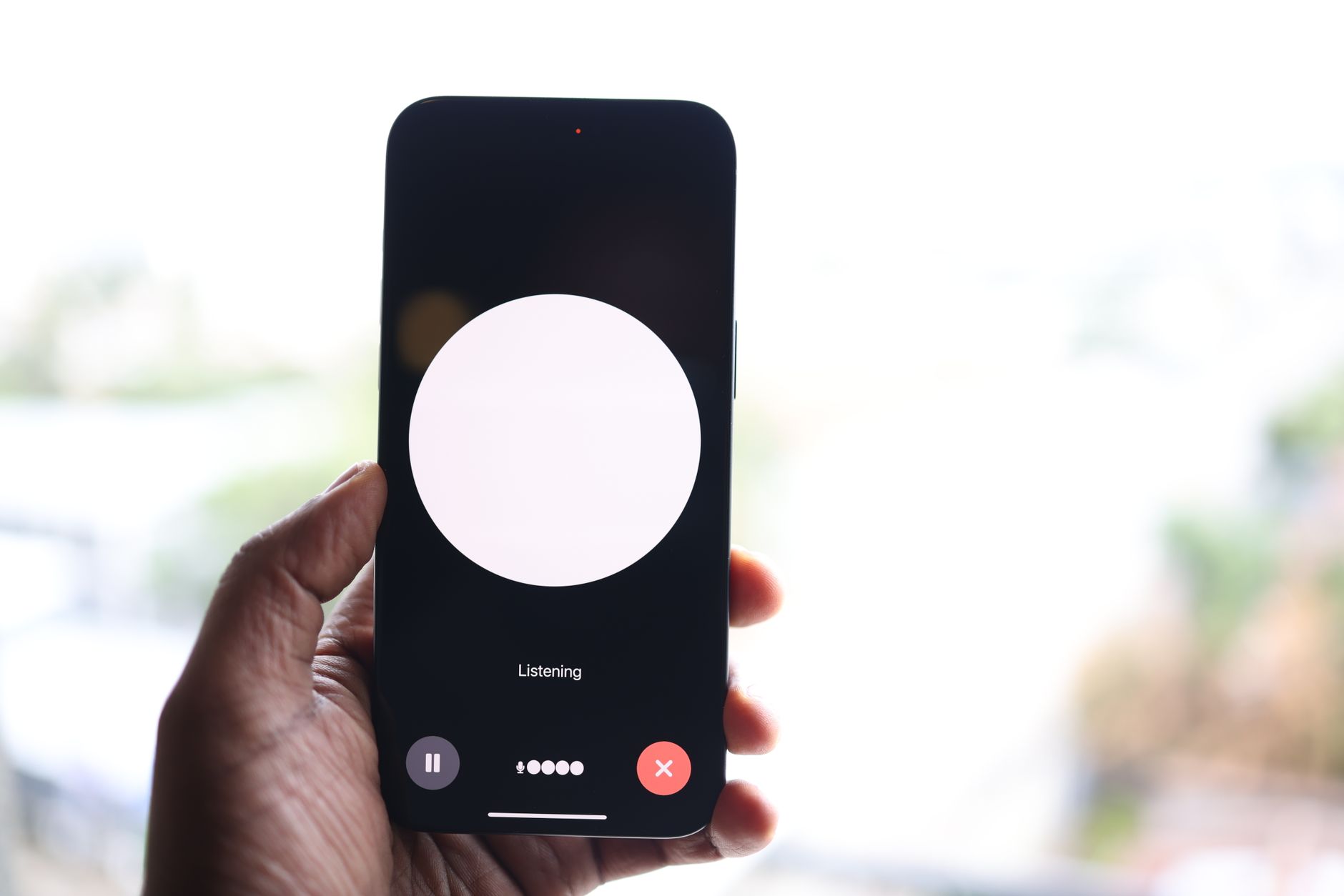
Apple shipped iOS 27 on Monday with a rebuilt assistant called Siri AI, roughly 27 months after the company first promised it at WWDC 2024 — and the update reaches only some users, in some countries, as an opt-in beta.
Apple released iOS 27 on Monday, September 14, 2026, a free software update for existing iPhones that includes the company’s rebuilt voice assistant, Siri AI. Apple’s own newsroom announcement put it simply: “The new features start rolling out today.” The release is software-only — it is not tied to any new hardware launch. Apple describes Siri AI as “a profoundly more capable and conversational assistant with personal context understanding, broad world knowledge, onscreen awareness, and even more systemwide app actions.”
A promise made in June 2024, delivered in September 2026
The version of Siri that shipped this week is not the one Apple originally promised. Apple first unveiled its overhaul plan for Siri — personal context, onscreen awareness, in-app actions — at WWDC in June 2024. It did not arrive on schedule.
In March 2025, Apple went on the record about the slip. Spokeswoman Jacqueline Roy told multiple outlets: “It’s going to take us longer than we thought to deliver on these features and we anticipate rolling them out in the coming year.” That September, iOS 26 shipped without the promised personalized Siri features at all.
In January 2026, Apple and Google jointly announced a multi-year partnership, saying “the next generation of Apple Foundation Models will be based on Google’s Gemini models and cloud technology,” and promising “a more personalized Siri coming this year.” Even that timeline slipped again: reporting in February 2026 said the Gemini-powered Siri work had been pushed past the iOS 26.4 update, and the beta that shipped that month indeed arrived without it.
Apple formally unveiled Siri AI, under its new name, at WWDC in June 2026 — describing it then as an upcoming beta rather than a finished release. It reached the public three months later, on September 14, still labeled a beta. Measured from the original 2024 promise, that is roughly 27 months, with one on-the-record delay confirmation and a second reported slip in between.
What’s actually new
Siri AI’s headline capabilities, per Apple, include conversational follow-ups, awareness of what’s on screen, the ability to search across a user’s own Mail, Messages, Notes, Photos and Calendar, an expanded version of Visual Intelligence now reaching iPad, Mac and Vision Pro, and broader systemwide actions such as drafting emails or editing photos on command. Siri has also gained a new architecture piece: in addition to the existing voice-activation, side-button and systemwide interactions, it now also has its own dedicated app, with conversation history synced through iCloud.
Apple says the new capabilities are “powered by the next generation of Apple Foundation Models, custom-built in collaboration with Google and its Gemini models for deeply integrated Apple Intelligence experiences.” The company says the processing still happens on-device or through its own Private Cloud Compute infrastructure, and that personal data used in that processing is “not stored nor made accessible to Apple or anyone else.”
The feature is free with the iOS 27 update. Apple says current and future Siri AI/Apple Intelligence features may be subject to daily usage limits — no specific threshold has been published — separate from a further, forward-looking caveat in Apple’s release: “expanded access to such features will be available for a fee in the future.”
Not on by default — and not for everyone yet
Even on a fully compatible device, Siri AI does not turn on automatically. A user has to go into Settings, find Siri, and choose “Try Siri AI (beta)” — and may then be placed on a waitlist before access is actually granted. Some eligible users have reported being stuck waiting for days.
Which devices qualify also varies by tier. iOS 27 itself installs on iPhones going back several years, but only iPhone 15 Pro and newer models get the baseline version of Siri AI and Apple Intelligence — several generations of eligible phones, not just the most recent two. A further set of features, including expressive Siri voices and advanced dictation, is limited to Apple’s newest, highest-RAM current iPhones, because, according to two independently reviewed outlets, the on-device model powering those features needs at least 12GB of RAM. Other Apple-Intelligence-eligible iPhones, including lower-RAM models, still get the rest of Siri AI’s new capabilities. Apple silicon Macs, recent iPads, recent Apple Watches and Vision Pro also get the baseline tier. Users under 13 cannot use Siri AI at all.
Separately, there’s a second, distinct opt-in: Settings > Privacy & Security > Analytics & Improvements > “Improve Siri & Apple Intelligence.” Turning that on lets Apple use a person’s text and audio interactions to help improve its models. Apple says that data is tied to “a random, device-generated identifier that rotates multiple times per hour” rather than to the user’s Apple Account — a separate choice from simply switching Siri AI on.
The rollout is staggered in other ways, too. Siri AI is English-only at launch; French, Japanese, Korean, Portuguese and Spanish support is due in October with the iOS 27.1 update. Features including “Live Rewind,” “Siri Recap” and a redesigned Health app are not part of this week’s release at all — Apple lists them as coming later.
No launch in the EU, and Apple names the reason
Siri AI is not available at launch on iPhone, iPad or Apple Watch in the European Union. Apple’s dedicated release is direct about why, pointing to the EU’s Digital Markets Act: “Under EU regulators’ extreme interpretation of the DMA, Apple would have to give any virtual assistant direct access to users’ private data — and the ability to directly control other installed applications.” The restriction is specific to those platforms — Apple says EU users can still get Siri AI on Mac and Vision Pro. As of this week’s ship date, the exclusion on iOS, iPadOS and watchOS is still in effect. China is also excluded from Siri AI at setup.
Apple flagged its own bugs before shipping
Apple’s release-candidate notes disclosed eight known issues ahead of launch, most with a workaround, rather than leaving them for users to discover. Examples cited include Siri potentially reading an unread message from an unknown sender when asked to read “your last message” (workaround: name the sender directly), Siri clipping the ends of words during spoken navigation directions, and a follow-up request like “send these” after a photo search sometimes applying to every photo returned rather than just the ones a user selected.
An early hands-on review from Six Colors, published the day of launch, was largely positive — “a marked improvement… in everything from design to performance” — while noting concrete misses, including missing a text message’s date reference and occasional misheard words. The review’s broader caution: “Siri AI sometimes misunderstands or gives confidently wrong answers.”
The competitive backdrop
Siri AI arrives as rival assistants are also shifting. Google is retiring Google Assistant on Android mobile devices and paired accessories in favor of Gemini, a change that began in early September 2026 (Assistant remains available on some other Google products). Amazon’s Alexa+ reached the UK on March 19, 2026, free for Prime members and built on Amazon’s own Nova models along with Anthropic’s — reporting has framed its differentiator as more mature “agentic” actions, like booking or adding calendar events from an email, than Siri AI or Gemini currently offer.
The launch also lands two weeks into a leadership change at the top of Apple. Tim Cook became Executive Chairman and John Ternus — formerly the company’s SVP of Hardware Engineering — became CEO on September 1, 2026, a transition Apple announced back in April. iOS 27 and Siri AI are the first major Apple software release under Ternus rather than Cook.