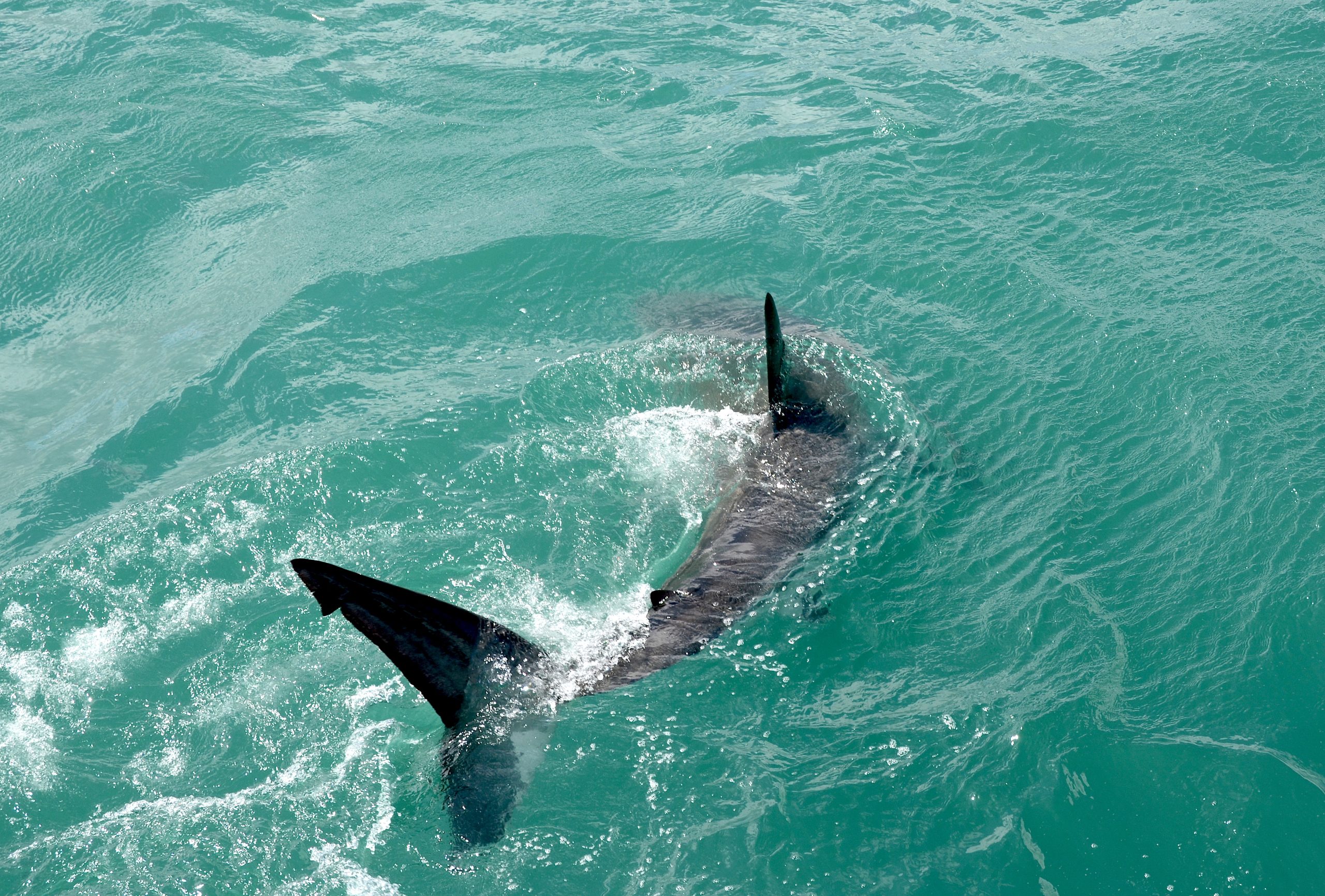

Charter boats out of Chatham now head offshore up to three times a day in season, loaded with visitors hoping to see a great white shark. The animals once associated with beach danger are now the focus of shark-watching trips. Cape Cod’s tourism economy generated $2.776 billion in direct visitor spending in 2024. That was up from $2.699 billion in 2023, according to the Cape Cod Chamber of Commerce’s own reporting on its website. By the Chamber’s own count, that 2024 spending supported 14,080 jobs and generated $259.1 million in state and local tax revenue. In 2024, Cape Cod accounted for roughly 11.5% of Massachusetts’ $24.2 billion in statewide visitor spending.
Key facts
- 2024 spending: $2.776 billion in direct visitor spending, up from $2.699 billion in 2023 (Cape Cod Chamber of Commerce)
- Real growth: about 2.9% year-over-year — not the roughly 40% figure that has circulated this month
- Jobs supported: 14,080
- Tax revenue generated: $259.1 million in state and local taxes
- Statewide share: Cape Cod accounted for roughly 11.5% of Massachusetts’ $24.2 billion in statewide visitor spending in 2024
- Shark-tourism link: no data quantifies how much of that spending comes specifically from shark tourism — the shark boom and the tourism record are related trends, not a proven cause-and-effect link
Why the sharks keep coming back
Researchers trace the sharks’ return to their food supply. Cape Cod’s gray seal population grew from roughly 2,000 animals in 1994 to an estimated 30,000 to 50,000 by 2017, after the seals were protected under the 1972 Marine Mammal Protection Act. A 2023 study in the peer-reviewed journal Marine Ecology Progress Series estimated that roughly 800 individual white sharks visited Cape Cod waters between 2015 and 2018, enough to make the area one of the world’s larger seasonal white-shark hot spots. The Atlantic White Shark Conservancy (AWSC), the group that studies and tags many of those sharks, says it has found no evidence the population has grown more aggressive or started hunting closer to shore — the animals are simply more numerous, and more visible, than they used to be.
Correcting a widely repeated figure
That year-over-year jump — about $77 million — is the figure the Chamber has actually published. A different, more dramatic comparison has circulated widely this month: it stretches back to 2019 and describes what would be a roughly 40% jump. That figure was repeated in a Fox News Digital feature published Sept. 6, 2026, and in syndicated republications across Fox-affiliate and radio-station news sites, with the figures attributed to the Chamber; the feature concerned the tourism trend, not a new Cape Cod attack. But the research for this article could not independently locate that older comparison figure on the Chamber’s own site; the Chamber pages reviewed here show $2.699 billion in 2023 and $2.776 billion in 2024. The real year-over-year growth those confirmed figures show is about 2.9%, not 40%. Readers who want a reliable measure of how fast the Cape’s tourism economy is actually growing should use that confirmed figure, not the wider, unverified comparison.
What a charter trip looks like
AWSC’s 2026 season runs July 6 through October 13. Trips last about 2.5 hours and use a spotter pilot to find sharks from the air, with an AWSC naturalist aboard. On its own site, AWSC lists an open-boat seat at $500 per person and a private charter — up to six passengers — at a flat $2,500, part of which is tax-deductible because it supports AWSC’s research, with a $500 deposit and the balance due at the end of the trip; AFAR has reported private group expeditions as high as $2,650, so reported private-group prices vary by source. Private charters routinely book up weeks to a month ahead. Guests aren’t just watching: they log sightings in the Sharktivity app, use a hydrophone to listen for acoustically tagged sharks, and contribute observations to AWSC’s White Shark Logbook, which now catalogs more than 700 individual sharks. “We can just come out of the inlet and they’re all right there,” AWSC naturalist Hannah Leary has said, describing how the fear that followed “Jaws” has shifted for many visitors. “We just had the 50th anniversary of ‘Jaws’ last year, and we came to realize that a lot of the fear has been turned into fascination.”
Staying safe on the beach
The National Park Service tells beachgoers to swim, paddle or surf in groups, stay away from areas where seals are present, avoid murky water, and limit splashing. Since 2019, some Outer Cape towns have also equipped remote beaches with “Stop the Bleed” kits — bleeding-control dressings, gloves and eye protection meant to treat trauma including shark bites where cell service and ambulance response are limited — though whether every kit is still stocked this season wasn’t something this reporting could confirm. At lifeguarded Cape Cod National Seashore beaches, a purple flag with a white-shark silhouette goes up when a shark is sighted, and the water closes until officials judge it safe again; away from lifeguards, visitors are told to call 911 or report a sighting through the Sharktivity app. Since 2012, NPS records show three shark bites in Truro and Wellfleet waters, one of them fatal: in September 2018, a 26-year-old bodyboarder died after being bitten off Newcomb Hollow Beach in Wellfleet — the first fatal shark attack in Massachusetts since 1936. No new 2026 Cape Cod shark attack or bite was found in this research; the most recent fatal Cape Cod attack remains the September 2018 incident. The most recent nearby report found in this research came on August 31, 2026, when a woman suffered a non-life-threatening leg injury consistent with a marine-animal bite in shallow water at Norton Point, on Martha’s Vineyard — a separate island, not Cape Cod — and officials suspected a sandbar or sand tiger shark rather than a great white.
The park’s side of the ledger
Cape Cod National Seashore itself drew about 3.8 million visitors in 2024, who spent $598 million directly in nearby communities, for a cumulative local economic benefit of $754 million and 5,385 supported jobs, according to the National Park Service. That’s down modestly from a 2021 peak of just over 4 million visits, even as the Cape’s overall tourism spending keeps climbing — a sign that the sharks, the seals and the summer crowds are pulling people to the region in somewhat different ways than a decade ago.
Sources and further reading
- Man dies as a result of a shark bite at Cape Cod National Seashore
- Stay Shark Smart at Cape Cod National Seashore Beaches this Fall
- Shark Safety at Cape Cod
- Tourism to Cape Cod National Seashore contributes $754 million to local economy
- Tourism to Cape Cod National Seashore contributes $754 million to local economy
- Cape Cod National Seashore Urges Residents & Visitors to be Shark Smart This Summer
- Cape Cod: Thriving on Its Own Terms