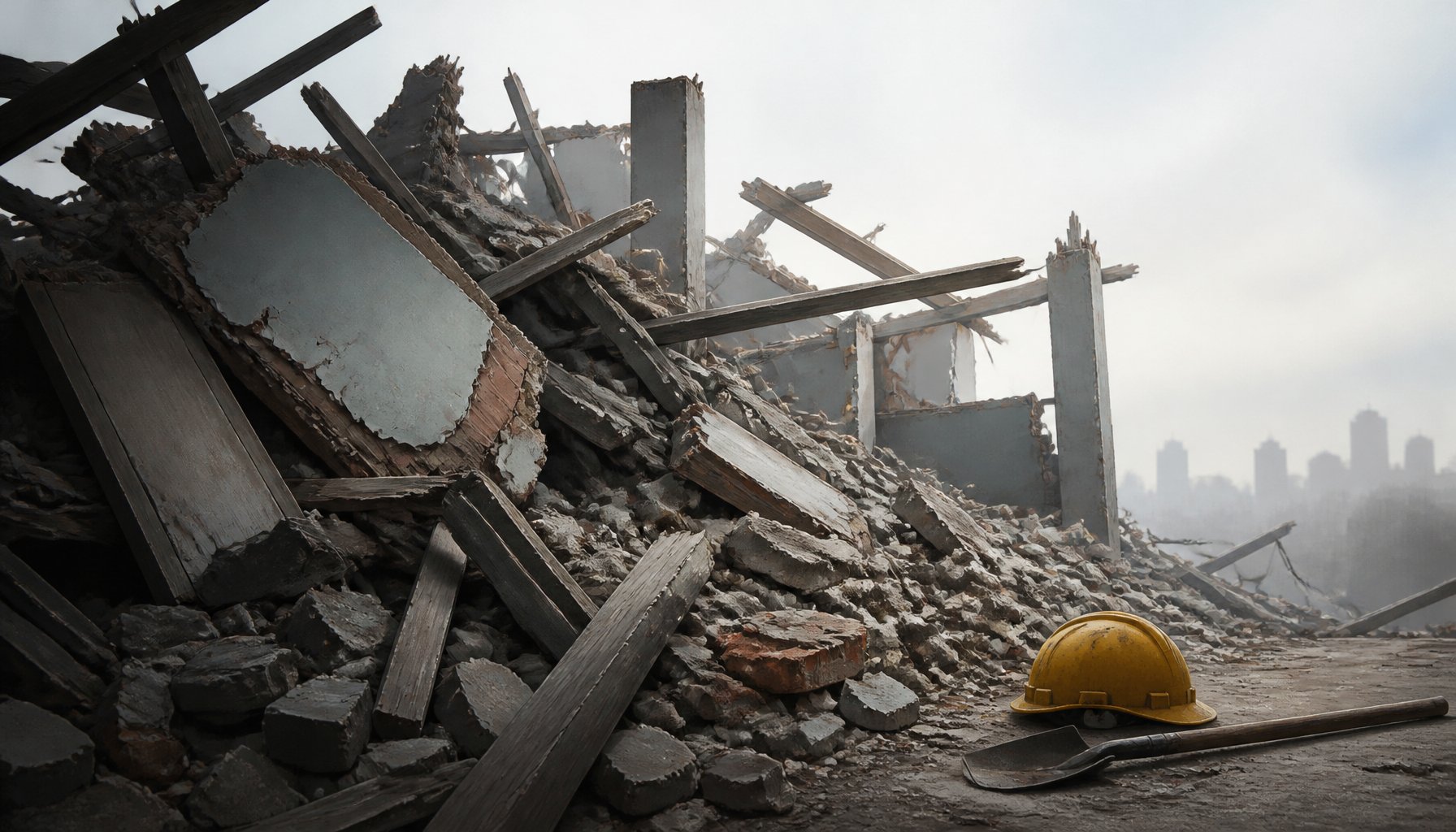
A gold mine collapsed on Tuesday, August 18, 2026, in the village of Zamboye, in the Nana-Mambéré prefecture of western Central African Republic, near the border with Cameroon. The death toll, initially put at “at least 30” on the day of the collapse, has since climbed past 100. As of Thursday, August 20, rescue and recovery work was continuing, but hope of finding more survivors was fading.
Zamboye is in western Central African Republic, near the border with Cameroon. The site was a low-tech, open-pit artisanal mine — the kind of informal operation where hundreds of miners typically dig for gold by hand rather than with industrial equipment. At this site, that work included underground tunnels as well as the open pit itself. The prosecutor at the Baboua sub-prefecture court said the ground collapse was believed to have resulted from several underground tunnels giving way while miners were working, burying an unknown number of people beneath earth and rubble. The exact technical cause is still under investigation.
Key facts
- What: The Baboua prosecutor said the ground collapse was believed to have resulted from several underground tunnels giving way while miners were working; the exact technical cause remains under investigation
- Where: Zamboye village, Nana-Mambéré prefecture, western Central African Republic, near the Cameroon border
- When: Tuesday, August 18, 2026
- Death toll: More than 100, up from an initial count of “at least 30”
- Search status: Rescue and recovery continuing as of Thursday, August 20; hope of finding survivors fading
- Investigation: The Baboua public prosecutor’s office has opened a judicial inquiry; no one has been charged
Timeline
- Tuesday, August 18 — The Baboua prosecutor said the collapse was believed to involve several underground tunnels giving way in Zamboye; early reports cited about 30 dead.
- Wednesday, August 19 — Death toll continues climbing, passing 100.
- Thursday, August 20 — More than ten additional bodies recovered that morning; search continues, but hope of finding survivors fades.
The death toll is still climbing
The scale of the disaster only became clear gradually. On the day of the collapse, early reports cited roughly 30 people killed. By Wednesday and again on Thursday, that figure had risen past 100, with local officials warning it was likely to rise further as search teams kept working. The rising toll has been reported by a local mining association official, a Red Cross volunteer involved in relief efforts, and wire reporting. More than ten additional bodies were recovered on Thursday morning alone. Several people remain missing or trapped under the rubble, though no source has given a precise count. Separately, the country’s Mines Minister, Rufin Benam Beltoungou, has given a lower, itemized official count of 49 dead — 35 Central Africans, 12 Cameroonians and 2 Chadians — and ordered the mine closed on that basis. The two figures have not been reconciled; they appear to reflect different points in an ongoing count rather than a resolved single total.
Rescuers are working with their bare hands
Two days after the collapse, workers at the site said they lacked the equipment and expertise needed for a disaster of this size, relying on rudimentary tools — and in many cases their bare hands — to clear the earth. Bertrand Be Yangué, a member of the Zamboye youth council, said several people were still missing and trapped, adding: “Finding them alive would be a miracle.” Souleymane Bi, a deputy mayor in the area, described the scene as “horrible” and said local officials were “calling for help.”
Video circulating on social media reportedly shows part of the mining ground giving way and burying people, though its authenticity and exact timing have not been independently confirmed.
The Baboua prosecutor has opened an inquiry
Zamboye sits roughly 31 miles from Baboua, both in the Central African Republic, and a few kilometers from the border town of Garoua-Boulaï, on the Cameroonian side of the frontier. The Baboua public prosecutor’s office has opened a judicial inquiry into the collapse. Investigators are working to determine the cause of the collapse, identify the victims, and assess whether those operating the mining site bear any criminal responsibility. No individual or company has been charged as of the latest reporting.
Local officials have appealed for outside help given the limits of the equipment on hand.
Why this keeps happening
Artisanal gold mining is a major source of income for people in parts of Central African Republic and across the region. But the sites are typically unregulated, with little in the way of formal safety protections, and that leaves them vulnerable to exactly this kind of tunnel and ground collapse. Central African Republic alone has recorded several other fatal mining incidents in 2026, including a collapse at Be-Mbari in June that reportedly killed several dozen people, a landslide in Ngourroum in March that killed seven people, and an incident in Gordi in February. Those are separate from the Zamboye collapse. Elsewhere in the region, the Rubaya coltan mining site in North Kivu, Democratic Republic of Congo, saw landslide-triggered collapses on January 28 and March 4, 2026, that killed more than 400 and more than 200 people, respectively. All are different events, but together they show how often deadly mining disasters have struck the region in 2026.