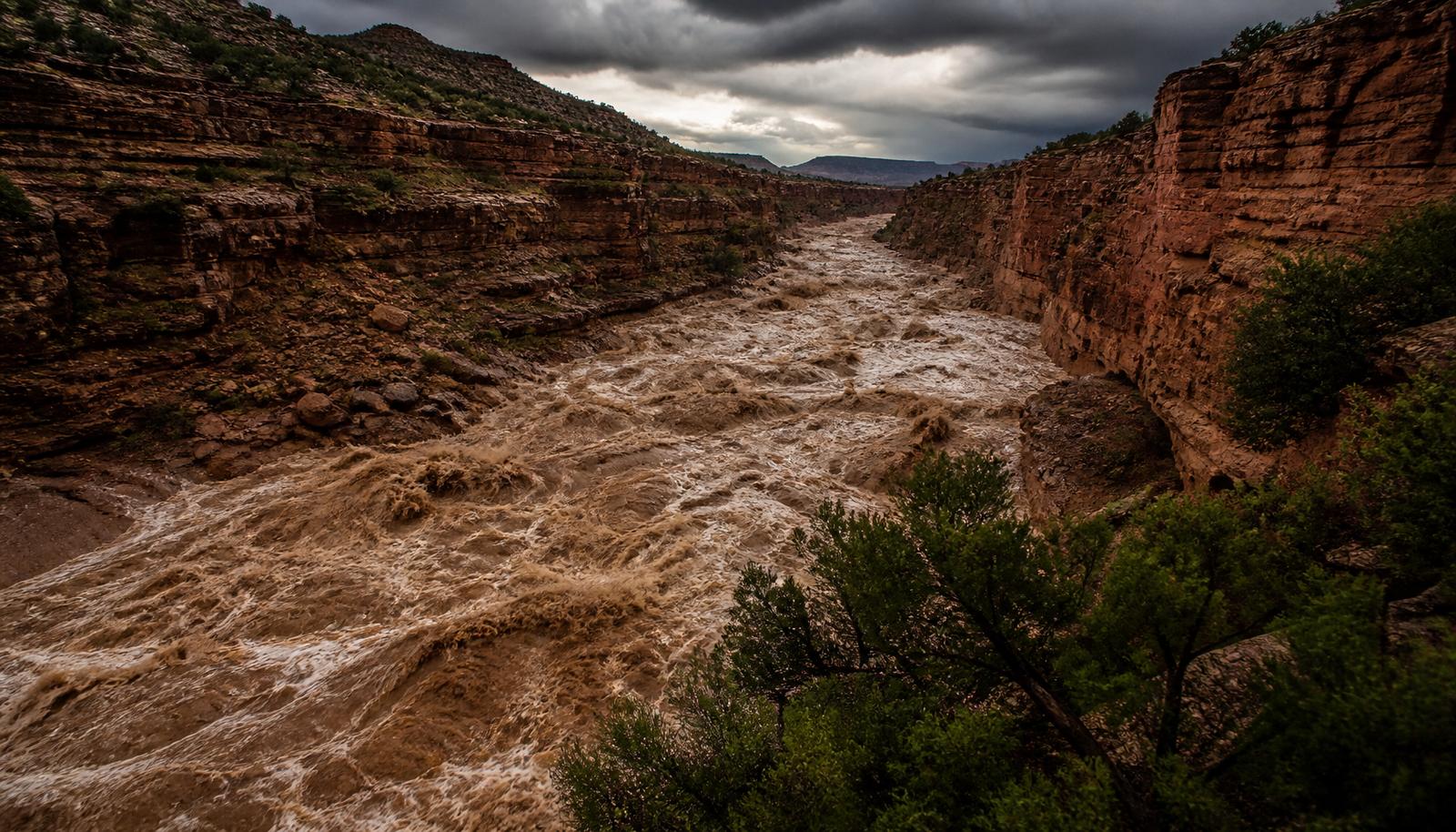
A flash flood tore through the bottom of the Grand Canyon on Saturday, August 29, 2026, at around 2:30 p.m. local time, killing two people and leaving roughly 15 others missing or unaccounted for as of Monday, August 31. The flood struck Bright Angel Canyon and the Phantom Ranch area, a stretch of Grand Canyon National Park in Coconino County, Arizona, that sits on the canyon floor near the Colorado River and can only be reached on foot, by mule, or by river — not from the more heavily visited South Rim overlooks.
Search and recovery work was still active as of the most recent reporting, and a flood watch remained in effect for the area through at least Monday evening, with the National Weather Service warning that more thunderstorms could bring additional flash flooding, debris flow and rockfall to the same terrain.
Key facts
- Toll: Two confirmed dead; about 15 more missing or unaccounted for as of Monday, August 31
- When and where: Bright Angel Canyon and Phantom Ranch, Saturday, August 29, around 2:30 p.m. local time
- Missing count: Revised down from more than 20 (Sunday morning) to about 15 (Sunday night into Monday)
- Named victim: Dr. John Giusti, 46, of Granbury, Texas — identified by family, not officials
- Second victim: A man, also 46, found near Crystal Rapids; not publicly identified
- Evacuated: About 62 people, many airlifted by helicopter, to Maswik Lodge Cafeteria on the South Rim
- Damage: Most Bright Angel Creek footbridges destroyed; about 40% of the Transcanyon Waterline damaged
- Restrictions: Stage 4 water restrictions on the South Rim starting noon, August 31
- Closures: Phantom Ranch, Bright Angel Campground and the North Kaibab Trail closed until further notice
How many are missing has changed as officials recheck
The number of people the National Park Service describes as missing or unaccounted for has moved as the agency works through its list. On Sunday morning, NPS put the figure at more than 20 possibly missing. By Sunday night into Monday, that count had been revised down to approximately 15, as officials continued cross-checking who had already been reached or accounted for. Two deaths are confirmed. The Park Service has cautioned that the missing count is still subject to change as more information comes in, and no final tally — of the missing or the dead — has been released.
One victim named by family, not by officials
The National Park Service has not released the identities of the two people confirmed dead. Family members have told several news outlets that one of the victims is Dr. John Giusti, 46, a chiropractor from Granbury, Texas, who had been camping at Bright Angel Campground since the Friday before the flood. That identification comes from the family, not from an official Park Service or medical examiner release. The second person killed is a different individual: a man, also 46, whose body was recovered near Crystal Rapids on the Colorado River. His identity has not been made public. The Coconino County Medical Examiner’s office is investigating both deaths. The fate of those still missing is not yet known.
What the flood damaged
The flood destroyed nearly all of the footbridges spanning Bright Angel Creek, cutting off pedestrian crossings in the area, and also closed the Black and Silver bridges. It also damaged roughly 40% of the Transcanyon Waterline, the that supplies water to the park, according to a preliminary Park Service assessment. Because of that damage, Grand Canyon National Park put Stage 4 water restrictions in place on the South Rim starting at noon on August 31 to conserve its remaining water reserves — a step that affects visitors on the South Rim even though the flood itself struck the canyon floor.
Phantom Ranch, Bright Angel Campground, the Phantom Ranch Canteen and cabins, and the entire North Kaibab Trail between its trailhead and Phantom Ranch are closed until further notice, with no reopening date announced. The stretch of the Colorado River near the flood site was also closed to river traffic after the water carried large boulders and metal debris into the channel.
Evacuations and the response
The National Park Service says roughly 62 people were evacuated from Phantom Ranch and the lower North Kaibab Trail, many of them airlifted out by helicopter. Evacuees were taken to the Maswik Lodge Cafeteria on the South Rim, where the American Red Cross coordinated assistance. The response has involved the National Park Service and the Arizona Department of Public Safety, which handled air evacuations. The Arizona Department of Emergency and Military Affairs and Coconino County Emergency Management are also assisting, and Arizona Gov. Katie Hobbs’s office said the state is coordinating with those agencies on the search and recovery effort.
A single report described intense monsoon thunderstorms over the Bright Angel Creek drainage before the flood, but the specific meteorological cause remains under assessment. A National Weather Service preliminary assessment found that a wildfire burn scar above Bright Angel Creek may have contributed to the flood’s severity but was likely not a major driving factor. Forecasters warn that additional storms could bring more flash flooding, debris flow and rockfall to the area.
No reporting so far indicates that lodging or visitor access on the South Rim, away from the flood zone, has been affected beyond the new water restrictions.