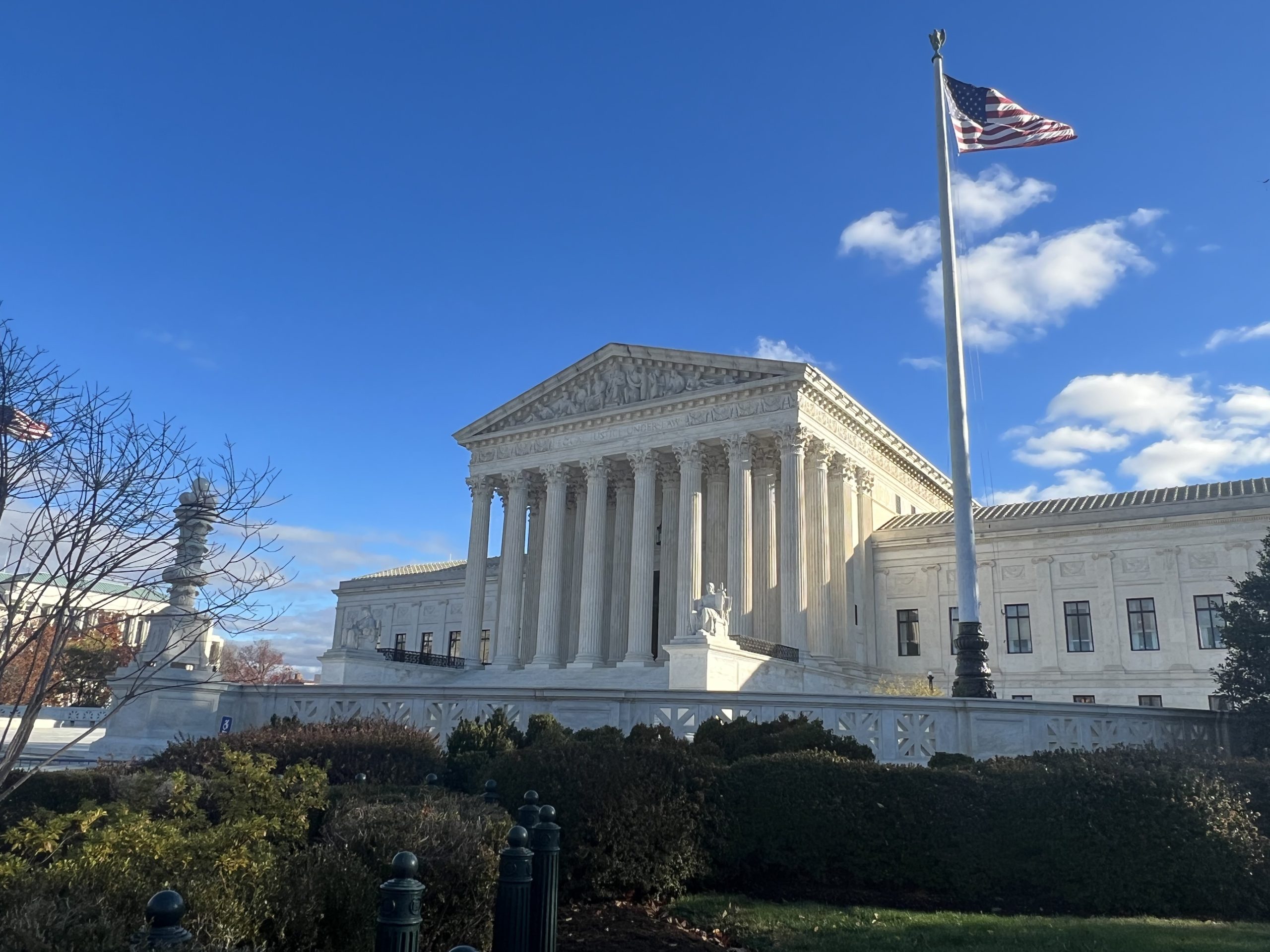
Temporary Protected Status for Haitians is no longer in effect. On August 5, 2026, U.S. District Judge Ana Reyes — the same judge who blocked the termination in February — entered an order confirming that her block “is no longer in effect” after the Supreme Court reversed her in June. The order did not end the program on its own; it recorded a termination the Supreme Court had already cleared. What is gone is the legal status, and the permission to work, of hundreds of thousands of Haitians. DHS (Department of Homeland Security)’s own November 2025 notice estimated about 352,959 Haitian TPS holders. News coverage this week describes between 330,000 and 350,000 people losing status — different counters, counting at different times.
The same order kept the lawsuit alive. Reyes denied the government’s request to pause discovery, and she directed both sides to propose a schedule for the part of the case that is still undecided: the plaintiffs’ claim that the termination was driven by racial discrimination against Haitians. That claim has not been dismissed or finally decided. It is still moving through her court, though the Supreme Court’s majority said the plaintiffs were unlikely to prove that race was a motivating factor when it sent the case back.
Key facts
- What ended: Temporary Protected Status for Haitians is no longer in effect. The August 5, 2026 order from U.S. District Judge Ana Reyes did not end it: the order confirmed that her February stay “is no longer in effect” after the Supreme Court reversed her in June, recording a termination that had already taken hold.
- How many people: roughly 330,000 to 353,000, depending on who counted and when — DHS’s November 2025 notice estimated 352,959; this week’s coverage puts it between 330,000 and 350,000.
- The Supreme Court ruling: June 25, 2026, 6-3, under the name Mullin v. Doe — one decision answering two separate suits, the Haitians’ case in Washington and a case brought by Syrian TPS holders in New York. It held that federal law bars courts from reviewing non-constitutional challenges to TPS termination decisions; it was not a finding that the termination itself was lawful.
- Still undecided: the plaintiffs’ claim that the termination was driven by racial discrimination against Haitians — a claim the Supreme Court’s majority said they were unlikely to prove, without deciding it. On August 5 Reyes denied the government’s request to pause discovery, and both sides owe her a proposed schedule for the rest of the case.
- No single end date: four dates compete — February 3, July 27, around August 3, and August 5, all in 2026 — and the available accounts do not reconcile them. Not in dispute: the designation is terminated and TPS-based work permits are no longer valid.
- What losing TPS means: lawful status and employment authorization end at the same time, unless a person holds some other status independently. TPS is not a path to a green card.
What the August 5 order did, and what it did not
The order is short on drama. Reyes did not rule against the Haitian plaintiffs, and she did not reverse her own thinking. In February she had paused the termination; in June the Supreme Court overturned that pause; on August 5 she recorded the consequence — her earlier order no longer has legal force. News accounts of the order quote her acknowledging plainly that “the Supreme Court’s judgment reversed the judgment of this Court.”
The part with teeth was the part she refused. The government asked her to halt discovery — the pretrial exchange of documents and evidence — in the surviving portion of the case. She said no. The plaintiffs’ lead counsel, Geoffrey Pipoly, called August 5 “a bad day for America and a devastating day for our clients,” and said the plaintiffs will keep litigating, including over government document productions he described as limited and “heavily redacted.”
How the case got here
DHS Secretary Kristi Noem signed the termination notice, published in the Federal Register on November 28, 2025. It set the end of Haiti’s TPS designation for 11:59 p.m. on February 3, 2026. In moving to end the designation, DHS cited gang violence in Haiti, security and vetting concerns, rising border encounters with Haitian nationals, and a broader national-interest rationale tied to immigration enforcement.
One day before that deadline, on February 2, Reyes issued an 83-page opinion in Miot v. Trump — a suit brought by five Haitian TPS holders, among them a neuroscientist, a software engineer and a registered nurse — staying the termination under a federal statute, 5 U.S.C. § 705, that lets a court postpone an agency action’s effective date. She found it “substantially likely” that the termination violated the Administrative Procedure Act and that the decision was motivated by “hostility to nonwhite immigrants.” The ruling brought a wave of threats; at a hearing that month, Reyes read some of the messages aloud and said, “We will not be intimidated.”
A divided appeals court left her stay in place in March. Then, on June 25, 2026, the Supreme Court ruled 6-3 against the TPS holders. The decision came down under a different name, Mullin v. Doe — and that is not the Haitians’ lawsuit wearing a new label. The Haitians’ case reached the Supreme Court on its own, docketed there as Trump v. Miot, No. 25-1084, and decided together with Mullin v. Doe, No. 25-1083. Two separate suits were moving through two different district courts: the Haitians’ case, Miot v. Trump, in Washington, and a case brought by Syrian TPS holders in New York. The Supreme Court took both up together and answered them in one decision, on whether the challengers were entitled to orders postponing the terminations while their lawsuits went on. The case carries the name of the sitting homeland security secretary, Markwayne Mullin; the November 2025 termination notice was signed by his predecessor, Kristi Noem. Writing for the majority, Justice Samuel Alito held that federal law, 8 U.S.C. § 1254a(b)(5)(A), bars courts from reviewing non-constitutional challenges to TPS termination decisions. The ruling was about which kinds of claims courts are allowed to hear, not a finding that the termination itself was lawful — and constitutional claims, like the discrimination claim in Reyes’s court, can still proceed.Even then, protections did not lapse the day the Court ruled: the appeals court kept them in place at least through July 27, 2026, while the Supreme Court’s formal mandate had yet to issue.
What losing TPS means in practice
TPS is not a path to a green card; it is a temporary shield. Losing it means losing lawful status and employment authorization at the same time, unless a person holds some other status independently. Pipoly put it directly: his clients “can no longer legally work.” One outlet, Truthout, also describes state driver’s licenses tied to TPS lapsing in some states along with the work permits.
What happens next to a person who holds nothing else — whether removal proceedings begin right away, whether there is any grace period, what options remain — is the first practical question, and a judge’s order is not where its answer lives. The August 5 order recorded that a legal block had ended; it set no timetable for anyone, and no grace period appears in the record around it. What a worker in that position is supposed to do now, and what an employer is supposed to do about a work permit that is no longer valid, is handled somewhere else entirely: in guidance issued by the federal immigration agencies, not by this court.
In Ohio, advocacy groups and local news outlets report that Haitian TPS holders — notably in Springfield, a city that is home to a large Haitian community — have been called into ICE (Immigration and Customs Enforcement) offices, fitted with ankle monitors, and told not to travel more than 75 miles from home. Governor Mike DeWine said he was told federal officials have no plans for raids or targeted operations in Springfield specifically.
Conditions in Haiti remain part of the record. The State Department keeps Haiti under a Level 4 “Do Not Travel” advisory — a safety warning Reyes cited in her February opinion, though it carries no immigration status of its own.
Why there is no single date TPS ended
Ask when Haitian TPS actually ended and the paper trail gives different answers. Four dates compete, and it helps to take them one at a time.
February 3, 2026 was the deadline in the Federal Register notice. It never operated, because Reyes stayed it the day before.
July 27, 2026 is the day the Supreme Court’s mandate — the formal paperwork that puts its ruling into effect — was issued. The appeals court had kept protections in place through that day. USCIS had extended Haiti TPS-based work permits through that same day, and no further. DHS’s own general counsel has publicly put the end of Haiti’s designation on that date, describing the August 5 order as an acknowledgment of a legal reality rather than a new one.
Around August 3, 2026 is when one outlet, Truthout, describes work authorization actually lapsing — a date it gives only approximately.
August 5, 2026 is the date much of this week’s coverage presents as the moment TPS “officially” ended — even though the order that day only records what the Supreme Court had already decided.
None of the available accounts reconcile those dates. What is not in dispute is where things stand now: the designation is terminated, and TPS-based work permits are no longer valid.
What is still undecided
The discrimination claim is the live wire. Discovery continues, and the parties owe the court a joint proposal on how the rest of the case will run; no hearing dates appear in the record yet. And if the plaintiffs ultimately win, what they would get — whether TPS could be restored, or a win would mean something short of that — is not spelled out in the public record. The claim is alive; what winning it would be worth is not yet on paper. The Supreme Court’s ruling covered Haiti and Syria, and it has already decided other countries’ cases: on July 31, 2026, the First Circuit Court of Appeals cited it in reversing district-court orders that had paused the end of TPS for South Sudan and Ethiopia. For roughly a third of a million people, the protection is gone while the question of why it was taken away is still being litigated.
Sources and further reading
- Update on Termination of Temporary Protected Status for Haiti (Release: July 29, 2026)
- Termination of the Designation of Haiti for Temporary Protected Status (Federal Register, Nov 28, 2025)
- 25-1083 Mullin v. Doe (opinion)
- District Judge Ana C. Reyes
- Termination of the Designation of Haiti for TPS (Federal Register, July 1, 2025)
- Mullin v. Doe: Supreme Court Allows Termination of Temporary Protected Status for Haiti and Syria
- Termination of the Designation of Haiti for Temporary Protected Status, 90 FR 54733