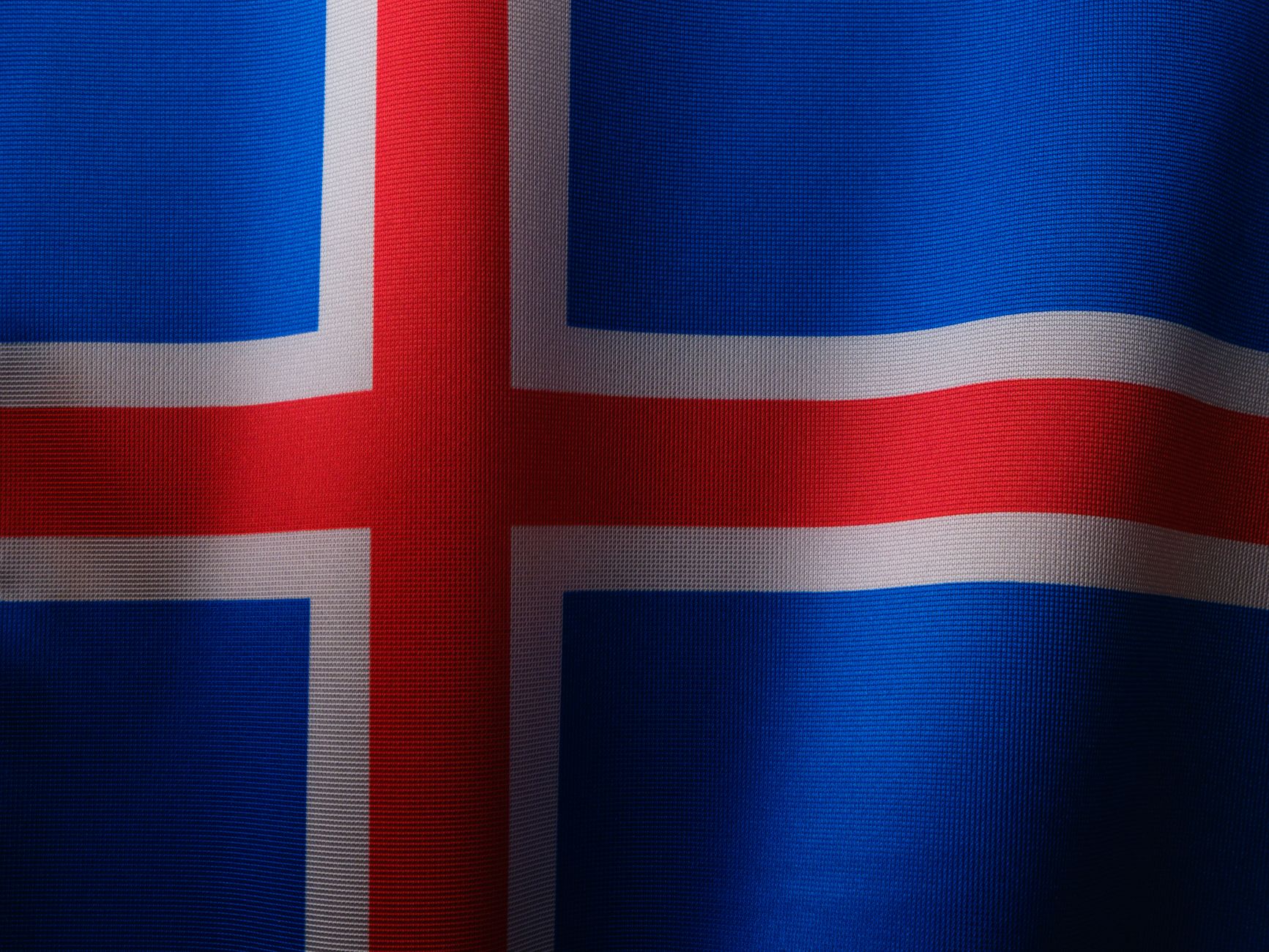
Iceland’s government called in the top American diplomat in Reykjavik after President Trump posted a map to Truth Social that showed the U.S. flag’s pattern stretched across Iceland, Canada, Greenland, Mexico and parts of the Caribbean, all labeled a single “United States of America.”
Key facts
- What: Trump posted a map to Truth Social showing the U.S. flag’s stars-and-stripes pattern covering Iceland, Canada, Greenland, Mexico and parts of the Caribbean, all labeled “United States of America”
- When: Posted Monday, September 7, 2026, with no caption or explanation
- Iceland’s response: Foreign Ministry summoned U.S. Ambassador Billy Long that evening, calling the post “completely inappropriate”
- PM’s reaction: Kristrun Frostadottir called it “an insult to Icelanders, Canadians, Greenlanders” the next day, September 8, 2026
- Other reactions: Mexico’s Claudia Sheinbaum pushed back on X the same day; in coverage of the map, Denmark’s Mette Frederiksen was quoted saying Greenlanders do not want to be American
- No comment: The White House, State Department, U.S. embassies in Copenhagen and Reykjavik, and U.S. consulate in Nuuk did not immediately respond to requests for comment
- Context: A separate August 27, 2026 executive order had sought to rename Lake Ontario “Lake America”
What the map showed
Trump posted the image on Monday, September 7, 2026, with no caption or explanation. It depicted a map of North America, Central America and the Caribbean in which the stars-and-stripes pattern covered the United States, Canada, Greenland, Iceland, Mexico and Caribbean islands including Cuba and Jamaica. Only the words “United States of America” appeared on the image itself. Iceland Review described the graphic as apparently , though that has not been confirmed by any official source.
The White House has not indicated that the map represents any kind of formal policy proposal.
Iceland’s response
Iceland’s Foreign Ministry summoned U.S. Ambassador Billy Long to a meeting on Monday evening, the day the map was posted. The ministry told him the post was “completely inappropriate,” a message it later confirmed to Icelandic broadcaster RUV in a statement: “The position was clearly expressed that the post was completely inappropriate.”
Prime Minister Kristrun Frostadottir spoke to local press the next day, Tuesday, September 8, 2026, and went further.
A single-source report also attributed a Tuesday, September 8, 2026, press-conference comment to Foreign Minister Thorgerdur Katrin Gunnarsdottir describing the post as absurd and insulting to Icelanders, Greenlanders and Canadians; that wording was not corroborated in the available reporting. Prime Minister Kristrun Frostadottir said: “It is an insult to Icelanders, Canadians, Greenlanders to express themselves in this way,” and added: “There is nothing funny or normal about making fun of the sovereignty of states, especially today when it is not a given.” She said she did not see the post as a joke: “This is not a joke in my view, and if it is meant to be a joke, then it is a bad joke.”
This is not the first friction between Reykjavik and Long. In January 2026, months before he formally took up his post as ambassador in August, he had already apologized once for joking that Iceland could become the 52nd U.S. state.
The White House had not issued a public response, and — according to multiple outlets — the State Department, the U.S. embassies in Copenhagen and Reykjavik, and the U.S. consulate in Nuuk did not immediately respond to requests for comment on the post.
What other countries said — and didn’t
Mexico’s government pushed back the same day. President Claudia Sheinbaum posted on X, without naming Trump directly: “Mexico is not and will not be a colony or protectorate of any foreign country… We are a free, independent and sovereign country.”
In coverage of the map, Denmark’s Prime Minister, Mette Frederiksen, was quoted saying of Greenland, a Danish territory, that “the Greenlandic government and the Greenlandic people have said again and again that they do not want to be American.” That comment came in NBC News coverage that also noted European Commission President Ursula von der Leyen had just announced a €200 million investment in Greenland.
Not every country on the map has weighed in. Canada’s Mark Carney has made no fresh, dated statement about this specific map — the closest thing on record is a general remark from a January 2026 Davos appearance that Canada stood firmly with Greenland and Denmark — and neither Greenland’s own government nor Cuba’s has issued a statement of its own about being included on the map.
The bigger picture
This map post is a distinct event from an earlier Trump move that also touched on North American geography — an August 27, 2026 executive order that sought to rename Lake Ontario “Lake America,” which drew its own rejection from Canada. The two are separately reported episodes, not the same story, but together they fit a pattern of territorial rhetoric from the administration this year, including its earlier push around acquiring Greenland.
For now, the map remains just that: a social media post Trump has not explained, that has drawn a formal protest from one government and silence from several others.