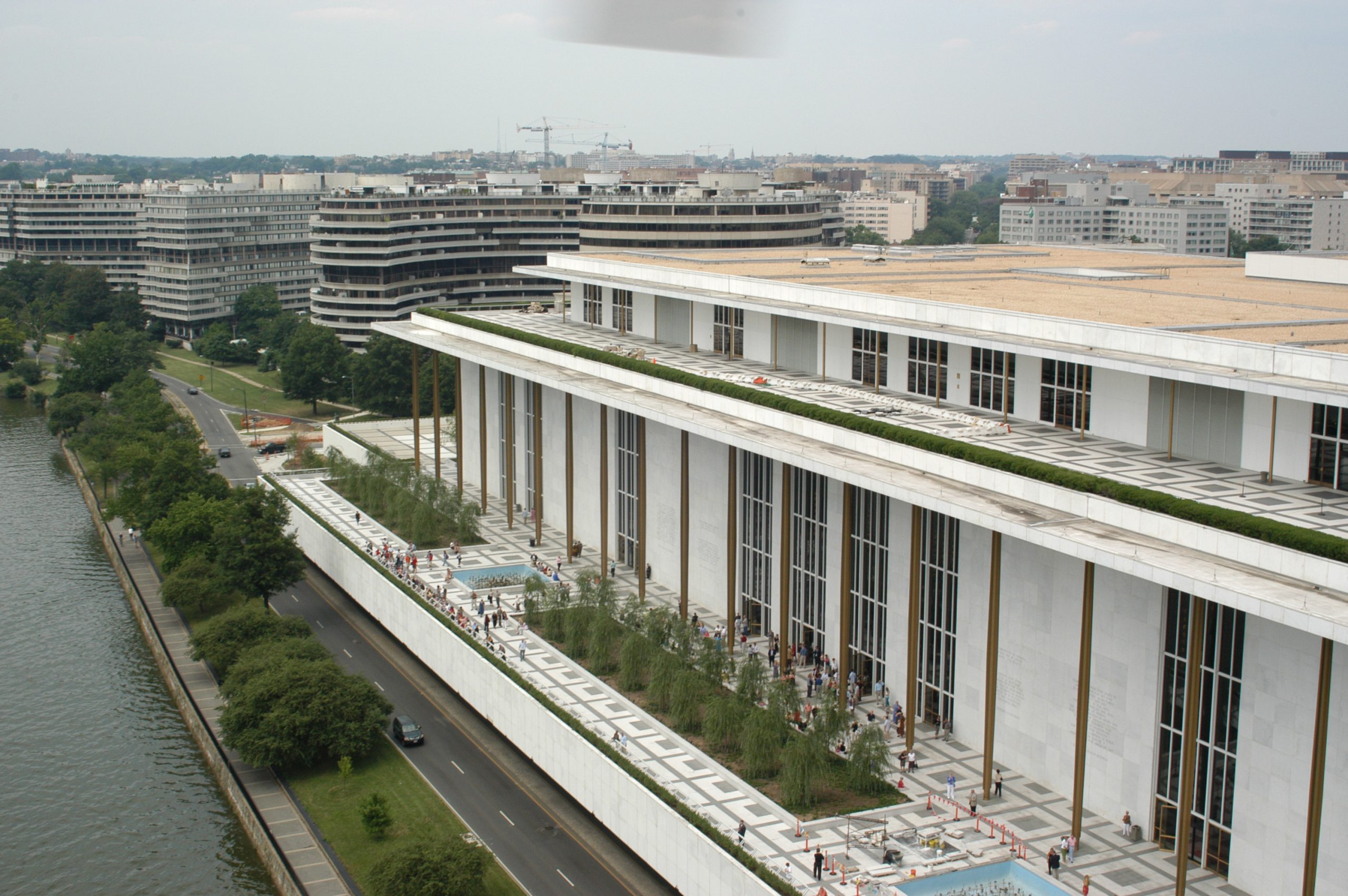
The fight over the Kennedy Center just took a sharper turn. In a court filing reported August 25, 2026, Justice Department lawyers told a federal judge that if the Trump administration’s renovation and closure plan for the performing arts center is permanently blocked, the building could ultimately need to be torn down. The filing described the Kennedy Center as “dangerously dilapidated, outdated, and decrepit,” called it “structurally unsound, fundamentally unsafe, and embarrassing to the Nation’s Capital,” and warned it faces a “financial and structural death spiral” without the work.
Key facts
- DOJ (Department of Justice) warning: made in an Aug. 25, 2026 court filing responding to Beatty’s emergency motion.
- No demolition ordered: the claim appears only as an argument in the legal filing, not an announced plan.
- Renovation cost: about $250 million (NBC News) to $257 million (Fox News).
- Closure timing: two years, originally targeted to begin around July 4, 2026, with completion targeted for summer 2028.
- Judge: U.S. District Judge Christopher Cooper is overseeing the case.
- Hearing: scheduled for Thursday on Beatty’s motion and the DOJ’s response.
What the filing does — and doesn’t — say
No demolition has been ordered, approved or begun. That dramatic language comes from the filing itself; it does not cite an outside engineering report or inspection to support it. The line appears only inside a legal filing, as an argument for why the court should let the renovation proceed — not as an announced plan. The filing also raised, as a hypothetical, that the site could one day become “a large outdoor amphitheater overlooking the Potomac River,” an idea it said “has been proposed, by some, for many years” — without saying by whom. That is not a confirmed or approved project; nothing about an amphitheater has moved beyond that one sentence in a legal brief.
Lawyers for the plan’s leading opponent, Rep. Joyce Beatty (D-Ohio), rejected the framing outright. Beatty’s attorneys, Norm Eisen and Nathaniel Zelinsky, called the demolition language “legally baseless” and “unconscionable,” saying it amounted to, in their words, “a not-so-subtle threat to demolish the Kennedy Center if the President doesn’t get his way.”
How the dispute got here
Beatty, who sits on the Kennedy Center’s board of trustees through her congressional leadership post, has been the lead challenger of the administration’s plans for the venue. Her challenge has centered on the renaming and the board’s decisions about the closure and renovation plans.
Separately, a coalition of historic-preservation and cultural groups sued Trump, the Kennedy Center board of trustees and Interior Secretary Doug Burgum, arguing that any demolition, major reconstruction or major aesthetic transformation of the Center should go through the standard federal historic-review process. In May 2026, U.S. District Judge Christopher Cooper ruled that renaming the institution after Trump was unlawful, since the Kennedy Center’s founding statute names it for President Kennedy alone; he also found the board’s earlier closure decision had rested on what he called an “insufficient, one-sided presentation of information,” and he ordered that closure plan halted.
Two and a half months later, on August 13, 2026, the board — whose members are mostly Trump appointees — voted again. It approved a renovation that most outlets, including NBC News, reported at about $250 million — Fox News put the figure at $257 million — with a two-year closure of the main building targeted for completion by summer 2028. Reported renovation plans and internal Kennedy Center documents describe a broad scope of work. That includes a $24.7 million Concert Hall upgrade, roughly $12 million in “acoustical improvements,” and a “Front of the House Renewal.” Plans also call for polishing the Carrara marble facade, remodeling grand halls and theaters, new marble floors, and repairs to HVAC, plumbing, elevator and auditorium seating systems. During construction, the eight-foot bronze bust of John F. Kennedy in the main foyer would be moved temporarily. Some signature events, including the Kennedy Center Honors and the Mark Twain Prize for American Humor, would move to venues off-site while the building is shut; The REACH, the campus’s 2019 addition, is expected to stay open for limited programming during the closure.
That same August 13 vote did not rename the institution itself — Judge Cooper had already ruled that act unlawful, and it stays off the table. What the vote did do was approve two separate steps: an inscription reading “Restored and Renovated by President Donald J. Trump” on the building, and, separately, a plan to rename the surrounding plaza after the president. Beatty argues those steps still run afoul of Judge Cooper’s order; the administration says they do not, because the institution’s formal name itself was not changed. That question is unresolved. While it plays out, the Kennedy Center has told the court it will not attempt to restore Trump’s name to the building’s facade before September 8, 2026; the available reporting does not establish whether Trump’s name is currently displayed.
Beatty filed an emergency motion on August 21, 2026, asking Judge Cooper to stop trustees from putting Trump’s name back on the building and from renaming the site after him. The Justice Department’s demolition warning came in the government’s response to that motion.
What happens next
Judge Cooper has a hearing scheduled for Thursday on Beatty’s motion and the administration’s response. No ruling had been reported. Until the court decides, the current closure plan and the proposed inscription and plaza renaming remain contested, while the DOJ’s demolition language remains a conditional argument in the filing; no ruling on Beatty’s August motion has been reported.