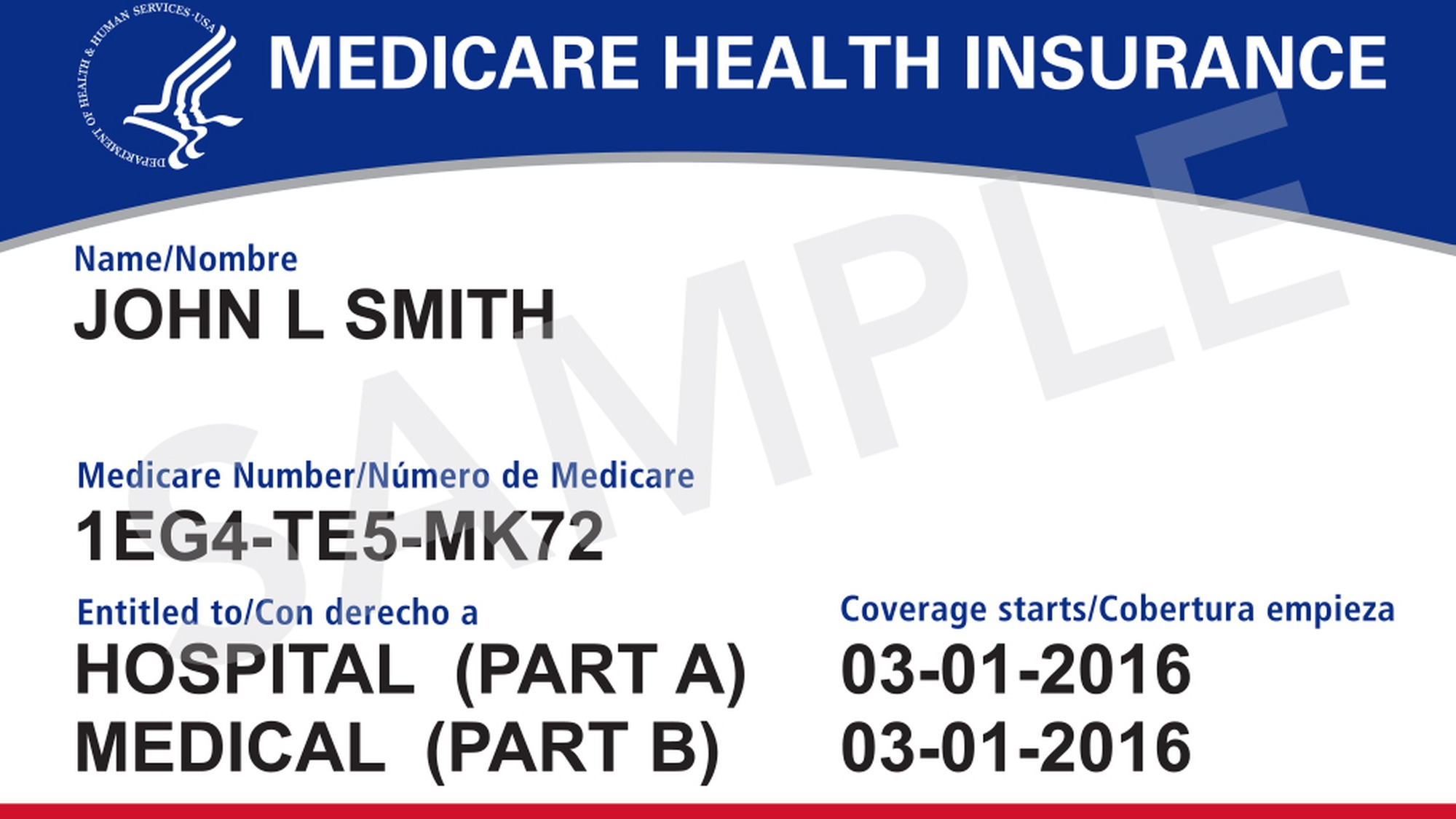
As of about 3 p.m. EDT on Saturday, Oct. 3, 2026, the federal government says a one-time $90 payment is coming to eligible people in Original Medicare Part B. CMS says most people will get a direct deposit “on or around October 8th.” The White House and CMS differ on when paper checks go out, and CMS adds a mid-October email or letter and two eligibility conditions that the White House text does not mention. We did not find any report that a payment has been delivered.
What the payment is
A White House fact sheet dated Oct. 2 describes “one-time payments of $90 per person to help more than 20 million enrollees pay for their Medicare Part B premiums.” A CMS FAQ posted Oct. 3 says “Eligible beneficiaries will receive one $90 rebate in October 2026.” Both documents use “payment” and “rebate” for the same $90. Our arithmetic, not an agency figure: $90 is about 44% of the $202.90 standard monthly Part B premium for 2026, which CMS announced in November 2025.
Who is eligible
The White House says “Most Medicare Part B enrollees are eligible for the payments.” As CMS lists them, the payment goes to the “20.8 million Americans in Original Medicare Part B” who:
- are in Original Medicare Part B (CMS: “Beneficiaries enrolled in Medicare Advantage are not eligible”);
- are living in the United States;
- are not receiving premium assistance from Medicaid; and
- are not paying an Income-Related Monthly Adjustment Amount.
That last item is a higher-income surcharge. CMS’s 2026 premiums fact sheet says these adjustments “affect roughly 8% of people with Medicare Part B” and start above $109,000 for an individual and $218,000 for joint filers.
Where the White House and CMS differ
CMS says most people will get a direct deposit on or around Oct. 8, followed by an email or a letter from the President in mid-October, and some will get a Treasury check “later in October.” The White House says a direct deposit “in early October” and, for those without one, a check “also sent in early October.” Oct. 8 falls within “early October,” so the deposit dates are compatible; the paper-check timing differs, and the mid-October email or letter appears only in CMS’s text.
What to do
Neither page we read describes an application. CMS says people without direct deposit will get a check “to the mailing address they have registered with Medicare.” Both agencies list 1-800-MEDICARE (1-800-633-4227) for eligibility questions and the Social Security Administration at 1-800-772-1213 for payment status. Only CMS gives a start date for status calls: “beginning on October 15, 2026.”
Where the money comes from
The White House and CMS say the payment will come from the Medicare Improvement Fund. The White House says the fund “has been given $2 billion by Congress” and “has never before been utilized.” Section 2007 of Public Law 119-103, approved Sept. 2, 2026, changed the statutory amount in 42 U.S.C. 1395iii(b)(1) from $2,062,000,000 to $2,041,000,000; the code text on Cornell’s site, current through February, still shows the older figure. CMS says Congress has withdrawn from the fund to “offset” new spending “around 20 times.” Each agency also says President Trump is the first to use it to help beneficiaries; those are their own characterizations. Neither states the fund’s current balance or a total cost.
Questions about authority, and a reaction
Newser, citing USA Today, reports that whether the White House can legally redirect the money “remains uncertain.” Neither the White House nor the Department of Health and Human Services responded to questions about its authority, per the Washington Post, as Newser reports; we did not open those reports. Newser quotes Democratic Sen. Ron Wyden, the top Democrat on the Finance Committee, calling it “another desperate attempt by a failed president to escape Americans’ revulsion with his failed agenda, amounting to one tank of Trump-inflated gas.” We draw no legal conclusion.
What we did not find
In the White House fact sheet, the CMS FAQ and the medicare.gov home page, we did not find any statement on whether the payment counts as taxable income or affects other benefits. We did not find a total cost.