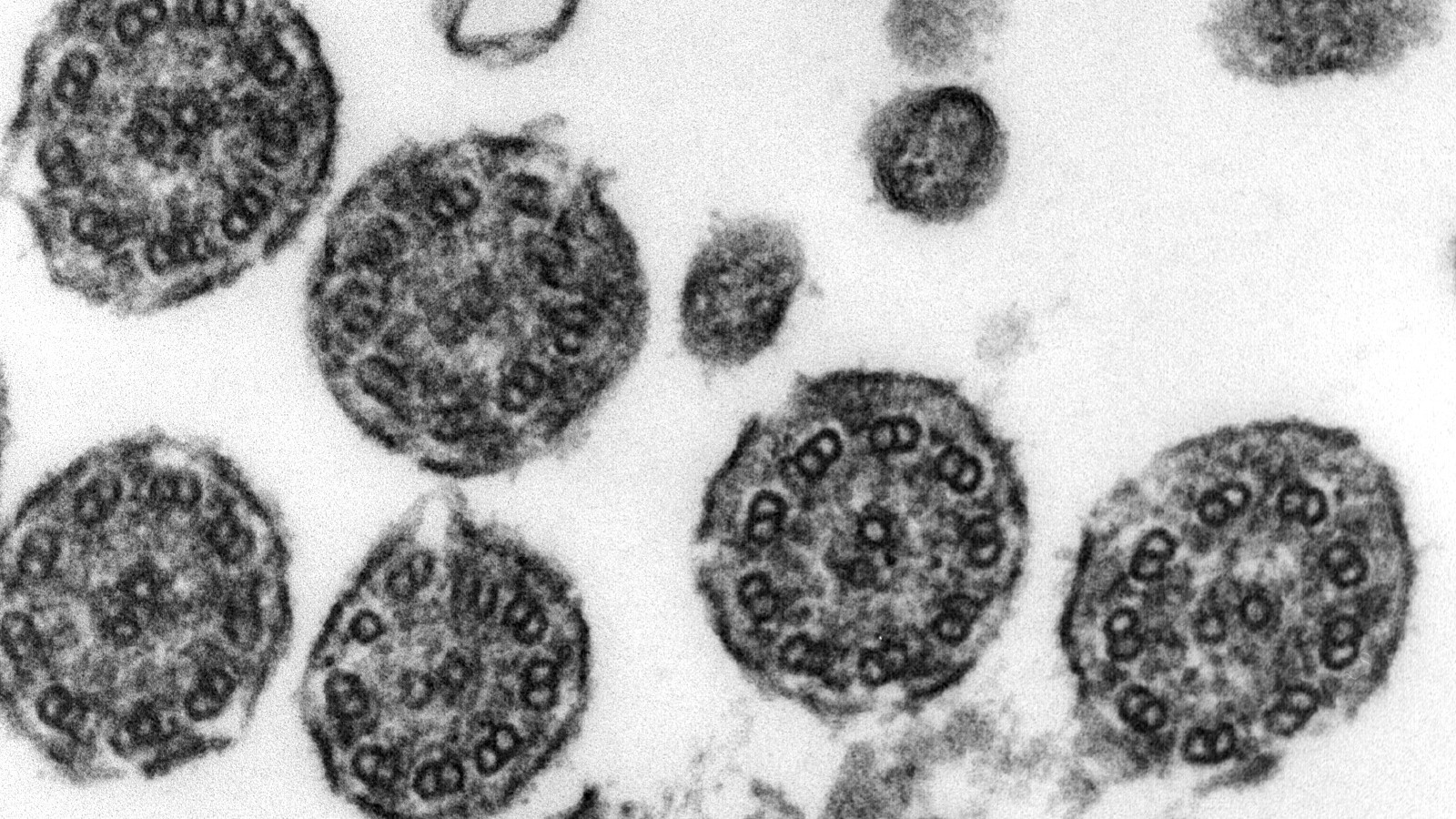
Nikon says it is re-reviewing the winning video of its Small World in Motion competition after critics questioned how it was made, according to reports on Thursday, Oct. 1 by CNN and PetaPixel. The dispute is less about whether AI was used, which Nikon and Xu both say it was in post-processing, than about whether that processing added things that are not in the data.
Nikon’s Sept. 15 release named Ning Xu first-prize winner of the 16th annual competition for a video of abnormal airway cilia beating in a child with primary ciliary dyskinesia.
What Nikon and Xu say
According to The Scientist, a Nikon Instruments spokesperson said in an email reported after the Sept. 15 announcement that “Based on the information currently available, Nikon can confirm that an AI-assisted enhancement tool was used by the entrant as part of post-processing.” Nikon said it determined the use, “as a tool for enhancement of microscopy-generated source data, not for image generation from scratch,” to be “in compliance with the rules set forth by the competition.”
According to The Scientist, the sample was imaged on a custom optical microscope, producing grayscale data. Xu said: “Then, we used an unsupervised neural network for post-processing and visualization.” Replying to Nikon’s LinkedIn post, as CNN reports, he wrote: “AI was not used to generate the experimental movie, the cilia, or their motion.” He said it was applied afterward to the reconstructed grayscale data “to distinguish and color structures with similar morphology.”
Xu also wrote on LinkedIn, as CNN reports: “For me, the important distinction is between using an image to make a scientific claim and using visualization to communicate the beauty of scientific data.” He added: “Both can have a place, as long as we are clear about which is which.”
What the critics say
Critics raise several concerns. Edward Phelps, an associate professor at the University of Florida, wrote on LinkedIn, as CNN and PetaPixel report, that there were “many serious problems with this video.” PetaPixel quotes him: “purple structures pop in and out of existence.”
Robert Hirst, a Leicester University scientist, told The Scientist that “some of these features just are not consistent with nature.” He said the film suggests one cilium per cell when there are about 200.
Ian Donovan, a PhD student at UT Southwestern Medical Center, says the video carries “an embedded SynthID watermark,” which he says identifies it as AI-generated content, according to CNN. PetaPixel says he ran the video through Google Gemini. This article has not verified that check.
Xu has replied to some of the criticism, according to CNN, and told The Scientist the concerns were “understandable.” The Scientist reports that Hirst and Xu exchanged comments on social media; it does not say whether the cilium count came up. PetaPixel reported that Xu’s messages on the LinkedIn post could not be found as of Oct. 1.
What the rules say
The competition’s current rules page says “AI generated videos are not permitted and Sponsor holds the right to request the original video for verification.”
What has not been published
In a LinkedIn note, as PetaPixel quotes it, Nikon said it “is carefully re-reviewing the information provided during the initial vetting, along with additional supporting materials from the entrant.” CNN reported the re-review on Oct. 1. A Nikon spokesperson had told The Scientist after the announcement: “We are reviewing the AI policy. At this time, we don’t see that any rules were violated, but we are reinvestigating and re-evaluating the entry.” Nikon’s LinkedIn note, as quoted, does not say which questions the review covers.
Xu wrote that a more detailed description of the optical system and quantitative analysis of the ciliary motion are “currently being prepared for publication.” PetaPixel reports that scientists have said the matter could be resolved if he shares his raw grayscale video. We found no report that the raw grayscale video has been released.