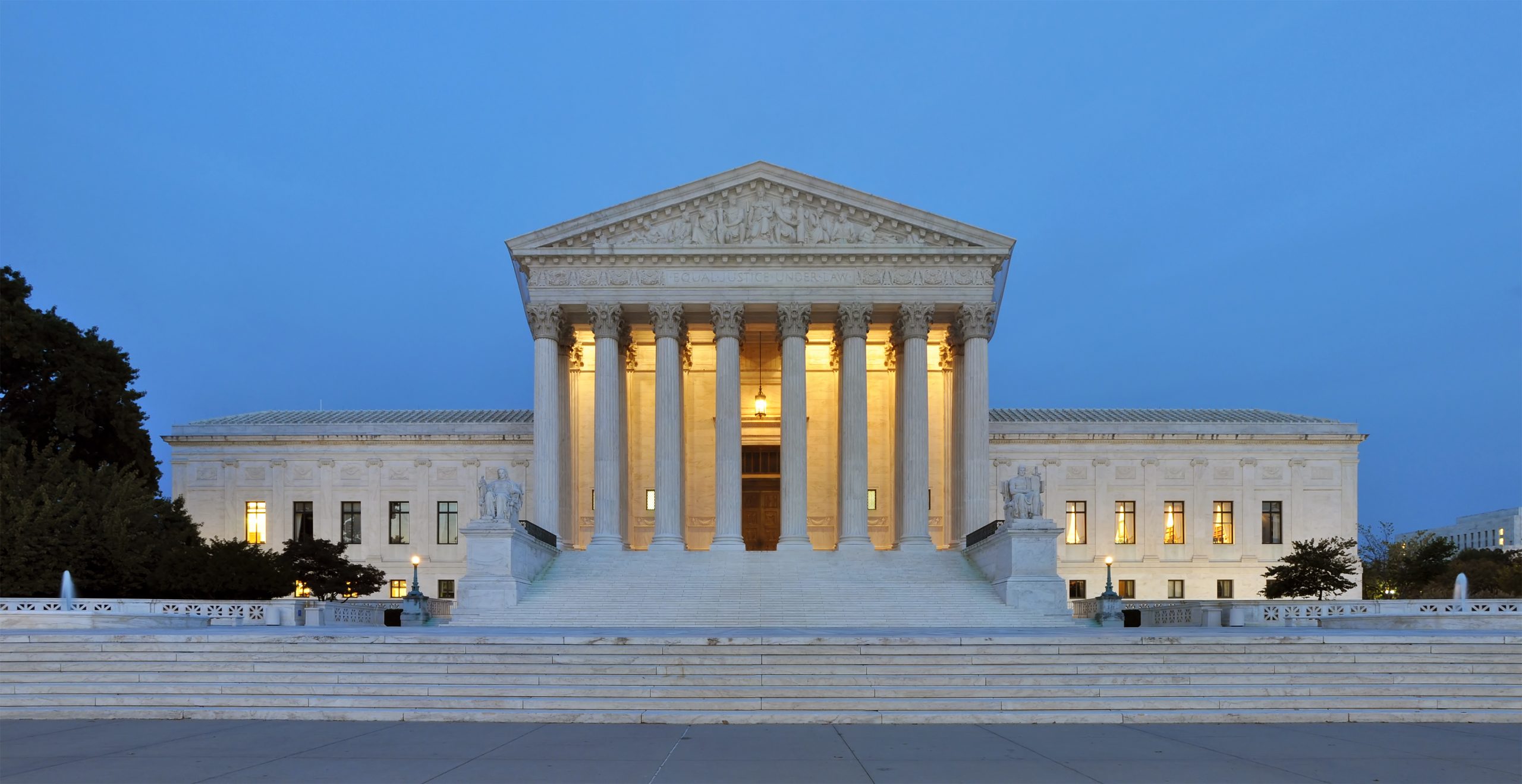
The Supreme Court voted 6-3 on Monday, Aug. 24, 2026, to lift a lower-court injunction that had been blocking parts of President Trump’s executive order restricting mail-in ballots, clearing the way for the administration to start acting on it in the states that sued. But the unsigned order was explicit that the justices were not deciding whether the underlying order is actually legal — only that the states’ challenge to it was premature. “The court’s disposition of this application does not mean that any measure taken by the government to implement the order will necessarily be lawful,” the order read. “On that score, time will tell.”
Key facts
- Vote: 6-3, unsigned order, Monday, Aug. 24, 2026
- What changed: The Supreme Court lifted the states’ injunction that had blocked parts of Trump’s mail-ballot executive order
- What didn’t change: A second, separate nationwide injunction — issued Aug. 11, 2026 by Judge Indira Talwani — still blocks the Postal Service from enforcing the new rules
- The order: Executive Order 14399, “Ensuring Citizenship Verification and Integrity in Federal Elections,” signed March 31, 2026
- Who sued: California and 22 other, mostly Democratic-led states
- Dissents: Justices Sotomayor and Kagan, and separately Justice Ketanji Brown Jackson
- Case name: Trump v. California
Two injunctions, one still blocking enforcement of the new rules
Three separate legal fights are now in play: the executive order itself, the states’ injunction the Supreme Court just lifted, and a second, separate nationwide injunction that is still blocking things. For now, almost nothing changes for voters. Monday’s ruling lifted only the states’ injunction — the one California and other states had won. It left the second injunction fully in force. That order, issued Aug. 11, 2026 by U.S. District Judge Indira Talwani in a different lawsuit brought by nonprofit voting-rights groups including the League of Women Voters, continues to block the U.S. Postal Service from actually enforcing the new mail-ballot rules anywhere in the country. The Postal Service has said it will not implement its rule for this November’s election unless both injunctions are lifted.
What the executive order requires
The order at the center of the fight is Executive Order 14399, “Ensuring Citizenship Verification and Integrity in Federal Elections,” which Trump signed March 31, 2026. It directs the Department of Homeland Security, working with the Social Security Administration, to compile state-by-state lists of citizens confirmed eligible to vote. It directs the Postal Service not to deliver mail-in or absentee ballots to anyone not on those lists. And it directs the Justice Department to prioritize investigating and prosecuting election officials who issue ballots to people the federal government considers ineligible. That list requirement is the part of the order most likely to touch an individual voter directly: if it took effect, someone not confirmed on their state’s list would stop getting a ballot mailed to them automatically. It also threatens to withhold federal funding from states that don’t comply.
How the case reached the Supreme Court
California and 22 other, mostly Democratic-led states sued over the order shortly after it was signed. Judge Talwani granted those states a preliminary injunction in June 2026 blocking key parts of the order from taking effect — the states’ injunction that the Supreme Court lifted on Monday. The six-justice majority reasoned that the order, as it stood, was an internal federal directive that had not yet harmed the states, so the challenge was not yet ripe for a court to block.
Dissenting justices’ objections
Justice Sonia Sotomayor wrote a dissent, joined by Justice Elena Kagan, arguing the states already faced a concrete, imminent injury and that the majority’s ruling “does not address whether the President’s attempts to interfere with States’ administration of the November 2026 elections are lawful,” nor does it suggest “the Executive Branch has any constitutional or statutory authority to implement the President’s directives.” Justice Ketanji Brown Jackson filed a separate dissent of her own, calling the case not “a close call” and warning that the ruling “needlessly injects chaos and uncertainty into the upcoming midterm elections.”
Reaction to the ruling
Reaction broke down along predictable lines. The White House called the ruling “a major win for the security of American elections” and described the order’s provisions as “commonsense measures.” California pushed back hardest: Gov. Gavin Newsom vowed the state “will sue again” to block implementation, calling it part of an effort to “rig elections and destroy democracy” and pledging California would keep mailing a ballot to every eligible voter, while state Attorney General Rob Bonta added that the ruling “was not a ruling on the merits, and this fight is far from over.”
Postal Service’s own rule
Separately from the executive order, the Postal Service issued its own final rule around Aug. 21, 2026, covering administrative details of how ballot mail is designed and tracked — not who is eligible to receive a ballot; the citizenship-list requirement described above is the piece of the order that would decide that. That rule is also on hold: the Postal Service has said it won’t apply it to this year’s election unless the courts clear the way.
Can states meet the timeline?
State election officials have questioned whether the rule could even be carried out in time. Nevada Secretary of State Cisco Aguilar said complying would be “impossible to implement … In that time frame,” and election administration expert Tammy Patrick said no state currently runs its elections the way the new rule assumes. North Carolina’s first ballots for overseas and military voters were already scheduled to go out Sept. 4, 2026, and California’s were due to begin going out roughly 11 days after the ruling — timelines that left little room to build new verification systems even if the second injunction were lifted.
What happens next
Monday’s ruling is not the last word. In dissent, Justices Sotomayor and Kagan wrote that the decision “merely postpones adjudication” of the underlying legal challenges — a case formally captioned Trump v. California. The next concrete step has already happened: the Trump administration filed a motion the same day as the ruling asking courts to also lift the second, still-standing injunction that blocks the Postal Service. California officials have said they will keep fighting the order in court, while New York Attorney General Letitia James called the ruling “a painful setback” but said it would not be the final word.
Sources and further reading
- Trump v. California stay second supplemental brief (No. 26A124)
- Docket for 26A124, Trump v. California
- Privacy Act of 1974; System of Records (USPS ballot-mail transmission)
- 26A124 Trump v. California opinion/order (docket)
- Ensuring Citizenship Verification and Integrity in Federal Elections (Executive Order 14399)
- Ballot Mail for Federal Elections (proposed rule)