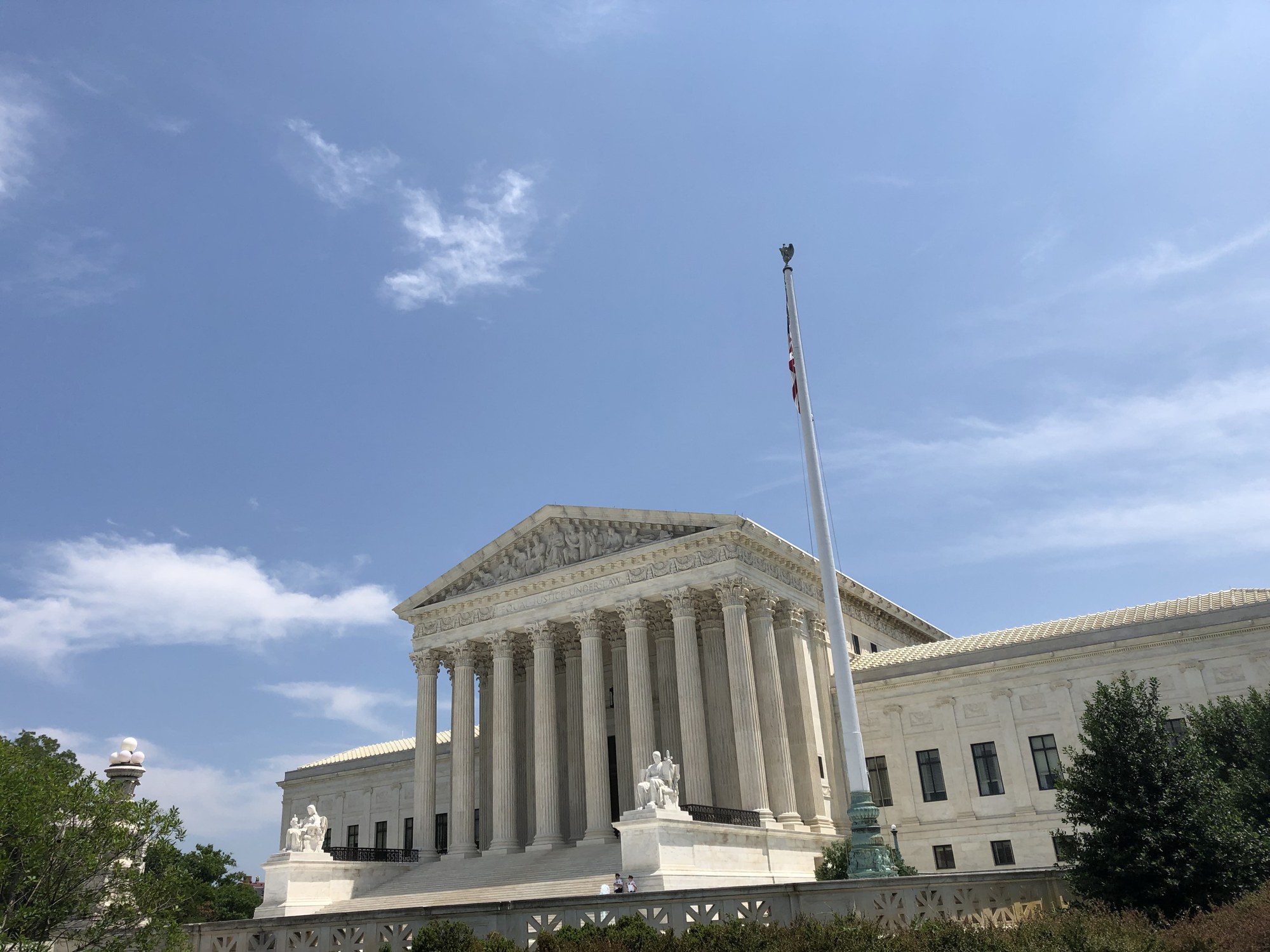
The Supreme Court on Thursday, Oct. 1, agreed to decide whether immigrants who have lived in the United States after entering without being admitted can be held without a bond hearing. The Court granted certiorari in No. 26-104, Rhoney v. Barbosa da Cunha. It was not the case the administration had urged the Court to take, SCOTUSblog reported.
Two statutes, one question
The question presented is narrow: “Whether 8 U.S.C. 1225(b)(2)(A) mandates the detention pending removal proceedings of aliens who, like respondent, are present in the United States without having been admitted.”
Subject to exceptions that do not apply here, section 1225(b)(2)(A) says that in the case of an applicant for admission, if the examining immigration officer determines that “an alien seeking admission is not clearly and beyond a doubt entitled to be admitted, the alien shall be detained” for removal proceedings. Section 1226(a) says the Attorney General “may release the alien on— (A) bond of at least $1,500 … ; or (B) conditional parole”. One wording is mandatory and the other is discretionary. The government’s petition says the provision’s plain language covers such people and mandates their detention.
What changed in 2025
SCOTUSblog reported that until last year the government had not applied the mandatory provision to noncitizens who had already entered the country and spent years or even decades here. The government’s petition says ICE guidance issued July 8, 2025, took the position that such people are held under Section 1225(b)(2)(A), and that the Board of Immigration Appeals agreed in In re Yajure Hurtado.
The man at the center
The respondent is a noncitizen from Brazil who, the Second Circuit wrote, has lived in the United States for more than 20 years after entering without inspection and admission, has had an asylum application under agency review since 2016, was granted work authorization and “has never been convicted of a crime.” Immigration officials arrested him in 2025 “on his drive to work.”
An immigration judge denied him a bond hearing as subject to mandatory detention. After the district court ordered a bond hearing, held Oct. 28, 2025, he was released the next day. The Second Circuit affirmed on April 28, 2026, noting that the government concedes he poses no danger or flight risk.
The vehicle the government called better
In its July petition, the Solicitor General asked the Court to “hold this petition pending the disposition of the petition in Lopez-Campos” and then dispose of it as appropriate.
Lopez-Campos is No. 25-1415, Putra v. Lopez-Campos (the Sixth Circuit’s Lopez-Campos v. Raycraft). The government called it “a better vehicle than this case” because it also raises whether mandatory detention for such people comports with due process.
The Court granted the petition the government had asked it to hold. As SCOTUSblog put it, “the court took up the issue, but not the administration’s preferred case.” Neither the Lopez-Campos docket nor the docket for No. 26-43, Buenrostro-Mendez v. Blanche, shows a ruling as of Thursday evening; both were distributed for the Sept. 28 conference.
Appeals courts are divided
The government’s July petition said the Fifth and Eighth Circuits had held the provision mandates detention, while the Second, Sixth, Tenth and Eleventh Circuits had held that people like the respondent fall under Section 1226(a) and may seek bond. The petition adds that the Tenth Circuit decided after an earlier filing and that the government has sought en banc rehearing in the Eleventh Circuit; counts may have changed since.
SCOTUSblog, citing a Politico analysis, reported that federal district judges have issued more than 9,300 rulings against the administration’s mandatory detention guidelines since they took effect.
What happens next
No argument date has been set. SCOTUSblog said the Court will hear this case and two others early next year. The Court is expected to release more orders from its Sept. 28 conference on Monday, Oct. 5, at 9:30 a.m. EDT.