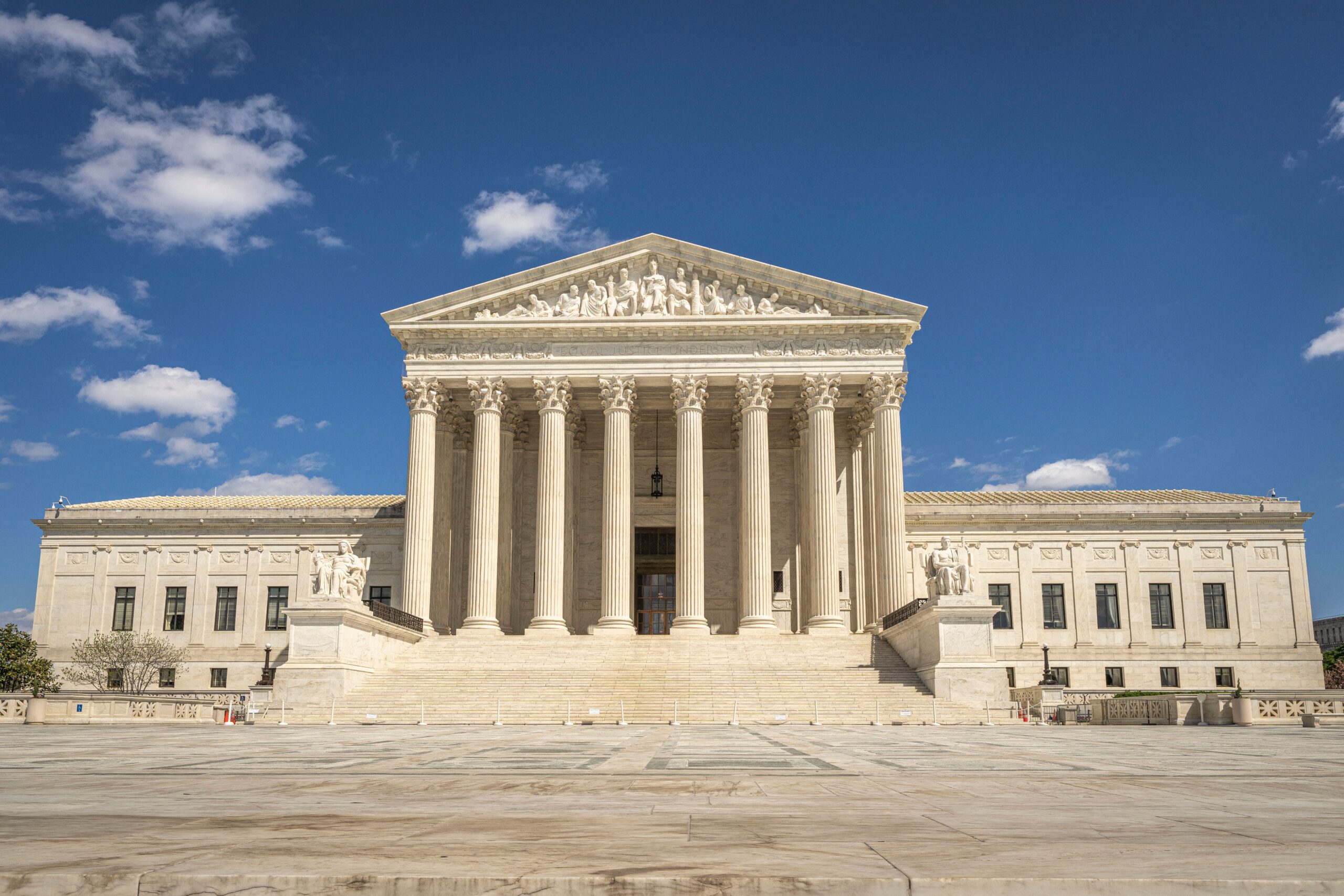
The White House ballroom project, for which the East Wing was demolished, is before the Supreme Court while the justices decide whether above-ground construction can continue after two lower federal courts ruled it must stop absent congressional approval.
On August 21, 2026, Chief Justice John Roberts stayed the D.C. Circuit’s injunction “pending further order of the undersigned or of the Court,” letting above-ground construction resume for now. That is a temporary, administrative stay — not a final ruling on whether the project is legal — and the case continues.
Key facts
- What’s happening: The Supreme Court is deciding whether above-ground ballroom construction can continue, after two lower federal courts ruled it must stop absent congressional approval.
- Current status: Chief Justice Roberts stayed the injunction on August 21, 2026, temporarily letting above-ground construction resume; the case is not finally decided.
- Who’s suing: The National Trust for Historic Preservation, a congressionally chartered nonprofit, since December 2025.
- Latest ruling: A divided D.C. Circuit panel upheld the injunction 2-1 on August 7, 2026.
- Construction claim: The administration says the project is about 65% complete, with a 250-person crew reportedly working 20 hours a day, seven days a week — a figure from its own filing, not independently confirmed.
- Cost: Publicly reported estimates have risen from about $200 million when the project was announced in 2025 to roughly $250 million, then $300 million, and about $400 million by August 2026.
- Funding: The White House says the ballroom is funded entirely by private donors, including Amazon, Google and Lockheed Martin, with no taxpayer money — a claim some Democrats dispute.
Timeline
- October 2025 — The East Wing is demolished to make way for the ballroom.
- December 2025 — The National Trust for Historic Preservation sues to block the project.
- February 26, 2026 — Judge Richard Leon denies an early bid to halt construction.
- March 31, 2026 — Leon reverses course and grants a preliminary injunction.
- April 11, 2026 — The D.C. Circuit lets construction resume while it considers the appeal.
- August 7, 2026 — A divided D.C. Circuit panel upholds the injunction, 2-1.
- August 14, 2026 — The Solicitor General asks the Supreme Court for an emergency stay.
- August 18, 2026 — The National Trust files its response with the Supreme Court.
- August 21, 2026 — Chief Justice Roberts stays the D.C. Circuit’s injunction, temporarily letting above-ground construction resume while the Court considers the case further.
How the case got here
The lawsuit began in December 2025, when the National Trust for Historic Preservation — a congressionally chartered nonprofit whose mission is preserving historic places — sued President Trump, the National Park Service and other federal agencies in the U.S. District Court for the District of Columbia. The Trust argued that demolishing the East Wing, which happened in October 2025, and building a roughly 90,000-square-foot ballroom in its place violated the National Capital Planning Act and environmental-review requirements under the National Environmental Policy Act. It also argued that the Constitution’s Property Clause — which gives Congress, not the president alone, authority over federal property — required congressional approval the project never got.
What followed was a fast back-and-forth between one judge and an appeals panel that ended with construction blocked again by August: U.S. District Judge Richard Leon, a George W. Bush appointee, first denied the Trust’s request to halt construction on February 26, 2026, saying its early legal arguments were weak but allowing it to amend its complaint. It did, and on March 31, 2026, Leon changed course and granted a preliminary injunction — a court order that pauses an action while a case is still being decided. “Unless and until Congress blesses this project through statutory authorization, construction has to stop!” he wrote, though he delayed enforcement for two weeks to let the administration appeal.
The U.S. Court of Appeals for the D.C. Circuit gave the administration a temporary reprieve on April 11, 2026, allowing construction to continue while it considered the appeal. On August 7, 2026, a divided three-judge panel upheld Leon’s injunction 2-1, but the D.C. Circuit stayed the effect of its ruling for 14 days to allow the administration to seek Supreme Court review. Judges Patricia Millett and Bradley Garcia, in the majority, held that Congress — not the president — has authority over major construction and demolition at the White House, and that Congress had not funded the ballroom. Judge Neomi Rao dissented, arguing the Trust doesn’t have legal standing to sue in the first place; the majority directly addressed and rejected that argument, holding that the Trust clears the standing hurdles at this preliminary stage based on a member’s documented, concrete connection to the White House grounds.
Now at the Supreme Court
The administration did not accept that ruling. On August 14, 2026, Solicitor General D. John Sauer asked the Supreme Court for an emergency stay that would let construction resume while the appeal continues. The filing described the ballroom as part of an “integrated military complex” that’s “vitally required by national security.” Among the features the administration officially claims in its Supreme Court filing is a rooftop “drone port,” described as intended “to protect the White House and surrounding region from aerial attacks” — a claim made in the government’s own filing, separate from an AI-generated image Trump separately posted showing the same feature; no publicly released architectural blueprint of the drone port itself has been found. The filing also pointed to a claimed missile threat against Air Force One on July 8, 2026, saying it prompted the Secret Service to secretly move Trump onto an alternate military aircraft. That threat and the plane swap were already public by the time of the filing: news outlets, including CNN and CBS News, reported them on August 12 and 13, 2026, two days before the administration’s August 14 Supreme Court filing cited the episode. The plane swap was publicly reported; what remains unconfirmed is the administration’s account of the underlying threat — including how serious it was and who, if anyone, was responsible.
Chief Justice John Roberts, who handles emergency matters from the D.C. Circuit, ordered the Trust to respond by noon Eastern on August 18, 2026. It did, filing a brief that accused the administration of racing to finish the project — including plans to install about 1 million pounds of rebar and pour roughly 3,000 cubic yards of concrete in the days that followed — to make the ballroom a “fait accompli,” a done deal too far along to undo, before the courts can rule. The Trust asked the justices to leave the injunction in place and proposed an expedited schedule that could bring oral arguments as soon as October 2026.
What’s actually blocked, and what isn’t
The injunction, as it stands, only stops above-ground construction on the ballroom itself. Underground work — including reported security and medical facilities — has been allowed to continue throughout the case. In its Supreme Court filing, the administration said the project was about 65% complete, with a 250-person crew reportedly working 20 hours a day, seven days a week; that figure comes from the administration’s own filing and has not been independently confirmed.
The Trust’s standing to sue — whether it has suffered a real enough injury to be in court at all — is part of what the administration is now asking the Supreme Court to revisit. The D.C. Circuit majority already ruled on the question, holding the Trust clears the standing bar at this preliminary stage based on a member’s documented use of and connection to the White House grounds; Judge Rao dissented on that point. The Solicitor General has argued to the Supreme Court that the group’s objections amount to nothing more than “subjective preference.”
Cost and funding remain murky, too. The White House says the ballroom is being paid for entirely through private donations — it has named roughly three dozen corporate and individual donors, including Amazon, Google and Lockheed Martin — and that no taxpayer money is involved, a claim some Democrats dispute. Publicly reported estimates have climbed as the project has gone on: about $200 million when it was announced in 2025, then roughly $250 million, then $300 million, and roughly $400 million in most reporting by August 2026.
What happens next
Chief Justice Roberts’ August 21 stay lets above-ground construction continue for now, but it is not the Supreme Court’s final word: the stay holds “pending further order,” meaning the full Court could still rule on the merits later, including reinstating the injunction. Underground work and the broader legal fight over Congress’s authority over the project continue either way.
Sources and further reading
- D.C. Circuit opinion, National Trust for Historic Preservation v. National Park Service, No. 26-5123
- National Trust for Historic Preservation Files Suit to Immediately Stop White House Ballroom Construction
- Statement on Emergency Application to the Supreme Court
- Government emergency application to the Supreme Court, docket 26A203 (Aug. 14, 2026)
- National Trust’s opposition to the stay application, docket 26A203 (Aug. 18, 2026)
- Supreme Court order staying the injunction, No. 26A203 (Aug. 21, 2026)