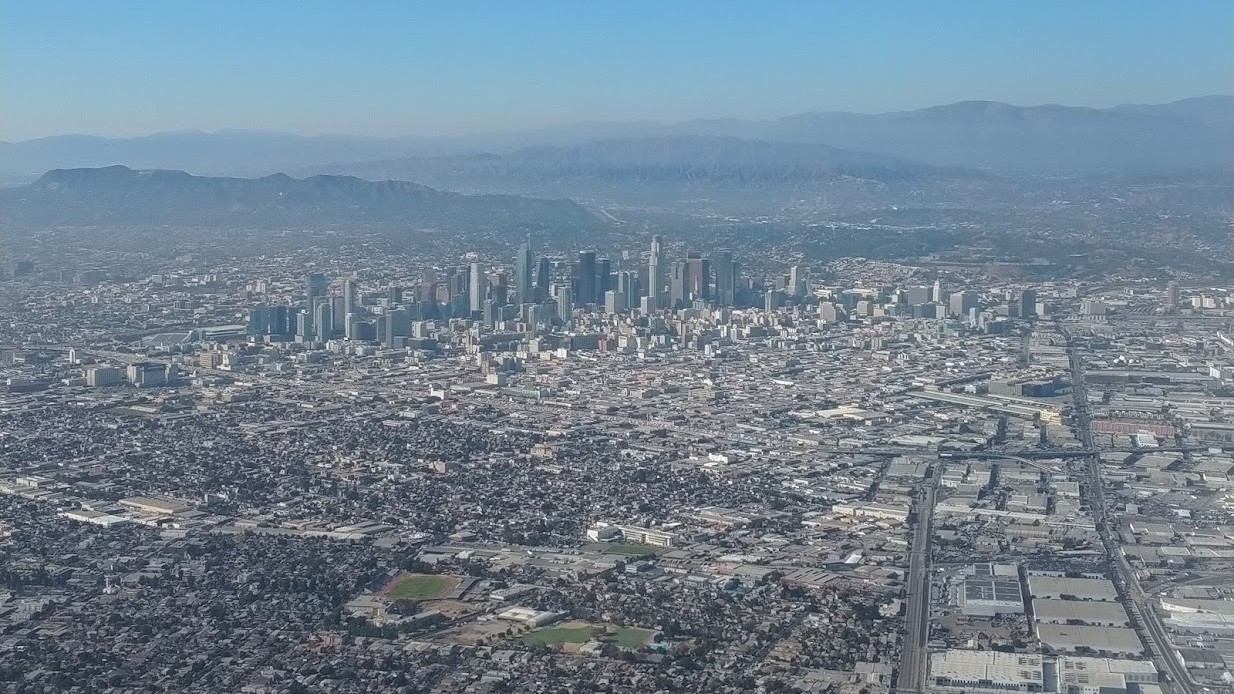
As of about 9:20 a.m. EDT Tuesday, Oct. 6, 2026, California officials are condemning President Donald Trump’s remark at a Nebraska rally on Monday evening, “They can take out a city. Let ’em take out Los Angeles, let ’em take out San Diego,” and the White House has answered with a different reading. CNN describes Trump as having “appeared to suggest Iran could ‘take out’ Los Angeles or San Diego,” and the officials responding describe it as an invitation to attack. White House Communications Director Steven Cheung said on X, as CNN reports it, that Trump was “clearly stating U.S. cities would have been threatened if a nuclear Iran hadn’t been stopped.” The Guardian reports that some conservative activists read the “small price to pay” line as being about high gas prices. These are different readings, each attributed to the people who gave it, and none is established by Trump’s own words in the passage.
The earliest postings of the passage are the San Diego Union-Tribune’s at 10:43 p.m. EDT Monday and KTLA’s at 10:31 p.m. PDT Monday (1:31 a.m. EDT Tuesday).
The passage as printed
The San Diego Union-Tribune (updated 1:05 a.m. EDT Tuesday) printed the fullest passage. Trump spoke Monday, Oct. 5, at a campaign event in Nebraska. KTLA places it at the Pinnacle Bank Expo Center in Grand Island, and CNN also says Grand Island. The Union-Tribune says Republican Sen. Pete Ricketts was at the event and that the visit to Nebraska, which Trump said is part of “a 32-day blitz of rallies ahead of the Nov. 3 election,” is one of many.
The Union-Tribune quotes Trump:
> “And again, remember, with the war, it’s just artificial. It’s a little bit high. It’s a small price to pay for keeping the world safe, keeping our country safe. They can take out a city. Let ’em take out Los Angeles, let ’em take out San Diego. This is a very small price to pay, and it’s going to be over with very soon. It’s essentially almost over with. And they might keep going a little long, you know, they always say they have a big threshold for pain.”
Outlets transcribe it with small differences. The Union-Tribune prints “Let ’em take out Los Angeles, let ’em take out San Diego.” KTLA prints “Let ’em take out Los Angeles. Let ’em take out San Diego.” Forbes, The Guardian and CNN print “let them take out” (CNN: “Let, let them take out Los Angeles. Let them take out San Diego”). The first sentence also differs: KTLA prints “They could take out a city,” while the Union-Tribune, The Guardian and NBC 7 print “They can take out a city.” KTLA prints “over very soon” where the Union-Tribune prints “over with very soon” and CNN prints “gonna be over with very soon.”
KTLA writes that Trump spoke “in reference to the Iran war.” The passage as the Union-Tribune prints it does not name Iran in those sentences.
What came right before
According to the Union-Tribune, Trump had just said gas prices would come down after the war ends “very soon,” that “we’re kicking Iran’s ass,” and that “they will not have a nuclear weapon.” NBC 7 San Diego reports that earlier in the speech he said he wanted to “see a tremendous victory” in the November election “cause it verifies all the things we did.”
The Union-Tribune also quotes him saying “oil is less than it was under (President Joe) Biden” and “We’re taking more oil out of the Strait now than we did before the war,” a reference to the Strait of Hormuz. Those are Trump’s claims, and none of the outlets named here checks them.
The Guardian describes the speech as “rambling” and “nearly hour-and-a-half” long, and says the crowd applauded after the remark. KTLA says the line drew “cheers from the crowd.”
The White House response
CNN’s wire item (published 5:26 a.m., time zone not shown on the page; “updated with additional information”) reports: “White House Communications Director Steven Cheung said on X that Trump was ‘clearly stating U.S. cities would have been threatened if a nuclear Iran hadn’t been stopped.'” CNN also quotes Cheung: “America is safer because of the President. Iran has no nuclear, no navy, no air force, and no money.” CNN’s page does not give the time of his post.
Cheung’s statements about Iran are his claims; this article has not verified them. The Guardian (4:04 a.m. EDT) wrote that the White House “did not immediately respond to a request for comment.” CNN’s item is stamped 5:26 a.m. (time zone not shown), so the order of the two reports cannot be fixed from their stamps. ABC News, in a short developing item posted at 5:23 a.m. (time zone not shown on the page), shows no White House statement.
Who responded
The responses below were posted on X or issued as statements, and the outlets print them as written. They are the officials’ own characterizations.
- Gov. Gavin Newsom wrote: “After sending the National Guard and Marines to occupy California, Donald Trump is now saying our foreign enemies should ‘take out’ Los Angeles and San Diego. He is deranged and dangerous.” KTLA says his press office posted a statement roughly two hours later: “Let’s be clear: The President is advocating for an attack on 10+ million U.S. residents in two of America’s largest cities. This is not normal. None of this is. And we will continue to remind folks of that every day.”
- Los Angeles Mayor Karen Bass issued a statement Monday night (KTLA; Forbes prints the same text): “The President of the United States suggested that a foreign government attack Los Angeles. His statements against our city are dangerous and could potentially compromise our safety. The role of a president is to protect the country, not to actively threaten it and encourage attacks on American lives. In the face of irresponsible threats, as Angelenos, we know how to stand together and protect our city.”
- San Diego Mayor Todd Gloria wrote: “San Diego is not collateral damage. We are not expendable. And we are never a ‘small price to pay.’ Keep our city out of your reckless war talk.”
- Sen. Alex Padilla wrote, in the wording the San Diego Union-Tribune prints (NBC 7 spells it “servicemembers”): “At least 19 service members have made the ultimate sacrifice in Trump’s unauthorized war with Iran – including Noah Tietjens of Nebraska. Now Trump is in Nebraska inviting an attack on U.S. soil, putting millions of Americans and hundreds of thousands of our service members at risk while trying to get Americans to cheer for an attack on our own country. What kind of Commander in Chief does that?”
- Sen. Adam Schiff, as quoted by Forbes: “The President says the Iran war will end ‘very soon.’ How many times have we heard that promise? And if it means attacks on two major American cities in the process, he is not troubled by the cost.”
- Rep. Sara Jacobs wrote: “My constituents – including many active duty service members, veterans, and their families – are not acceptable collateral damage in Trump’s stupid war.”
- Rep. Scott Peters wrote: “San Diego is a proud military town, home to 115,000 courageous active duty servicemembers and their families … America knows San Diego is not a ‘small price to pay’ for his inability to resolve it.”
- Xavier Becerra, whom The Guardian calls the Democratic nominee for governor, said: “Thirteen million Californians call LA and San Diego counties home. Their lives are not a ‘small price to pay’ or a punchline for Donald Trump.”
- San Diego Councilmember Marni von Wilpert, whose post NBC 7 quotes, wrote: “This is an impeachable offense by the Commander in Chief.” That is her opinion, not a legal finding. NBC 7 shows her account as “Marni von Wilpert for Congress.”
- Jim Desmond wrote: “I vehemently disagree with President Trump’s comments. America must stand up to Iran and defend our interests, but the first responsibility of our Commander in Chief is to protect the American people and our homeland.” NBC 7 also quotes him saying in part: “No American city is expendable, and no American family should ever be treated as collateral damage.” CNN calls him a Republican congressional candidate running in California’s 48th Congressional District, and NBC 7 shows his account as “Jim Desmond for Congress.” Both he and von Wilpert posted from accounts named as campaign accounts.
The Guardian describes the comments as “unwelcome” in California and notes that Steve Hilton is the Republican candidate for governor endorsed by Trump. The Guardian does not quote Hilton.
The readings side by side
- White House (Cheung, per CNN): Trump was “clearly stating U.S. cities would have been threatened if a nuclear Iran hadn’t been stopped.”
- CNN’s own framing: Trump “appeared to suggest Iran could ‘take out’ Los Angeles or San Diego.” CNN also wrote that Trump “has repeatedly made the argument that high gas prices are a small price to pay for the war in Iran” and that in Nebraska “he appeared to contrast that with a dramatically higher price to pay – an attack on a US city.”
- Forbes (11:40 p.m. EDT Monday): “it’s unclear if he was daring Iran to attack the cities or warning that this might happen.” Forbes also wrote that he made the claim “without offering any evidence of the country possessing weapons of mass destruction or long-range weapons to do such a thing.”
- NBC 7 San Diego: “even if the president was joking, the comments have drawn condemnation.” That is the outlet’s conditional framing.
- The Guardian: online the comments “set off a debate” over whether it was “a crude joke about two blue cities” or whether Trump had, “accidentally perhaps, disclosed confidential intelligence about potential Iranian targets.” It added that “some conservative activists argued” he was referring to high gas prices when he called it a “small price to pay.”
No outlet quoted here has Trump himself saying whether he was joking or serious.
Context a reader may need
The war. Newsweek reported that the Iran conflict “started on February 28” and that fighting “resumed in July following a ceasefire.” CNN wrote that at the onset Trump “had vowed that the conflict would only last a few weeks, but it has since gone on seven months,” and that last week he made “the new argument” that his initial four- to six-week timeline “had just been about the time it would take to eradicate the nuclear threat from Iran and not the time it would take to conclude the entire war.”
Casualty figures are from September. Padilla’s “at least 19” is the same number as a Pentagon count in a Newsweek article updated Sept. 24; nothing in the outlets quoted here says Padilla drew on that database. Newsweek wrote that, “as of Tuesday,” the Defense Casualty Analysis System showed 19 U.S. personnel had died from hostile and nonhostile action in the Iran war and more than 820 had been wounded. The same article says The Washington Post reported that “at least 22 service members” had died in the Middle East, according to five officials, with a sixth official saying 23. Newsweek also reported that the Pentagon lowered its official toll in July from 18 to 14, and that the Pentagon denied the change was an attempt to conceal casualties, saying it resulted from “temporary data disruptions.” These are late-September figures from Newsweek, not a current count.
What The Guardian says about Iran’s reach. The Guardian wrote that “US defence officials have previously stated that Iran currently lacks the capability to launch a direct missile attack on the US mainland.” It did not name the officials. It also noted that Trump “has argued in previous speeches that allowing Iran to develop a nuclear weapon would threaten US cities,” and that in his last State of the Union speech he claimed Iran was working to build missiles that would “soon” reach U.S. soil.
San Diego’s recent history. The Union-Tribune wrote that “in March, a memo sent out by the FBI to some police agencies in California warned about Iran allegedly aspiring at one point to conduct a surprise attack using drones from an offshore boat,” and that “the White House downplayed the threat at the time.” It also notes that San Diego is in the spotlight ahead of “the expected return Thursday of the USS Abraham Lincoln after one of the longest and most grueling deployments since World War II.”
The political setting. KTLA reports that Ricketts “faces an unexpectedly tight race against independent Dan Osborn, according to the polls.” CNN notes that Trump “has frequently criticized the state and its leaders over immigration, state elections and wildfires.” Newsom’s reference to sending “the National Guard and Marines to occupy California” is his own characterization, and this article does not describe the events behind it.
What is not known
- What Trump meant by the remark, and whether he will clarify it himself.
- When Cheung posted his statement; CNN’s page does not say.
- Whether the White House or the campaign will say more, or respond to the California officials’ specific criticisms.
- A current U.S. casualty count. The newest figures cited here date to Sept. 22-24.
- Whether Trump’s statements that the war is “almost over” will prove accurate, or whether Cheung’s statements about Iran’s capabilities hold. Those are their words, not established facts.
What to watch next
- Any further statement from the White House or the Trump campaign on the remark.
- Whether Republican officials in California or elsewhere comment beyond Desmond, a candidate rather than a sitting member of Congress.
- The expected Thursday return of the USS Abraham Lincoln to San Diego, which the Union-Tribune flags as a moment when the city will be in the spotlight.
- Trump’s further rallies before the Nov. 3 election, which he described as a 32-day run, and any new remarks on the war.