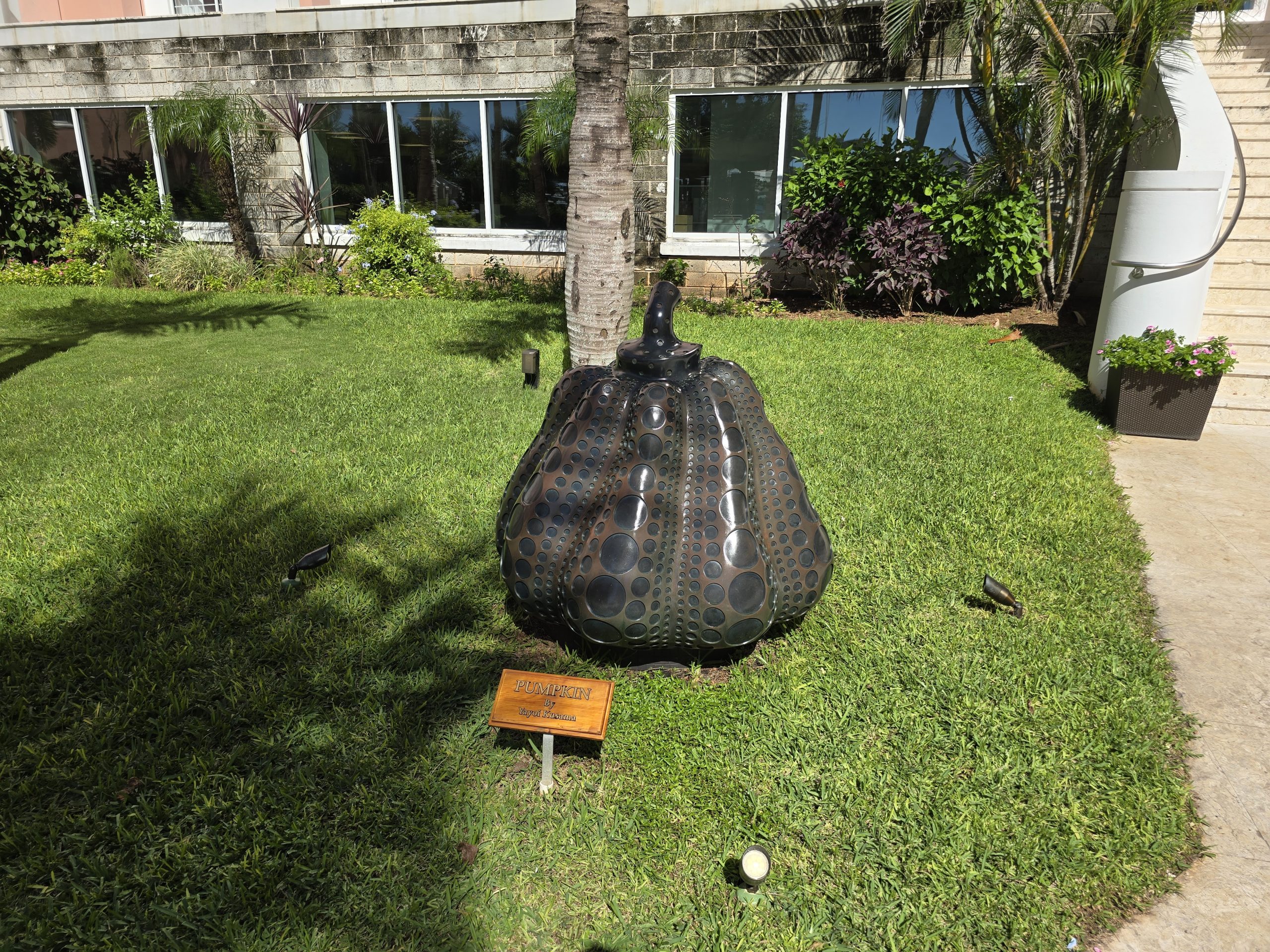
Yayoi Kusama, the Japanese artist whose polka-dotted pumpkins and mirrored infinity rooms made her one of the most recognized names in contemporary art, has died at age 97. She died August 14, 2026, at a hospital in Tokyo, though the news did not become public until August 26, 2026, when her official website and the Yayoi Kusama Museum announced it and her gallery, David Zwirner, confirmed it the same day.
According to Kyodo News, her gallery, David Zwirner, said the cause of death was “multiple organ failure.” The studio’s own public statement did not itself give a cause of death, and no further medical detail has been disclosed by either side.
Key facts
- Who: Yayoi Kusama, Japanese artist known for polka-dot art and Infinity Mirror Rooms
- Died: August 14, 2026, at a hospital in Tokyo, at age 97
- Announced: August 26, 2026, by her studio and gallery David Zwirner
- Cause of death: “Multiple organ failure,” according to David Zwirner, as reported by Kyodo News
- Born: March 22, 1929, in Matsumoto, Nagano, Japan
From Matsumoto to New York’s avant-garde
Kusama was born March 22, 1929, in Matsumoto, in Japan’s Nagano region, to a family that ran a plant nursery and seed farm. She has said she began experiencing vivid hallucinations as a child — fields of dots, flashes of light — that later shaped the polka-dot and “Infinity Net” patterns she became known for. She trained briefly in traditional nihonga painting at the Kyoto Municipal School of Arts and Crafts in the late 1940s before leaving Japan.
She moved to the United States in 1957 and became a fixture of New York’s avant-garde scene through the 1960s, producing her Infinity Net paintings and staging public “happenings” — including events where she painted polka dots on the bodies of Vietnam War protesters. She began the Infinity Mirror Room series, the immersive, mirrored installations she is now best known for, in 1963.
Kusama returned to live in Japan in 1973. From 1977 on, she resided by choice at a psychiatric hospital in Tokyo, continuing to work from a studio nearby for the rest of her life; available reports do not say whether this was the same hospital where she later died. Her organizations said she “continued to paint until her final days, never setting aside her brush.”
A global audience for her work
By the time of her death, Kusama was widely regarded as one of contemporary art’s most commercially successful and popular figures, with her Infinity Mirror Rooms having drawn millions of visitors at museums worldwide, including Tate Modern in London and the Hirshhorn Museum in Washington, D.C., and she collaborated with Louis Vuitton. Her life and work were the subject of the 2018 documentary “Kusama: Infinity.” A museum dedicated entirely to her work, the Yayoi Kusama Museum, opened in Tokyo’s Shinjuku district in 2017.
Two Kusama exhibitions already scheduled for 2026, planned independently of her death, remain on the calendar. Museum Ludwig in Cologne, Germany, is running a 50th-anniversary retrospective of her work with more than 300 pieces on view, and Cincinnati Art Museum’s exhibition “Yayoi Kusama: All the Eternal Love I Have for the Pumpkins” runs from July 17 through October 18, 2026.
“At the time of her passing, Kusama was, without a doubt, the most famous living artist in the world,” Zwirner said, adding that representing her art for the past fifteen years had been “one of the great privileges” of his professional life.
What happens now
Kusama’s organizations said only that they will “carry forward Kusama’s wishes and, through art, continue to bring hope and strength for the future to people around the world.” No successor has been named, and no funeral or memorial details have been announced.