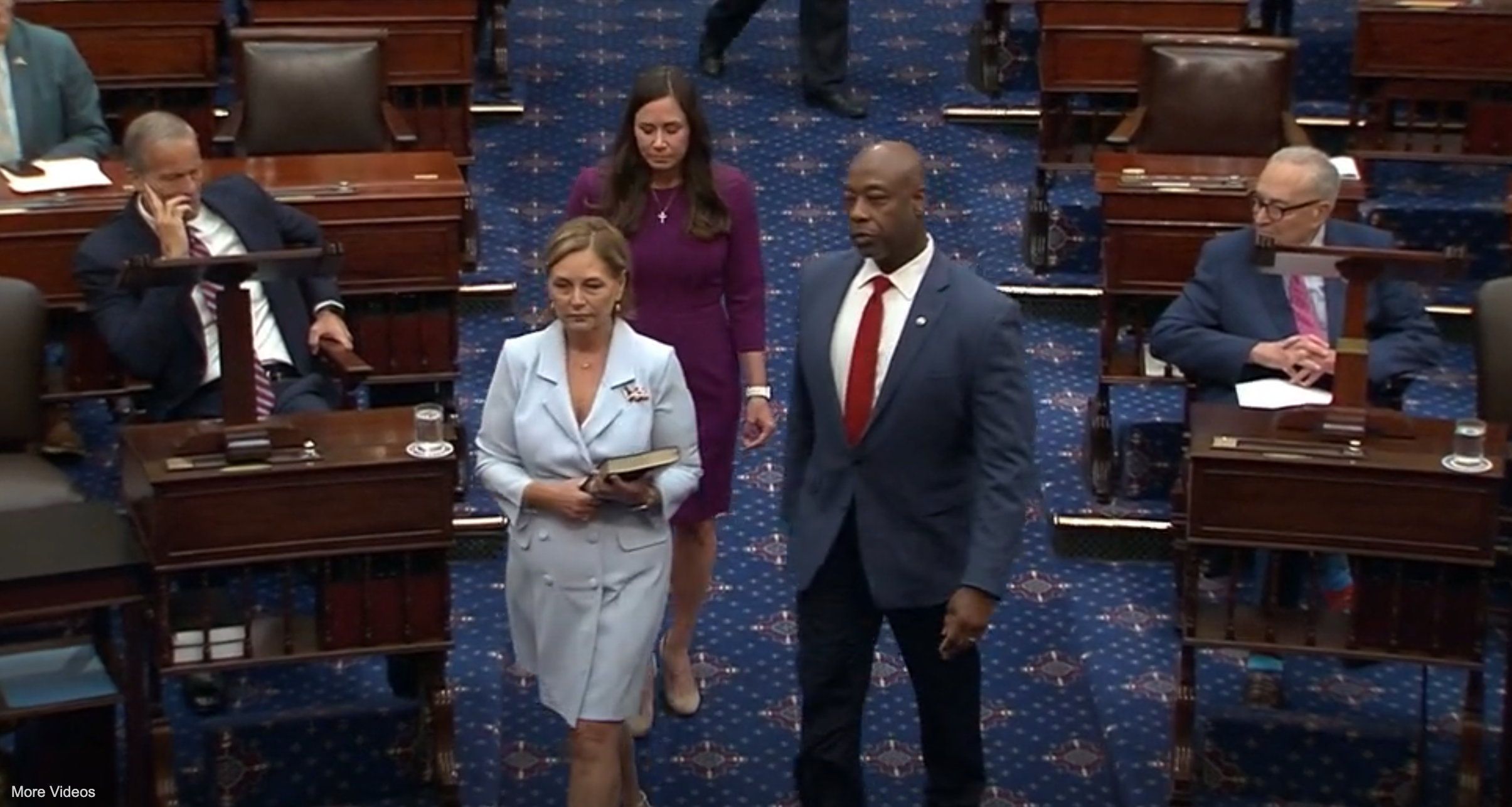
Darline Graham, the South Carolina senator who took her late brother’s seat after his sudden death last month, won the Republican nomination for a full Senate term on Tuesday, defeating U.S. Rep. Ralph Norman in a primary runoff. The Associated Press called the race for Graham.
Key facts
- Winner: Darline Graham, South Carolina’s appointed senator since mid-July
- Defeated: U.S. Rep. Ralph Norman, in a Republican primary runoff
- Margin: unofficial returns had Graham ahead by roughly 52% to 48%
- Endorsement: President Trump backed and campaigned for Graham
- Next election: Nov. 3 general election against Democratic nominee Dr. Annie Andrews
- Term: the winner serves a full six-year Senate term
Timeline
- July 11 — Sen. Lindsey Graham dies at 71 after a brief, sudden illness.
- Mid-July — Gov. Henry McMaster appoints Darline Graham to fill the vacant seat.
- Aug. 11 — Graham leads a 10-candidate first-round primary with about 32.7%; Norman finishes second with about 24.7%.
- August — In a debate, Graham says she isn’t “that informed” on national security, drawing criticism.
- Tuesday — Graham defeats Norman in the runoff; the AP calls the race for her.
- Nov. 3 — General election against Democratic nominee Dr. Annie Andrews.
A seat that passed between siblings
Graham, 62, has served as South Carolina’s appointed senator since mid-July, when Gov. Henry McMaster named her to fill the vacancy left by the death of Sen. Lindsey Graham, who died July 11 at age 71 after a brief, sudden illness. She is his younger sister; he took legal guardianship of her when she was 13 and he was 22, after both of their parents died within about 15 months of each other. Before her appointment, Graham had never held elected office. She spent more than a decade in South Carolina’s Vocational Rehabilitation Department and has served since 2019 as commissioner of the state’s Commission for the Blind. Her appointment made her the first woman to represent South Carolina in the U.S. Senate, and the first senator in U.S. history to directly succeed a sibling in the same seat.
How the runoff came about
Tuesday’s runoff followed a crowded first-round primary on Aug. 11, when 10 Republicans — including Graham, Norman, U.S. Rep. Russell Fry and former Gov. Mark Sanford — competed for the nomination. Graham led that field with about 32.7% of the vote, and Norman was second with about 24.7%. Because no one cleared 50%, state rules sent the top two finishers into a runoff.
Trump’s role in the race
President Trump backed Graham throughout the race. He had recommended her for the Senate appointment that Gov. McMaster made, then endorsed her runoff campaign and campaigned for her in person, headlining a rally in Myrtle Beach and phoning into a tele-rally in the campaign’s final days. A super PAC aligned with him, MAGA Inc., spent roughly $800,000 on ads supporting her in the closing stretch, and Gov. McMaster campaigned alongside her as well — a win that adds to Trump’s string of successful primary endorsements this year.
Norman concedes
Norman, the sitting U.S. representative for South Carolina’s 5th Congressional District, conceded on election night. He said he hadn’t prepared remarks and that he had never understood why Trump got involved in the race, while acknowledging the president had every right to weigh in. He pledged to support Graham and other Republicans in the general election. Norman remains South Carolina’s 5th District representative in the House.
A debate moment drew criticism
The campaign wasn’t without a rough moment for Graham. During an August debate with Norman, a moderator asked whether Taiwan and the South China Sea count as U.S. national-security issues. Graham said she wasn’t “that informed on national security,” calling it “not my thing, not my area of expertise,” while adding that she supports the military. The answer drew criticism, including a public rebuke from former South Carolina Gov. Nikki Haley, who said on social media that Lindsey Graham had been well informed on national security and that his sister had admitted she was not. Graham won the runoff by roughly five points regardless, and it isn’t clear how much the exchange weighed with voters.
What comes next
Graham’s win sets up a Nov. 3 general election against Democratic nominee Dr. Annie Andrews, a Charleston pediatrician and Medical University of South Carolina professor. The winner will serve a full six-year term, since the seat was already scheduled for regular election this year regardless of Lindsey Graham’s death. South Carolina has leaned heavily Republican in recent statewide races, but no reliable polling of the Graham-Andrews matchup has emerged since the runoff.