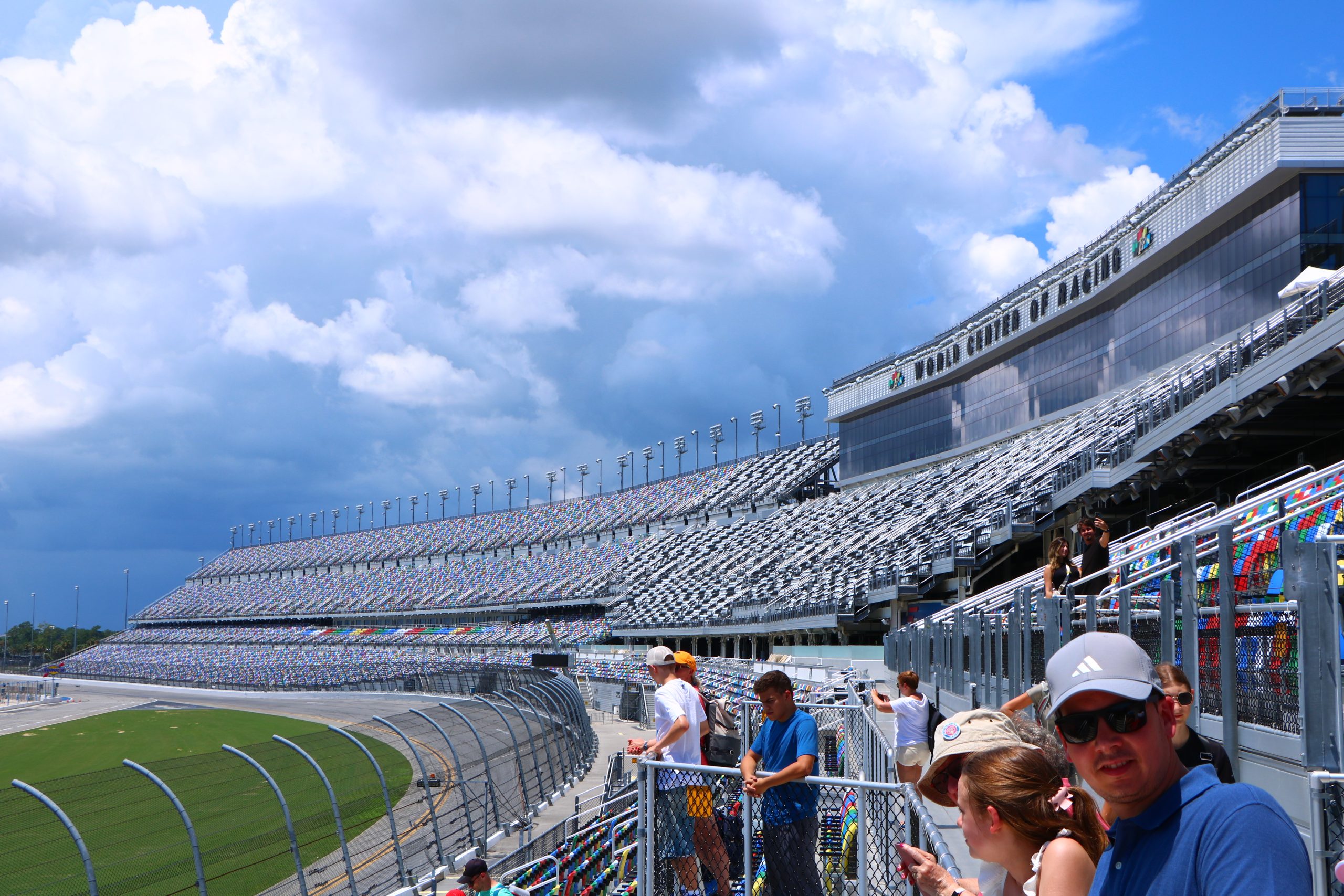
Kyle Larson finished 31st in NASCAR’s Aug. 29, 2026 season finale at Daytona International Speedway — and still made the 16-driver Chase field, seeded 7th, because his place was based on his regular-season points total, not solely on his finish in the finale. His night included two separate wrecks, a scoring review that revised his own results mid-race, and a finish nowhere close to where he started.
The race itself, the Coke Zero Sugar 400, went to Ryan Preece, who won in overtime after the scheduled 160 laps were extended to 166 for a green-white-checkered finish. It was Preece’s first career NASCAR Cup Series victory, and it also secured him the 16th and final Chase berth, beating Shane van Gisbergen by 17 points for the spot. The race also debuted NASCAR’s new low-downforce aerodynamic package for Daytona — a smaller rear spoiler and less horsepower meant to increase passing — which every team ran for the first time with zero practice laps beforehand. Preece was also caught up in the Stage 1 wreck that collected Larson; he was scored 8th at the end of that stage and worked his way back to the front from there before winning the race outright in overtime.
Key facts
- Winner: Ryan Preece, his first career NASCAR Cup Series victory
- Race: Coke Zero Sugar 400, Aug. 29, 2026, Daytona International Speedway — extended to 166 laps for a green-white-checkered finish
- Larson’s finish: 31st place, after two separate incidents
- Larson’s Chase seed: 7th of 16, based on season-long points, not the finale result
- New format: 2026 Chase replaces the win-and-you’re-in playoff used since 2014 — 10 races, no eliminations, points reset
- Missed the cut: Brad Keselowski (14th at Daytona) and Alex Bowman (eliminated at Richmond)
- Next race: Southern 500 at Darlington Raceway opens the Chase
Two incidents, two different kinds of trouble
Larson’s night went wrong twice, in unrelated ways.
He started 10th, well back of pole-winner Ross Chastain, and the trouble began at the end of Stage 1: an early push from Larson’s car unsettled Chris Buescher heading into the tri-oval. Buescher’s car went into the outside wall and slid back across the track. That slide collected both Larson and Preece, and all three cars slid through the infield grass. Afterward, NASCAR’s scoring officials reviewed the tangled Stage 1 finish and corrected the running order, moving Larson up to a stage result that put him just ahead of teammate Chase Elliott. That fix corrected the scoring — it didn’t change which drivers ultimately made the Chase.
The second incident had nothing to do with scoring. On the race’s final lap, during the overtime restart, race leader Zane Smith moved to block a rival’s pass attempt and spun out, scattering the cars behind him. Larson slowed to avoid Smith’s spinning car, but Daniel Dye’s car had nowhere to go, climbed over the top of Larson’s No. 5 Chevrolet, and struck it near the window net. Larson was not hurt; he told his team over the radio that he was okay.
NASCAR also made additional post-race scoring corrections after further pileups, but those changes did not alter which drivers qualified for the Chase.
By the end of it, Larson had completed all 166 laps but finished 31st — a steep drop from where the Stage 1 correction had put him.
Why a 31st-place finish didn’t cost him a playoff spot
NASCAR moved to a new “Chase” format for 2026, ending the win-and-you’re-in elimination playoff system it had used since 2014. Under the new format, the top 16 drivers in regular-season points after the Daytona finale move on to a 10-race Chase with points reset and no elimination rounds along the way.
That means Larson’s Chase spot was decided by points he’d built up across the whole regular season, not by his finishing position in the finale itself. He enters the Chase seeded 7th. That seed does more than set his rank: it also determines how many points he starts the 10-race Chase with, so a better seed carries a bigger points cushion into the reset than a lower one.
The full 16-driver field
In seed order:
- Denny Hamlin
- Ryan Blaney
- Tyler Reddick
- Ty Gibbs
- Chase Briscoe
- Christopher Bell
- Kyle Larson
- Chase Elliott
- Joey Logano
- Chris Buescher
- Daniel Suárez
- Carson Hocevar
- William Byron
- Bubba Wallace
- Austin Cindric
- Ryan Preece
Hamlin earned the No. 1 seed by winning the regular-season points championship; Blaney took the No. 2 seed on the strength of regular-season wins at Phoenix, EchoPark and New Hampshire.
Two notable names are missing from that list. Brad Keselowski, the only former Cup Series champion still racing full time and still eligible, finished 14th at Daytona and missed the Chase. And Alex Bowman, who missed four races earlier this season after vertigo forced him out of the car at Circuit of the Americas, was already mathematically eliminated from Chase contention at Richmond before the Daytona finale — he is not on the final 16-driver list.
What’s next
The 10-race Chase is set to open at Darlington Raceway’s Southern 500, where the reset points and the new no-elimination format get their first real test.
Sources and further reading
- NASCAR announces rule changes for summer Cup race at Daytona
- NASCAR returns to Chase championship format for 2026
- Cup Series: 2026 Daytona summer race recap & results
- NASCAR Cup qualifying today: Kyle Larson nabs 10th spot in Daytona starting lineup
- Racing Insights: New postseason format, same Daytona mystique
- 2026 NASCAR Cup Series Chase field set after Daytona
- NASCAR points standings: Larson seventh, Elliott eighth, Byron 13th to begin The Chase