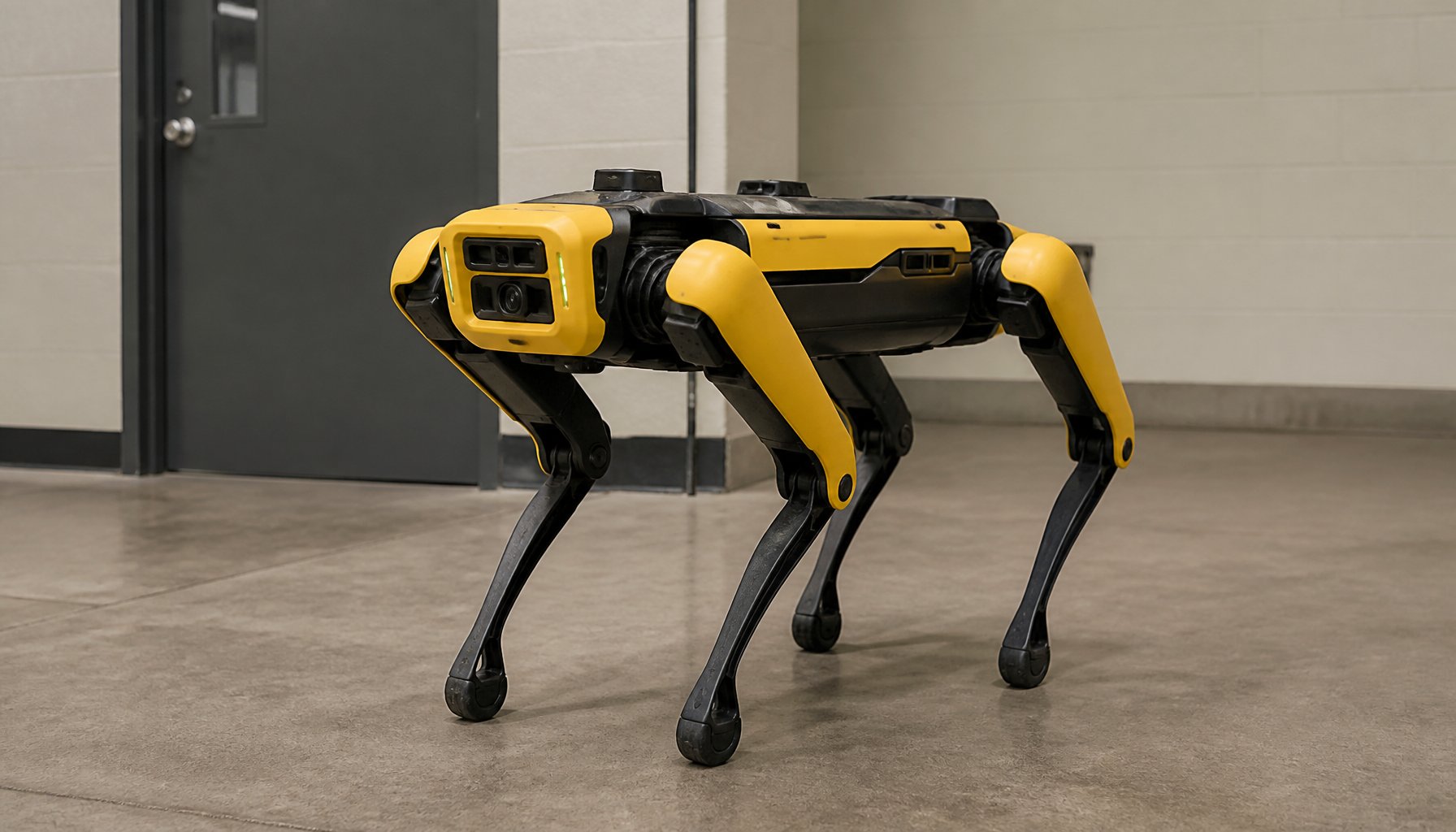
Immigration and Customs Enforcement is planning to spend between $1 million and $2 million on Boston Dynamics “Spot” robot dogs, according to a procurement notice the Department of Homeland Security published on Aug. 27, 2026. A group of 16 Democratic U.S. senators has since sent a letter to acting ICE Director David Venturella demanding the deal be cancelled.
The notice, filed in DHS’s public Acquisition Planning Forecast System, describes the purchase as covering Spot robots and related accessories. A senior DHS official told NBC News the robots will not be used to make arrests. Instead, DHS says their job is inspection, situational awareness and hazard assessment — essentially, scouting dangerous, confined, unstable or hard-to-reach spaces before officers go in themselves, so agents have a better idea of what they’re walking into.
Key facts
- What: ICE plans to buy Boston Dynamics “Spot” robot dogs and accessories
- Cost: $1 million to $2 million, per a DHS procurement notice
- Notice published: Aug. 27, 2026, in DHS’s Acquisition Planning Forecast System
- Stated use: Inspection, situational awareness and hazard assessment — not arrests, DHS says
- Base robot price: About $75,000 per unit before add-ons
- Estimated fleet size: Roughly 13 to 26 units, per a Gizmodo estimate not confirmed by DHS or ICE
- Opposition: 16 Democratic senators have asked acting ICE Director David Venturella to cancel the deal
- Next step: A formal solicitation is expected Sept. 4, 2026, with an award targeted by Sept. 30
What the robots would actually do
Spot is a four-legged robot that can walk on uneven ground and climb stairs. Depending on how it’s equipped, it can carry:
- Cameras and sensors that detect vibration, gas or radiation
- A robotic arm, on some versions
- 360-degree cameras and thermal-imaging capability, according to some reporting on this purchase — though it isn’t clear which specific features the ICE units would include
Unlike a police dog, Spot cannot physically attack a person.
Boston Dynamics, headquartered in Waltham, Massachusetts, lists a starting price of roughly $75,000 for a base Spot unit before add-ons, which means the $1 million to $2 million budget would likely cover more than a single robot. Dividing the budget by that base price, Gizmodo has estimated a fleet of roughly 13 to 26 units. That’s a rough estimate based on public numbers, not a figure DHS or ICE has confirmed; the procurement notice does not disclose an exact unit count.
Where the deal stands
As of August 31, 2026, no contract has been signed. The DHS forecast describes a plan, not a completed purchase: it points to a formal solicitation expected on Sept. 4, 2026, with an award targeted for the last quarter of the current federal fiscal year, which ends Sept. 30, and contract completion scheduled for April 24, 2027. The notice names Boston Dynamics’ Spot specifically as the product DHS is looking to buy. It lists Fort Benning, Georgia, as the place of performance, but that does not establish where ICE would deploy the robots in the field.
Boston Dynamics has a standing company policy, reaffirmed in a 2022 open letter co-signed by five other robotics makers, that it will not authorize or partner with buyers who want to use its robots as weapons or autonomous targeting systems, and that it will act if its products are misused. That policy predates and is separate from this specific ICE purchase. A Boston Dynamics spokesperson described the company’s business more broadly, saying it “sells to many government agencies and public safety organizations” and that its robots are “used to keep people out of harm’s way and aid first responders in assessing dangerous situations” — a general characterization of its customer base, not a statement about the ICE deal specifically.
Why senators want it stopped
The 16 Democratic senators’ letter to Venturella calls for the robot-dog contract to be cancelled and asks ICE to put that money into de-escalation training and accountability measures instead. The letter frames that request as part of a broader pattern, citing what it calls a 37% rise in use-of-force incidents in ICE detention during 2025 — at least 780 incidents affecting more than 1,300 people — though those figures come from the senators’ own letter, not from an independently verified DHS report. Civil-liberties groups have also raised concerns: the ACLU has called for more transparency around how the government tests and deploys robots like Spot, and Matthew Guariglia of the Electronic Frontier Foundation has warned that sending a robot through a door first, rather than a person, could make agents more willing to escalate a raid.
ICE isn’t the first law-enforcement or security agency to use this kind of robot. The Los Angeles and New York police departments have both used Spot-type robots, and the U.S. Secret Service reportedly used similar robots to help secure Mar-a-Lago in 2024. The NYPD’s experience shows the technology can be politically fraught:
- 2020: NYPD first tested Spot
- 2021: Dropped the contract after public backlash
- 2023: Brought the robot back
A separate ICE purchase, in the same week
Separately from the robot dogs, ICE also recently finalized a no-bid contract worth tens of millions of dollars for thousands of pairs of electric-shock gloves, intended to let officers use less lethal force in the field. That gloves contract drew its own formal objection letter from Democratic senators to Venturella and public criticism from immigrant-rights advocates. Border czar Tom Homan has publicly defended the gloves purchase, arguing it could reduce how often agents need to use deadly force. That defense was specifically about the gloves. No source reviewed for this story shows Homan commenting on the robot-dog purchase. The two purchases are being reported around the same time as part of a broader pattern of ICE technology spending. One report described nearly 50,000 ICE arrests in July 2026 as the highest monthly total of the second Trump administration. But they’re separate deals — different companies, different price tags, and different controversies behind them.
What happens next
Whether the senators’ letter changes DHS’s plans, and how many robots ICE ultimately buys, are not yet known.