Wall Street fell and oil prices climbed on Monday, Aug. 31, 2026, after US forces struck Iranian military targets in the Strait of Hormuz over the weekend and Iran said it launched missiles and drones at US-linked bases in Jordan and the United Arab Emirates. The Dow Jones Industrial Average, the S&P 500 and the Nasdaq Composite all closed lower, while traders pushed up their bets that the Federal Reserve will raise interest rates when it meets next month.
Key facts
- Strike: US Central Command hit two Iranian Revolutionary Guard rocket launchers on Larak Island in the Strait of Hormuz on Sunday, Aug. 30.
- Retaliation: Iran’s Revolutionary Guard said it launched missiles and drones at US-linked bases in Jordan and the UAE early Monday; Jordan’s military said it intercepted eight missiles, while the UAE said it intercepted a drone and rejected Iran’s account of an attack on one of its bases. Neither country reported casualties.
- Markets: The Dow, S&P 500 and Nasdaq all closed lower Monday; energy stocks Exxon Mobil and Chevron each rose about 3%.
- Oil: WTI crude rose more than 2% to around $85 a barrel; Brent crude rose roughly 3%, to about $88-$91 a barrel depending on the report.
- Fed: Futures trackers put the odds of a rate hike at the Fed’s Sept. 16 meeting in the high 50s to low 60s, up from about 40% a week earlier.
What happened over the weekend
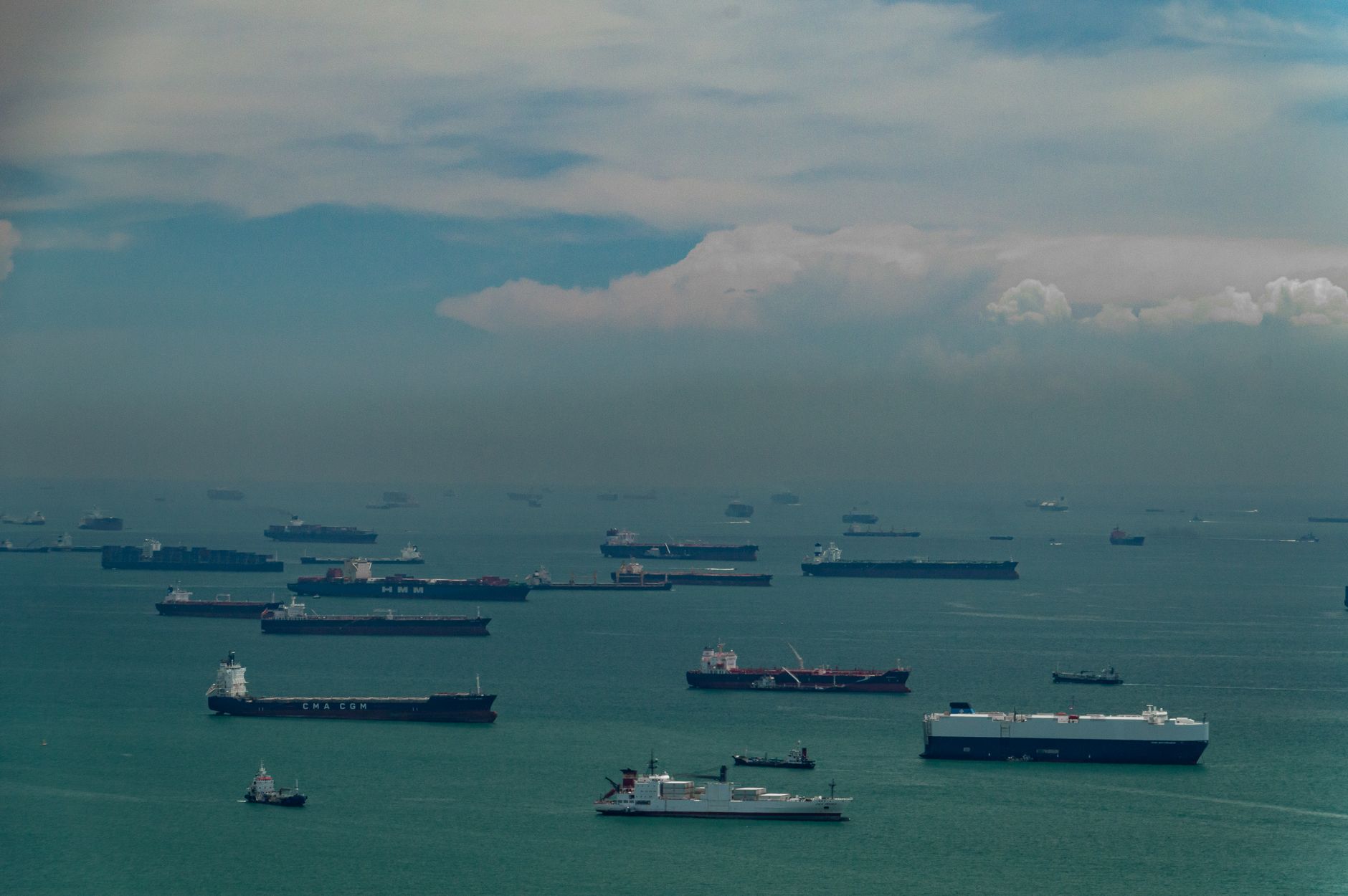
US Central Command forces struck two Iranian Revolutionary Guard Corps rocket launchers on Larak Island, in the Strait of Hormuz, on Sunday, Aug. 30 — the first US military action in the region in about a month. CENTCOM spokesperson Tim Hawkins said the Revolutionary Guard forces had been “observed preparing to launch rockets with sea mines into the strait,” a waterway between Iran and Oman that carries a large share of the world’s seaborne oil.
Early Monday, Iran’s Revolutionary Guard said it launched missiles and drones at King Hussein and Al Azraq air bases in Jordan and at Al Minhad Air Base in the United Arab Emirates in retaliation, and said the strikes caused heavy damage. Jordan’s military said it intercepted eight missiles before they could cause any damage, and the UAE said it intercepted a drone while rejecting Iran’s account of an attack on one of its bases. Neither Jordan nor the UAE has reported casualties. Iran’s Revolutionary Guard said two personnel — Hamid Avazzadeh and Ali Fayazi — were killed in the strike and that additional personnel were injured; the report did not establish an independently confirmed casualty count. President Trump told Fox News the US would respond further: “We’re going to hit them hard. There will be a response.”
The exchange is the latest flare-up in a US-Iran conflict that began Feb. 28, 2026, when US and Israeli strikes hit Iranian military and nuclear sites and killed Iran’s Supreme Leader Ali Khamenei. The conflict has continued on and off since, through a naval blockade and a June 17 truce between President Trump and Iranian President Masoud Pezeshkian that collapsed by early July after Iran struck commercial ships.
Timeline
- Feb. 28, 2026: US and Israeli strikes hit Iranian military and nuclear sites, killing Iran’s Supreme Leader Ali Khamenei, starting the conflict.
- June 17, 2026: President Trump and Iranian President Masoud Pezeshkian agree to a truce.
- Early July 2026: The truce collapses after Iran strikes commercial ships.
- Sunday, Aug. 30, 2026: US Central Command strikes Iranian Revolutionary Guard rocket launchers on Larak Island in the Strait of Hormuz.
- Monday, Aug. 31, 2026 (early): Iran’s Revolutionary Guard said it launched missiles and drones at US-linked bases in Jordan and the UAE.
- Monday, Aug. 31, 2026: Wall Street closes lower and oil prices jump.
- Sept. 16, 2026: The Federal Reserve’s next meeting, where traders now see a rate hike as more likely.
How stocks moved
All three major indexes closed lower Monday. Reported declines varied by source and snapshot, with the Dow down roughly 330 to 465 points, or about six-tenths to nine-tenths of a percent, and the S&P 500 and Nasdaq down roughly three-tenths to half a percent. The Dow’s decline ran anywhere from roughly 330 to 465 points, or about six-tenths to nine-tenths of a percent, with the S&P 500 and the Nasdaq down smaller amounts, roughly three-tenths to half a percent. That range exists because outlets checked the market at different points in Monday’s trading day — some using pre-market futures, others a mid-morning snapshot — not because anyone disputes that stocks fell.
One part of the market moved the other way: energy stocks. Exxon Mobil and Chevron both rose roughly 3% as oil prices climbed.
Why oil prices jumped
Oil rose as markets reacted to the escalation around the Strait of Hormuz, a major shipping route for crude. West Texas Intermediate crude, the US benchmark, rose more than 2% to around $85 a barrel, a Yahoo Finance market report showed. Brent crude, the international benchmark, rose roughly 3% Monday — to about $88 a barrel by that same report, or closer to $91 a barrel by another market report.
Trump also posted an AI-generated video Monday depicting Iran’s Kharg Island oil-export terminal being destroyed, but a US official told Reuters the terminal was not targeted in the overnight strikes.
Why the Fed comes into it
The stock and oil moves landed a few days after Federal Reserve Chair Kevin Warsh — confirmed by the Senate in May 2026, succeeding Jerome Powell — struck a hawkish tone at the Jackson Hole conference, saying inflation was “running too hot” and that the central bank has “work to do.” Rising oil prices tend to push inflation higher, which is one reason traders raised their bets on a rate hike at the Fed’s next meeting, scheduled for Sept. 16. Estimates of how much those odds moved vary by market, because different kinds of markets measure the bet differently. Futures-based trackers such as CME FedWatch, which price odds off interest-rate futures contracts, put the odds of a September hike in the high 50s to low 60s, up from around 40% a week earlier. Prediction markets such as Polymarket and Kalshi, where traders bet directly on the outcome instead, showed a closer-to-even split. No rate decision has been made, and the market-implied odds varied by source and platform.
What to watch next
Treasury Secretary Scott Bessent said the administration intends to keep up economic pressure on Iran, saying the goal is to “create the conditions that they will want to come to the table” and that the Treasury plans new sanctions on Iran-linked banks on a weekly basis. With the underlying conflict still active and no confirmed ceasefire in place, investors are likely to keep watching for further military moves and their effect on oil prices heading into the Fed’s Sept. 16 meeting.