Tesla shares closed at $354.08 on Friday, September 4, 2026, down $22.29, or about 6%, for the day, a day after the company’s Cybercab robotaxi made its commercial debut in Austin, Texas. The drop reversed a roughly 5% gain from the day before; the federal regulator, NHTSA, had opened a formal audit on September 3, the day of the launch, into how Tesla certified the two-seat vehicle as meeting applicable federal motor vehicle safety standards — a car built with no steering wheel, no brake pedal, no accelerator pedal and no mirrors.
Key facts
- Stock: Tesla closed at $354.08 on September 4, 2026, down $22.29 (about 6%) for the day
- Launch: Cybercab’s commercial debut was September 3, 2026, at ACL Live in downtown Austin — invite-only, about 15 minutes, no public livestream, no Elon Musk
- Audit: The agency opened Audit Query AQ26002 on September 3, 2026, examining how Tesla self-certified the Cybercab as meeting applicable federal motor vehicle safety standards
- Fleet: 45 Cybercabs cleared for driverless operation in Texas (up from an initial 7), out of roughly 314 vehicles authorized overall for Tesla’s Texas robotaxi program
- Audit scope: NHTSA’s record lists an estimated population of 1,000 vehicles under review — reflecting Tesla’s stated expansion plans, not today’s actual fleet
- Fares: Reported launch-day rides cost $19.58 and $12.15; Tesla has not published an official Cybercab rate card
Timeline
- October 2024 — Cybercab first shown as a prototype at Tesla’s “We, Robot” event
- 2022 — NHTSA raised similar self-certification questions about Amazon’s Zoox, a steering-wheel-free vehicle
- July 2026 — Zoox obtained a formal federal exemption for its design rather than continuing to rely on self-certification
- September 3, 2026 — Cybercab’s commercial debut in Austin, Texas; NHTSA opens Audit Query AQ26002 the same day
- September 4, 2026 — Tesla stock closes at $354.08, down about 6% for the day
A quieter launch than expected
The launch itself, on September 3 at ACL Live in downtown Austin, was smaller and quieter than many had expected. The invite-only event ran about 15 minutes, was not shown on a public livestream despite earlier plans to broadcast it, and Elon Musk did not attend. It nonetheless marked the start of real, paying rides: Tesla began limited commercial deployment of a small number of Cybercabs within a limited service area of the city, nearly two years after the vehicle was first shown as a prototype at Tesla’s “We, Robot” event in October 2024.
Booking a ride and what it costs
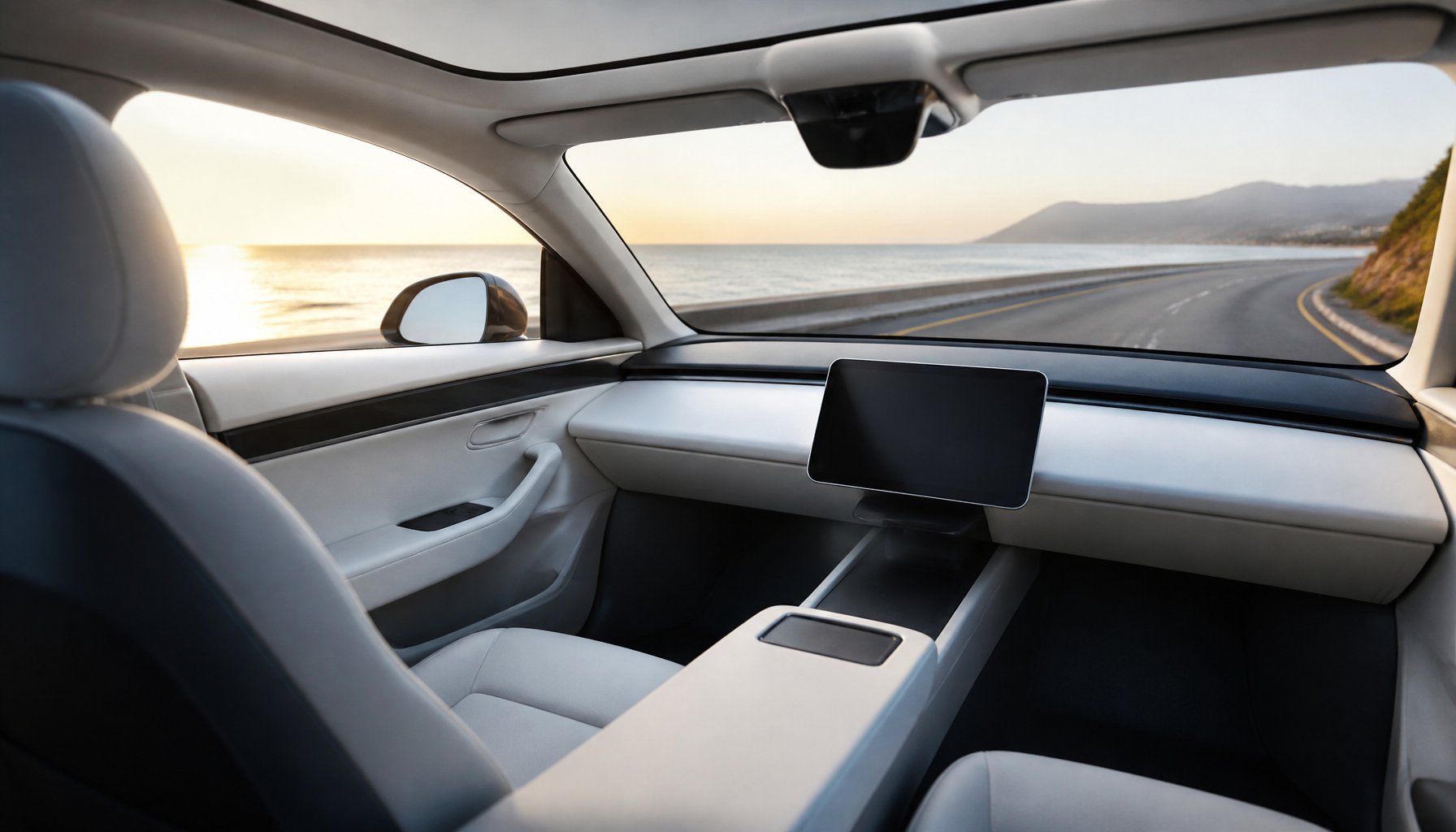
For anyone in Austin curious about actually trying it, the Cybercab is booked through the same Robotaxi app Tesla already uses for its non-Cybercab rides — the booking experience is the same, but the car is different, a two-seat vehicle with no permanently attached steering wheel, brake pedal, accelerator pedal or mirrors, rather than a modified Model Y. Tesla has not announced a fixed, public fare schedule for the Cybercab specifically; the roughly $3 base fare plus about $1.40 a mile the company has cited is the general pricing formula carried over from its existing robotaxi service, not a confirmed Cybercab rate. Real-world rides on launch day landed in that range: reported fares of $19.58 and $12.15 for two separate trips, even though Tesla still hasn’t published an official Cybercab rate card, which is part of what RBC’s analysts said was missing from the picture.
Why Wall Street reacted
Analysts’ concerns the next day centered on what the event did not answer. Analysts at RBC Capital Markets said the presentation left basic questions unanswered: what Cybercab rides will actually cost once Tesla settles on an official pricing structure, how fast Tesla can actually build and deploy more of the cars, and where things stand with regulators. Wells Fargo separately pointed to complaints from riders using Tesla’s existing, non-Cybercab Austin robotaxi service — wrong routes, skipped stops and long waits. The newly disclosed federal audit added to the pressure on the stock.
NHTSA opens a safety audit
That audit, NHTSA’s Audit Query AQ26002, was opened September 3, 2026, according to the agency’s own record, the same day Tesla began the Cybercab rides. It examines the “process and technical data” behind Tesla’s decision to self-certify the Cybercab as meeting federal motor vehicle safety standards. Specifically, NHTSA wants to know whether Tesla was right to conclude that certain standards simply don’t apply to a car with no steering wheel, brake pedal, accelerator pedal or mirrors. NHTSA Administrator Jonathan Morrison said in a statement: “as the federal regulator, we need to ensure that all of our laws are followed.” The agency says it opened the review based on public information about Tesla’s own deployment announcement — not because of a crash or a specific complaint.
What the audit is — and isn’t
It’s worth being precise about what the audit is not. It is a fact-finding request for documentation, not a recall and not a finding that the Cybercab is unsafe or non-compliant. NHTSA’s record lists an estimated population of 1,000 vehicles under review — a figure that reflects Tesla’s stated plan to keep expanding the service, not how many Cybercabs are actually on the road today. Texas’s own vehicle-authorization records show a much smaller number: 45 Cybercabs cleared for driverless operation as of the launch, up from an initial seven. That’s out of roughly 314 vehicles Tesla has authorized overall for its Texas robotaxi program, with the rest made up of modified Model Ys.
A similar case: Zoox
This isn’t the first time a control-free robotaxi has drawn this kind of scrutiny. In 2022, NHTSA raised similar questions about a self-certified, steering-wheel-free vehicle from Amazon’s Zoox. That review dragged on for years before Zoox, this past July, obtained a formal federal exemption for its design. The available record does not confirm that Tesla has filed for or obtained a comparable exemption; it describes the deployed Cybercabs as certified under all applicable federal motor vehicle safety standards.
What happens next
What happens next with the federal audit is genuinely open. NHTSA has not set a timeline, and the agency’s document does not indicate what, if anything, it will require Tesla to change. For now, the Cybercab keeps running in its limited service area in Austin while regulators review the paperwork behind it.