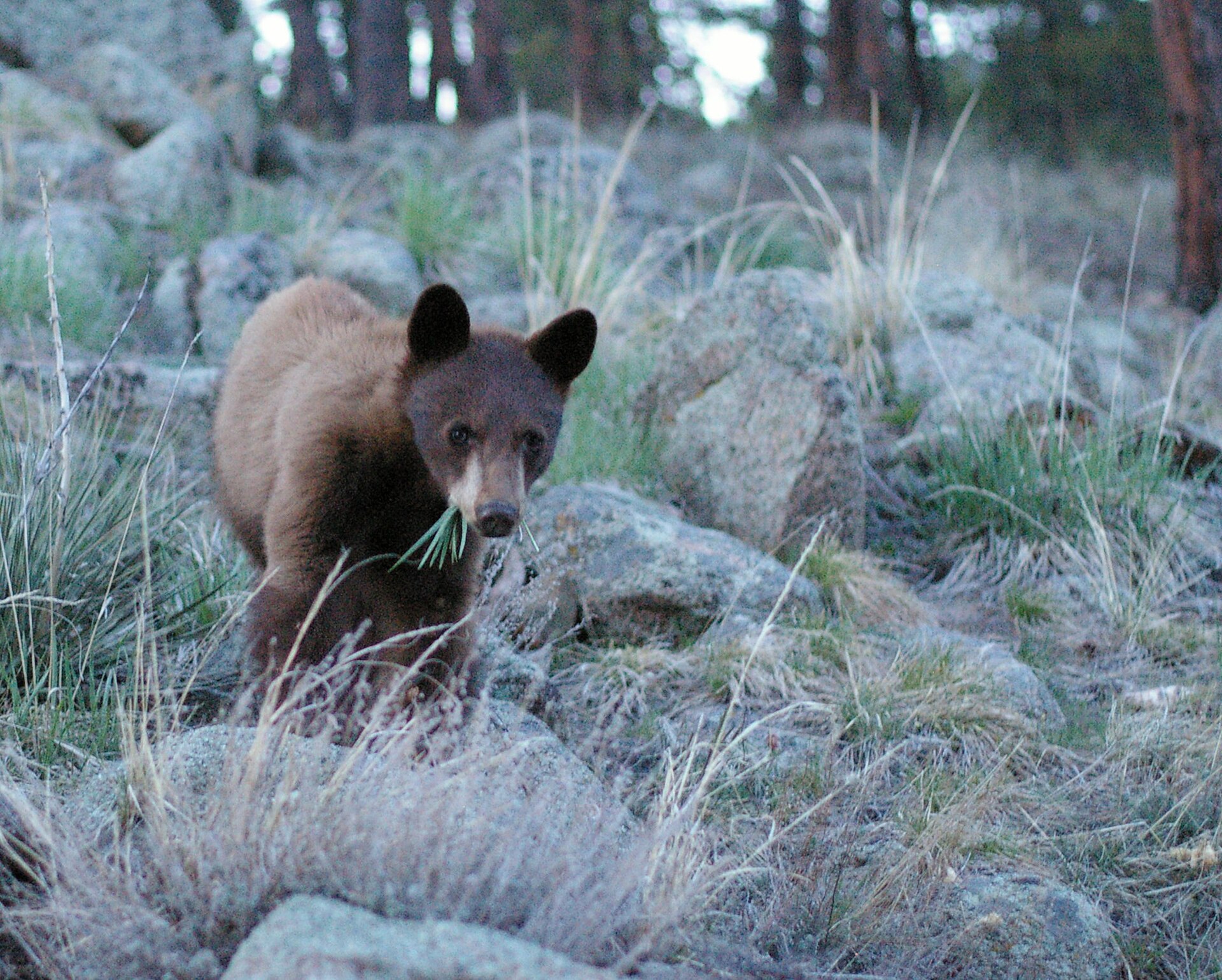
Colorado Parks and Wildlife says it has confirmed 10 reports of bear attacks on humans so far in 2026, the most on record, including two incidents two days apart this month: a camper bitten through her tent near South Fork on Sept. 11 and a 17-year-old scratched in her bedroom in Durango on Sept. 13.
The Incidents
Around 5:30 a.m. Friday, Sept. 11, at Park Creek Campground in the Rio Grande National Forest near South Fork, a black bear bit a woman on the right forearm through her tent. EMS treated her, she had follow-up care at Rio Grande Hospital, and the Colorado Sun reported three puncture wounds on her right arm and no broken bones. CPW said it found bite and claw marks, a paw print and dark hairs at the scene, but did not capture the bear; officials found no continued threat and closed the investigation. Rick Basagoitia, CPW’s area wildlife manager in Monte Vista, said in the agency’s release: “The bite in this incident was more likely an act of surprise than aggression.” The campground closed for the rest of that weekend and then for the season shortly after.
The camper, Kathleen Baran, described the moment to the Colorado Sun: “It was so quick. He was on the other side of the tent, and he comes crashing down on me.” She said she instinctively raised her arm: “So I put my arm up to protect my face and he grabs hold of it.” She added: “I’m very lucky because he could have easily just chomped down on my head and not my arm if I had not put my arm up.” The experience won’t keep her off the trail alone, she said, though it may change her gear: “I won’t stop backpacking by myself. But I might buy some bear spray.”
Two days later, around 2 a.m. Sunday, Sept. 13, a black bear tore off a window screen and pushed open a partly open bedroom window at a condo building on Escalante Drive in Durango, ripping down a curtain and waking a 17-year-old who was asleep inside. She hid under her blankets; the bear sniffed her head, and after she made a noise it swiped her through the covers. She self-treated three scratch marks on her stomach, and wildlife officers also noted bruising. The bear left, came back once, then left for good after she stood up and screamed. Luke Clancy, a CPW district wildlife manager, said: “Based on what we know happened in this encounter, the woman is very lucky she had multiple blankets covering her when the bear swiped her.” CPW set a trap at the location, and by Monday morning a bear had entered another nearby residence, according to the agency’s release.
In one statement, Adrian Archuleta, CPW’s area wildlife manager in Durango, said officers planned to have a presence in the area Monday “with the intent to catch and remove the bear,” adding: “This is a human health and safety issue that we take seriously. This bear has exhibited behavior that threatens human health and safety.” He also said: “It has shown that it is not afraid to enter homes multiple times now, and it is likely this behavior will continue.” As of CPW’s release, the bear had not been reported caught.
A Record Year
CPW’s release says this year’s total is the most on record. The agency defines an attack as an incident in which a person is bodily injured or killed by a bear.
The scale behind that record shows up in CPW’s broader figures through August, reported by KRDO, citing CPW: 8,672 reports of bear sightings or incidents, compared with 3,680 through the same point in 2025 — an increase of about 135%. Wildlife officers relocated 98 bears this year, versus 33 last year. Nature World News, also citing CPW, reported 294 bears euthanized so far in 2026, up from 83, with the agency saying reported incidents are running roughly 3.6 times the 2020-2025 average.
CPW puts it directly: “Colorado is experiencing an unprecedented bear conflict year, largely because of drought conditions depleting natural food sources for bears.” Reporting on the agency adds detail: thin berry and acorn yields are described as pushing hungry bears closer to homes and campsites just as they enter their heaviest feeding season.
Why Fall Is the Riskiest Season
CPW explains the seasonal spike on its website: “In the fall, bears enter a period of compulsive overeating (hyperphagia). They start feeding for 22 hours a day to gain the 20,000 calories a day they need to survive hibernation.” Most Colorado bears stay active from mid-March through early November, meaning the current stretch — combined with this year’s food shortfall — keeps bears searching harder and longer for calories near people.
What CPW Recommends
CPW’s published guidance for residents and campers includes:
- Keep trash cans, bird feeders and other attractants out of reach — leaving them accessible to bears is a violation of state law and some local ordinances — and always keep trash indoors overnight. CPW’s Sept. 14 release adds: “Take down bird feeders and never feed or leave out food for bears, as feeding wildlife is illegal and contributes to their habituation.”
- Lock windows, doors, garages and vehicles: CPW’s release says to do so “to discourage break-ins.” CPW’s Living with Bears guidance adds that if a car or RV is used for storage, “keep all doors locked and windows closed.” In the same statement, Archuleta asked residents: “We want residents to make sure they are closing and locking their doors and windows during this high human-bear conflict year in addition to securing all outside attractants.”
- At campgrounds, use bearproof food lockers where they’re provided, and make sure children know how to close them properly.
- If you encounter a bear, yell and throw small rocks in its direction; if it keeps approaching, use bear spray when it is about 40 feet away.
- If a black bear attacks, do not play dead — fight back with anything available, CPW says.
- To report a bear encounter, contact CPW Monday through Friday, 8 a.m. to 5 p.m. Outside those hours, call the Colorado State Patrol or your local sheriff’s department.