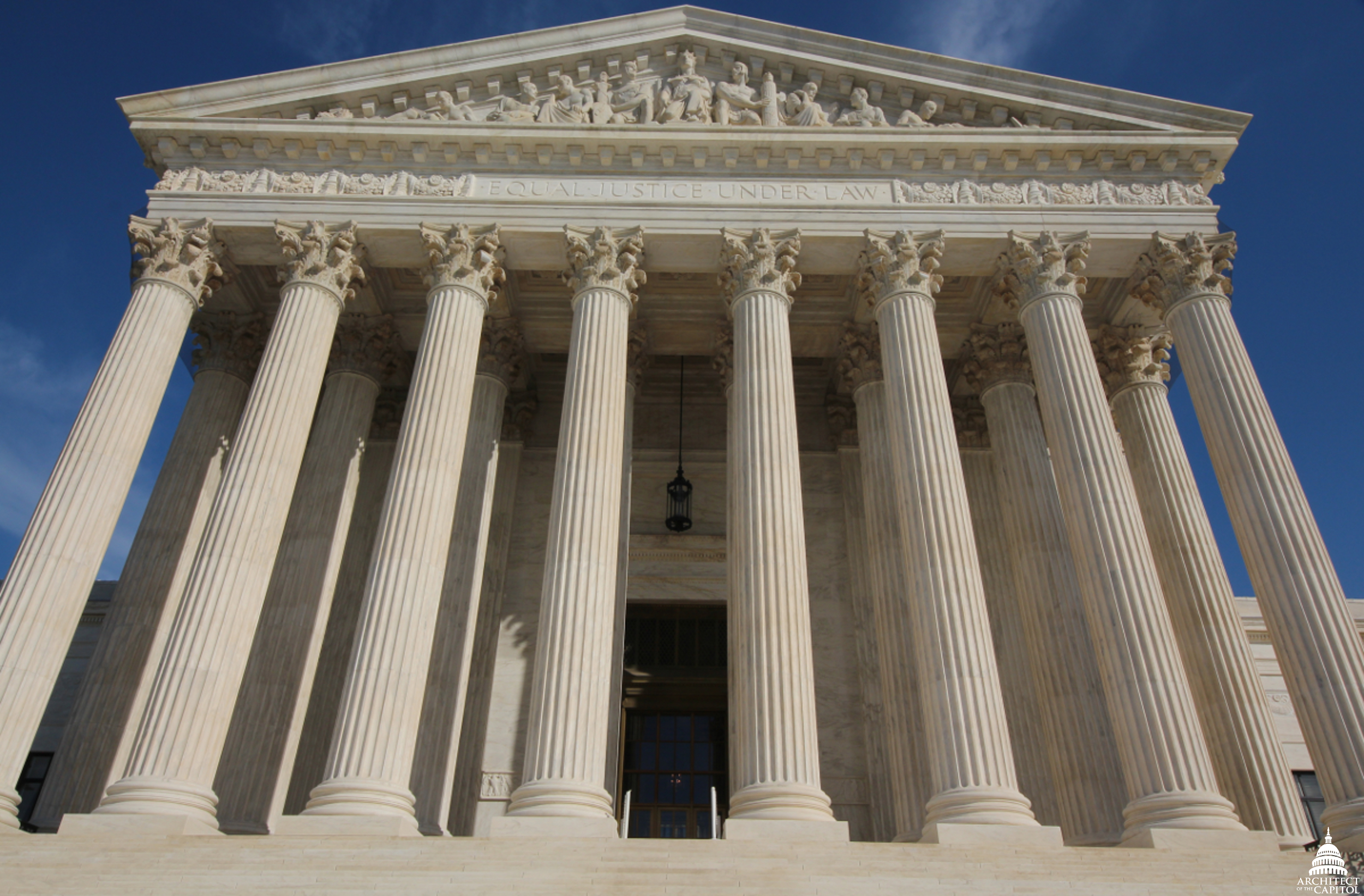
Missouri’s November general election will use the state’s 2022 congressional map, not the newer 2025 map. The U.S. Supreme Court said so in an unsigned order Friday. Missouri ran its August primary under the 2025 map; November will use the 2022 map.
What the court ordered
People Not Politicians — the group that gathered referendum signatures against the 2025 map, led by executive director Richard von Glahn — asked the Court for the stay; the docket lists it as “People Not Politicians, et al., Applicants.” According to SCOTUSblog, opponents of the new map submitted “more than 300,000 signatures” on Dec. 9; Secretary of State Denny Hoskins rejected the petition on Aug. 4, 2026, and the Missouri Supreme Court reversed that rejection on Sept. 3.
The per curiam order — an unsigned opinion issued in the Court’s name — was issued Sept. 25 in People Not Politicians v. Onder, staying the Eighth Circuit’s Sept. 21 mandate and Sept. 22 order, and a federal district court’s Sept. 21 and Sept. 22 injunctions requiring the 2025 map. A stay pauses a lower court’s order while the fight continues. The justices wrote that lower courts “should not enjoin or otherwise prohibit the use of the 2022 map in the 2026 congressional election in Missouri,” nor require the 2025 map. The Sept. 10 order “likewise remains in effect” and issued “without any noted dissent,” the opinion says; of Friday’s order, SCOTUSblog reported “there were no public dissents.”
Why the court sided with the 2022 map
The Court’s reasoning rested on state law: “as a matter of state law, the 2022 map—not the 2025 map—must be used in the 2026 congressional election.” That tracks the Missouri Supreme Court’s Sept. 3 ruling that the 2025 map — intended, per SCOTUSblog, “to give Republicans an additional seat in the U.S. House of Representatives” — “is not the law and has never been the law.”
Timing mattered too. Citing the Purcell principle — which counsels against late judicial changes to election rules — the justices noted that “the election is not merely upcoming; it has already started,” adding that “absentee voting has already begun, as has military and overseas voting.” Reverting to the 2025 map now, the Court said, “would usher in electoral chaos,” citing county election officials who told the Eighth Circuit that “at this point, it is practically impossible to revert to the” 2025 map.
The order rejected the Eighth Circuit’s attempt to blame the Missouri Supreme Court, noting that the state court had said back in May, in Maggard v. State, that the 2025 map would not take effect until approved by voters if the referendum petition was legally sufficient. “The Secretary nonetheless chose to proceed with the 2025 map for the primary,” the justices wrote, placing responsibility on the Secretary’s own decision. On the underlying legal question, the Court noted its precedents “have not previously stated that Article I, Section 2 requires a state to use the primary election map in a general election,” adding only that “the merits are not entirely clearcut.”
Opposition
Missouri and the federal plaintiffs, including Rep. Robert Onder, opposed the stay, according to the docket’s Sept. 23 filings. According to SCOTUSblog, the state’s brief told the Court that “denying a stay—and declining to change Missouri’s congressional map for a fifth time—is the best way to promote stability.”
How the case reached the court
The map fight began after the legislature enacted a new congressional map in 2025. On Sept. 3, the Missouri Supreme Court ruled the 2025 map was not yet law. On Sept. 8, Justice Brett Kavanaugh, as Circuit Justice for the Eighth Circuit, denied the Secretary of State’s request to stay that ruling; that same evening, a federal district court ordered use of the 2025 map instead. On Sept. 10, the full Supreme Court stayed that order. Friday’s opinion says the Court had already refused, in two orders — the Sept. 8 denial of the Secretary of State’s request and the Sept. 10 stay — to require the 2025 map.
On Sept. 21 the Eighth Circuit ordered the district court to enter a permanent injunction requiring the 2025 map, which it did that day (amended Sept. 22); on Sept. 22 the appeals court refused to recall its mandate. The application at the center of Friday’s order, 26A388, was filed Sept. 22 and granted Sept. 25 — the third trip to the Court in this litigation. Two plaintiffs backing the 2025 map, Rep. Robert Onder and fellow candidate Richard Brattin, won August nominations in the 3rd and 5th districts under that map and argued, per SCOTUSblog, that their districts would look significantly different under the 2022 map.
What is still open
Friday’s order is a stay, not a final ruling on the merits. It does not address candidates who won August nominations under 2025 map lines that differ from the 2022 map in November. Missouri voters will also decide the map’s future: under the Missouri Supreme Court’s ruling, the 2025 map takes effect only if voters approve it in a referendum on the November ballot.
Reaction
Gov. Mike Kehoe said in a statement Sept. 25 that “it is disappointing that today’s decision by the United States Supreme Court means Missouri will conduct its November general election under a different congressional map than its primary election. Voters deserved consistency and certainty, and not for the rules to be changed between elections. Nevertheless, Missouri will follow the Court’s order.”