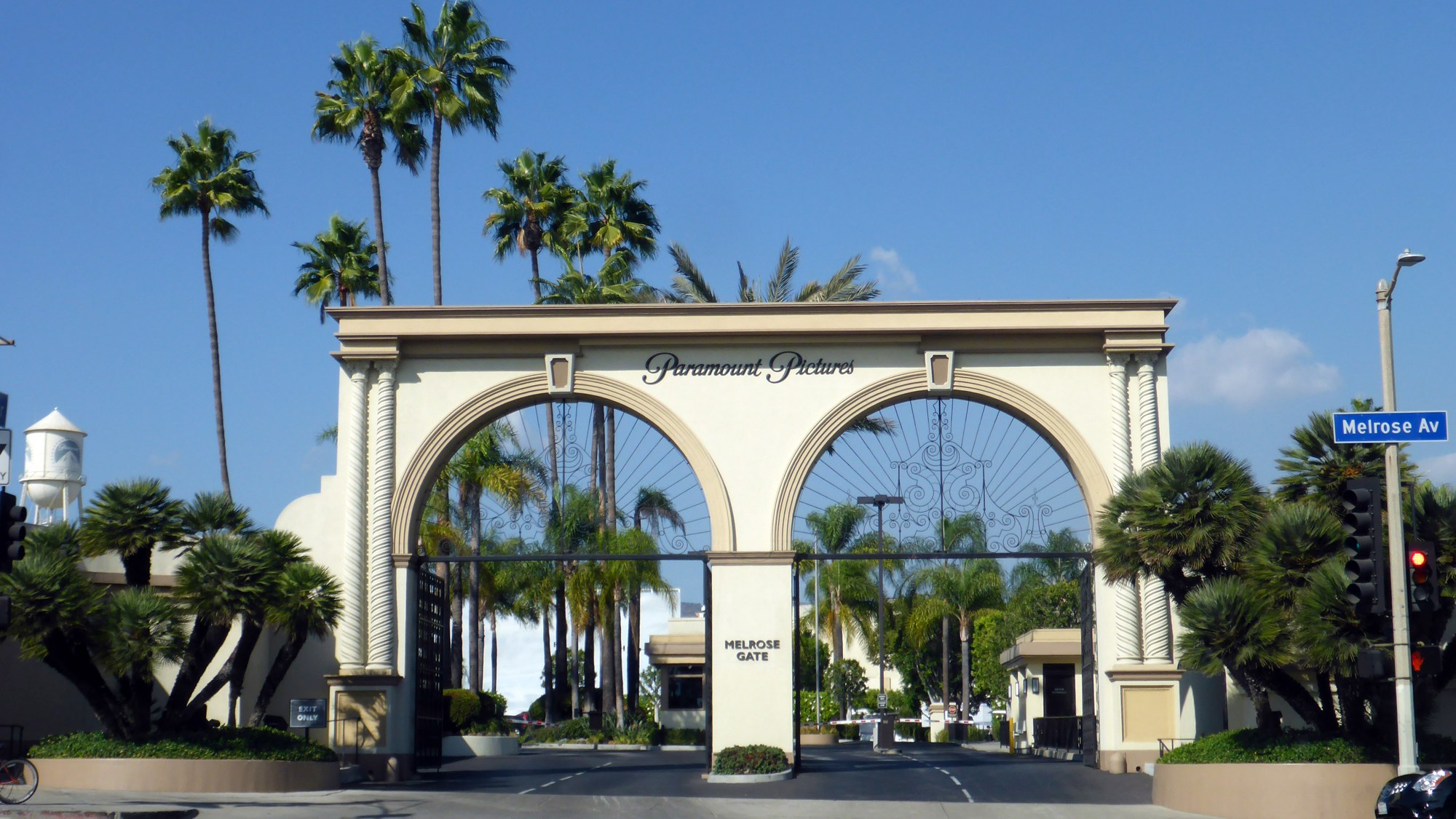
The combined Paramount and Warner Bros. Discovery company is to be named Skydance, but the merger behind the name is not finished. In an 8-K filed Oct. 1, Paramount Skydance Corporation said it announced on Sept. 30 that the closing of its deal for Warner Bros. Discovery (WBD) is expected on Oct. 6, 2026, “subject to customary closing conditions.”
What the filings say about timing
An 8-K dated Oct. 2 says the company intends to amend its certificate of incorporation to change its name to Skydance Corporation, “also expected to be effective on October 6, 2026.” It also plans to move its Class B common stock from Nasdaq to the New York Stock Exchange and change its ticker from PSKY to SKYD.
An earlier 8-K says each WBD share converts to $31.00 in cash, plus $0.00277778 for each calendar day after Sept. 30. If the deal closes on Oct. 6, that comes to $31.01666668 per share. The company’s filings also caution that the merger may not be completed “in the expected timeframe or at all.”
What David Ellison said
Chief Executive David Ellison announced the name in a social media post Friday, as reported by CNBC and Deadline. “Paramount and Warner Bros. shaped over a century of culture,” he wrote. “By combining them, we aren’t rewriting history — we’re equipping these iconic studios with a more powerful engine. Together, we are Skydance: a creative-first home for bold, quality storytelling.”
He also said: “We never wanted a new corporate identity to diminish, alter or overshadow either one. Instead, we wanted a name that would give the combined company an identity of its own while allowing Paramount and Warner Bros. — and all our extraordinary brands — to remain in the spotlight.”
What the court-entered consent decree requires
The name is the headline, but the legal commitments are in a separate 8-K. On Sept. 30, the U.S. District Court for the Northern District of California entered a consent decree, agreed to by the companies and 12 states, resolving a lawsuit that sought to block the merger under Section 7 of the Clayton Act. The decree was entered for settlement purposes and is not an admission of any antitrust violation, the filing says.
For a five-year commitment period, the combined company must:
- Release in the United States at least 30 films a year in the first two years and 32 a year in years three through five, including at least 20 wide releases a year in the first two years and 21 in years three through five, each on at least 2,000 screens.
- Give each counted film a theatrical window of at least 45 days, with no move to a subscription streaming service for at least 90 days after its U.S. theatrical debut.
- Spend at least $300 million more a year, or $1.5 billion more over the period, on U.S. production compared with the two companies’ combined 2025 levels.
What happens if it falls short
Missing the annual film commitments, after a six-month cure period and other procedures, “requires divestiture of Miramax Studios.” For each film short of the minimum, the company must contribute $30 million to designated funds, including entertainment-industry health and retirement funds. An uncured material breach on cable terms requires divestiture of BET, VH1, Comedy Central, Smithsonian, Destination America and Science.
The company must also invest $9.5 million a year for five years in workforce training and related programs, which is $47.5 million by Plainly Now’s arithmetic. Within 180 days of closing, it must set up a five-member News Editorial Independence Board of established journalists.
The decree sets the terms. Whether the commitments are met is not yet known, and the merger itself has not closed.