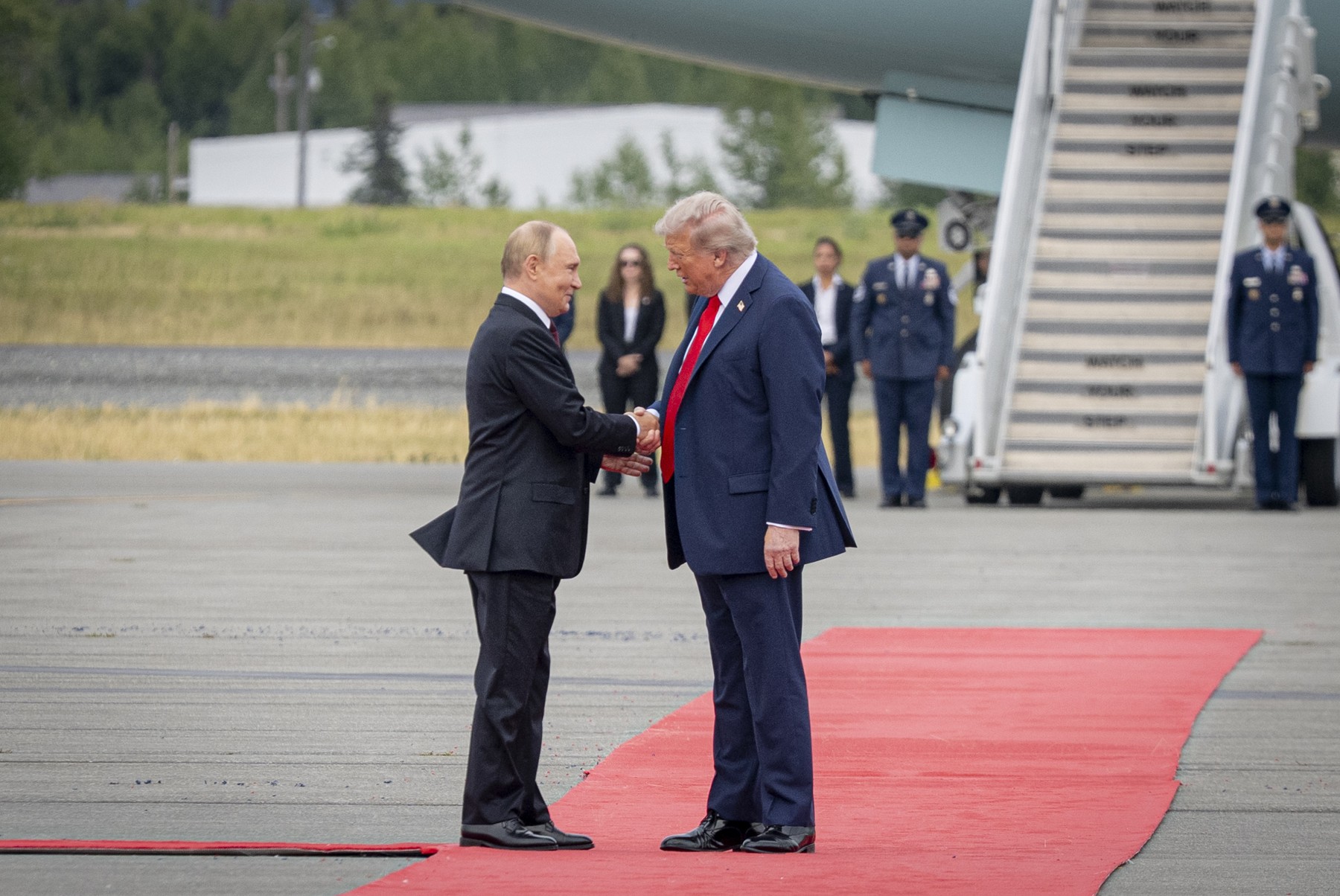
President Donald Trump announced on Friday, Oct. 9, what he described as a deal under which Russia would supply millions of tons of diesel to the American and global market, and the Treasury Department issued a temporary license easing U.S. sanctions on Russian diesel the same day. On Saturday, Oct. 10, Trump said it is time for Ukraine to get a new president. Ukraine’s president, Volodymyr Zelensky, called the deal a gift to Russian President Vladimir Putin, and European governments and U.S. lawmakers including Sen. Richard Blumenthal and Rep. Don Beyer criticized it. Putin’s statement confirmed a willingness to supply but gave no amounts, though a senior Russian official and Deputy Prime Minister Alexander Novak cited volumes to the Russian state news agency TASS.
What Trump announced
Trump announced the deal after a call with Putin. The Kremlin said the call lasted about an hour and a half, according to Al Jazeera.
In his Truth Social post, as reported by the BBC, Trump said Russia would immediately supply more than 300,000 tons, followed by 500,000 tons in November and 1 million tons after that. (The BBC wrote “tonnes”; Novak’s figure below is in metric tons.) He added that a further 3 million tons would come within a short period, depending on the condition of Russian refineries. The Associated Press wrote that the 1 million tons would follow immediately after the November delivery, while CBS News placed it in December.
Added together, the four installments come to about 4.8 million tons (300,000 plus 500,000 plus 1 million plus 3 million). The last 3 million tons is the least firm part: it has no specific date and depends on refinery conditions.
Trump said lower prices for Americans, especially farmers, ranchers and truckers, are his greatest priority, and he thanked Putin, according to the AP. The Kyiv Independent reported that Trump also credited U.S. control of the Strait of Hormuz, together with the Russian deal, for bringing diesel prices down. None of the coverage independently confirms the status of the Strait.
The account of Trump’s post and Putin’s statement here rests on the BBC’s reporting, not on their full texts.
How big is the deal?
The BBC, in a report republished by Albanian Daily News, quoted Tim Armitage, an investment strategist at Quilter Cheviot, as saying the numbers Trump mentioned were “relatively small.” He said the first installment equates to roughly 2.25 million barrels, against daily U.S. consumption of around 3.8 million barrels, “so it won’t make a material difference to pump prices in the US.” The tons-to-barrels conversion is his. He added: “Granted, there are then two more releases to come, but it does appear to be a slightly desperate move by President Trump to try to lower inflation ahead of the midterms.” Note that the first 300,000 tons is meant for American and global markets together, while the consumption figure he compares it to is American.
Analysts also question whether Russia can supply the quantity, the BBC reported. Michael Lynch of the Energy Policy Research Foundation told the AP that the deal is like rearranging deck chairs on the Titanic.
NBC reported that diesel futures fell about 4% on Friday and that Brent crude was about $104 a barrel. NBC did not tie the move to the announcement.
What the Treasury license does
The Treasury Department’s Office of Foreign Assets Control (OFAC) issued General License No. 135 on Oct. 9. NBC News reported that it was issued at Trump’s direction. The license carries a signature stamp of 2:43 p.m. EDT on Oct. 9; NBC’s first report was at 2:56 p.m. EDT. The exact time of Trump’s post was not found. A general license is a standing authorization from OFAC that lets a category of otherwise-prohibited transactions go ahead without an individual application.
The license, titled “Authorizing Transactions Related to the Sale, Delivery, Offloading, and Importation of Diesel Fuel of Russian Federation Origin,” is signed by OFAC Director Bradley T. Smith and dated Oct. 9, 2026. Its paragraph (a) says that transactions prohibited by two sets of sanctions regulations (31 CFR part 587 and 31 CFR part 589) “that are related to the sale, delivery, offloading, or importation, including importation into the United States, of diesel fuel of Russian Federation origin are authorized through 12:01 a.m. eastern daylight time, April 7, 2027.”
Paragraph (b) carves out one thing: “This general license does not authorize any debit to an account on the books of a U.S. financial institution of the Central Bank of the Russian Federation, the National Wealth Fund of the Russian Federation, or the Ministry of Finance.”
The text covers diesel only and names no buyers or sellers. The BBC said other Russian assets, such as those held in American banks, remain frozen. The AP described it as the first license easing diesel sanctions for longer than the standard 30-day window since February 2022, and said sanctions will not apply until April 2027 to deliveries of Russian diesel loaded onto tankers as of Friday. The license text itself sets no loading-date condition.
What Russia and the Kremlin said
In a statement quoted by the BBC in its own translation, Putin said he had spoken to Trump about the global energy situation and that the Russian side “confirmed its willingness to supply oil and petroleum products to the US market and global markets at large.” The statement did not give amounts.
TASS, a Russian state news agency, quoted a senior Russian official as saying 300,000 tons would be supplied this month, and quoted Deputy Prime Minister Alexander Novak as saying exports could rise to 500,000 metric tons in November. Both are unnamed or state-media-relayed claims about Russia’s own supply.
Kirill Dmitriev, an envoy for Putin, welcomed the deal on social media. In the BBC report he is quoted as saying that Russia-US co-operation on diesel and energy “will benefit the world.”
Kremlin spokesman Dmitry Peskov said Putin also conveyed Iran’s views on resolving the Iran conflict to Trump, CBS News reported on Oct. 10. Moscow did not disclose Tehran’s terms or Trump’s response.
Why diesel is expensive and whether Russia can supply it
The Iran war, which began in February, has sent energy prices up, the BBC reported. It said the average U.S. diesel price is $6.28 a gallon according to AAA, down from a record of about $6.53 a gallon around Sept. 22, according to AAA figures reported by the AP and the BBC. NBC reported that diesel is up almost 70% since the war began. The BBC said Brent crude was above $103 a barrel, compared with about $73 before the war.
Russia has its own shortage. The BBC reported two waves of severe fuel shortages across the country this year after Ukrainian drone strikes on refineries, and, citing the International Energy Agency, that Russian diesel production is estimated to have fallen by nearly 30%. According to Al Jazeera, Russia banned diesel exports in July to meet domestic demand, and the ban was extended in late September to the end of October. Ship & Bunker put the start at July 8, and Yahoo Finance said the ban runs through Oct. 31. Al Jazeera also quoted Novak as saying Russia would consider partially reopening exports if diesel production exceeds domestic demand.
The AP, as carried by the Washington Post, reported that Novak said Russia was lifting its diesel export restrictions ahead of schedule and could begin supplying the United States in October; the BBC reported that analysts question whether Russia can provide the quantities.
How the deal sits with the new sanctions law
The AP reported that Congress passed, and Trump signed in September, a sweeping Russia sanctions law that allows tariffs of up to 100% on the top five importers of Russian oil and gas, with exceptions. Al Jazeera names it the Lindsey O. Graham Sanctioning Russia and Iran Act of 2026. The AP noted that the United States has not imported Russian oil or gas since 2022.
According to a summary by the law firm Paul Weiss, the law was signed Sept. 18, 2026 (H.R. 5334). The summary says many of its sanctions and tariff measures must take effect or be implemented within 30 days of enactment, that is by Oct. 18, and that the law lets the President waive measures with a written national-interest certification and a report to Congress.
The BBC described the announced deal as an about-face from that legislation. Euronews asked whether the White House will impose further sanctions this month, as the legislation requires, and the question remains open.
Who reacted
Blumenthal said the deal makes the United States complicit in Putin’s war, and Beyer called it infuriating, the AP reported. Axios reported on Saturday that Republican Rep. Brian Fitzpatrick of Pennsylvania said he would try to force a House vote, through a discharge petition, on a bill to block Russian oil purchases, and that Republican Rep. Don Bacon said he had already agreed to sign it; the House is not scheduled to vote again until after the Nov. 3 midterm elections.
European officials responded as well, the AP reported, in coverage carried by ABC News. Swedish Prime Minister Ulf Kristersson regretted the move. German government spokesperson Stefan Kornelius said Germany remains committed to the sanctions. Polish Foreign Minister Radoslaw Sikorski asked where the surplus for export would come from. The AP said the EU plans its largest sanctions package yet on Monday, Oct. 12. EU foreign policy chief Kaja Kallas, according to the BBC, said this is not the time to ease pressure on Russia, and the BBC described the Monday package as the largest since the full-scale invasion.
A UK government spokesperson said, in the BBC report, that the UK’s position “could not be clearer” and that it will maintain pressure on Russia.
What Zelensky and Kyiv said
Zelensky called the deal a gift to Putin. In the BBC report he is quoted as calling it “an investment in a war that must be ended, not prolonged.” Democrata, a Spanish news site, in a translation of his social media posts, reported that he said any easing of sanctions against Russia without a clear and lasting de-escalation agreement constitutes “an evident weakness,” and that Russia would repay the diesel with more terror. The Kyiv Independent reported that he described it as a weak decision by strong partners.
On Saturday, according to the AP as carried by ABC News, Zelensky said Russia had expressed its thanks for the lifting of diesel sanctions by dropping five glide bombs, which are bombs fitted with wings or fins to glide to their targets, on residential buildings in Zaporizhzhia.
The refinery dispute and the Miami talks
The two sides give different accounts of the refinery strikes. The BBC reported that Trump has expressed his displeasure over the attacks and blamed them for rising fuel prices. NBC reported that he said Ukraine’s refinery strikes are what is driving prices up. Fox News reported that he said the administration told Ukraine it could do whatever it wants to Russia but should not hit the refineries, because it is a world problem.
Zelensky defended the strikes on Friday, saying they were in response to “Russia’s years-long campaign of terror against Ukraine’s energy sector,” according to the BBC and Democrata’s translation. He said “Ukraine will not set Russian oil refineries on fire if Russia does not destroy our energy infrastructure,” and, in the Democrata translation, that this is the kind of agreement Ukraine proposes to the United States. The coverage contains no Kremlin statement on the refinery strikes and no Ukrainian response to the claim below about ignored requests.
An unnamed U.S. official told Axios, as relayed by the Kyiv Post, that Trump struck the deal after Zelensky ignored about six U.S. requests to stop refinery attacks. The same reporting says U.S. envoys told Ukrainian negotiators that Zelensky was misreading the situation. Axios, again as relayed by the Kyiv Post, reported that Steve Witkoff and Jared Kushner warned Ukrainian negotiators in Miami that Washington could cut intelligence sharing if Kyiv keeps striking Russian refineries; another U.S. official disputed that this was an explicit threat. Zelensky rejected a unilateral pause, per the same report. All of these Axios claims come from unnamed-source reporting relayed second-hand, and none was made on the record.
U.S., Ukrainian and European negotiators met in Miami on Friday for about six hours, according to Reuters as carried by Investing.com. Witkoff, the American envoy who led the U.S. side, called the talks constructive in a post on X and said they explored ways to de-escalate and end the war before winter, the Kyiv Post reported.
A planned second day did not take place. RFE/RL’s Alex Raufoglu reported that the Miami talks concluded sooner than planned. Dmytro Lytvyn, a communications officer in Zelensky’s office, told the Ukrainian outlet Liga.net that the first day ran longer and that the meeting was not canceled. The delegation returned home Saturday. A senior Ukrainian official, who was not named, told the AP that Kyiv did not know about the deal before it was announced, and the Financial Times reported, as relayed by TASS, that the delegation cut its trip short.
Trump’s Saturday remarks
Outside the White House on Saturday before a Tennessee rally, Trump said it is time for Ukraine to get a new president, a leader who can make a deal. Fox News reported this at 3:54 p.m. EDT and MS NOW reported it at 4:10 p.m. EDT. Fox and the BBC reported that he also said Zelensky had better stop, in wording that included an expletive; the passage does not specify what Zelensky should stop. Fox also reported that he said the administration had warned Ukraine against hitting Russian refineries.
Ukrainian Foreign Minister Andrii Sybiha responded that Zelensky has the backing of Ukrainians, who have the right to decide, according to a France 24 liveblog. The BBC, as relayed by Yahoo, reported that Dmitriev welcomed Trump’s call for a new Ukrainian leader, calling it iconic and historic.
Strikes on Zaporizhzhia and Kyiv
Ukrainian officials told the AP that at least 20 people were killed in the Zaporizhzhia region on Saturday, and the State Emergency Service said the dead included three children and that at least 18 were wounded, the AP reported in coverage carried by ABC News. France 24 reported at least 15 killed in the Russian attack on Zaporizhzhia, including three children, and later at least 21 killed overall, including four children. Counts rose through the day and outlets differ in scope. The AP also reported four people wounded in a missile strike on Kyiv, according to Mayor Vitali Klitschko, and power outages in the Kyiv region. The AP counted more than 60 people killed by Russian bombardments over four days; Kallas, per France 24, said more than 80 Ukrainian civilians had been killed in two days. The coverage carries no Russian account of the Zaporizhzhia strike.
What is known and what is not
Known, on the record: Trump announced the installments; OFAC issued General License No. 135, which authorizes transactions related to Russian diesel through 12:01 a.m. eastern daylight time, April 7, 2027, and excludes debits to accounts of the Russian central bank, National Wealth Fund and Ministry of Finance; Putin’s statement confirmed a willingness to supply without giving volumes; Zelensky, Blumenthal, Beyer and European officials criticized the move; Trump said Saturday that Ukraine should get a new president.
Reported without a name: the Axios account, including the claim about ignored U.S. requests and the intelligence-sharing warning attributed to Witkoff and Kushner, rests on a U.S. official and other unnamed sourcing relayed through the Kyiv Post, with another U.S. official disputing that the warning was an explicit threat; a senior Ukrainian official, quoted by the AP and, via TASS, the Financial Times; and a senior Russian official quoted by TASS.
Not explained: what Russia gets in return, which the BBC asked the White House; who pays and when supplies arrive, which the AP and Euronews noted the White House did not say; whether Russia can physically supply the volumes, and how this month’s shipments square with the export ban; and whether further sanctions required by the new law will follow this month.