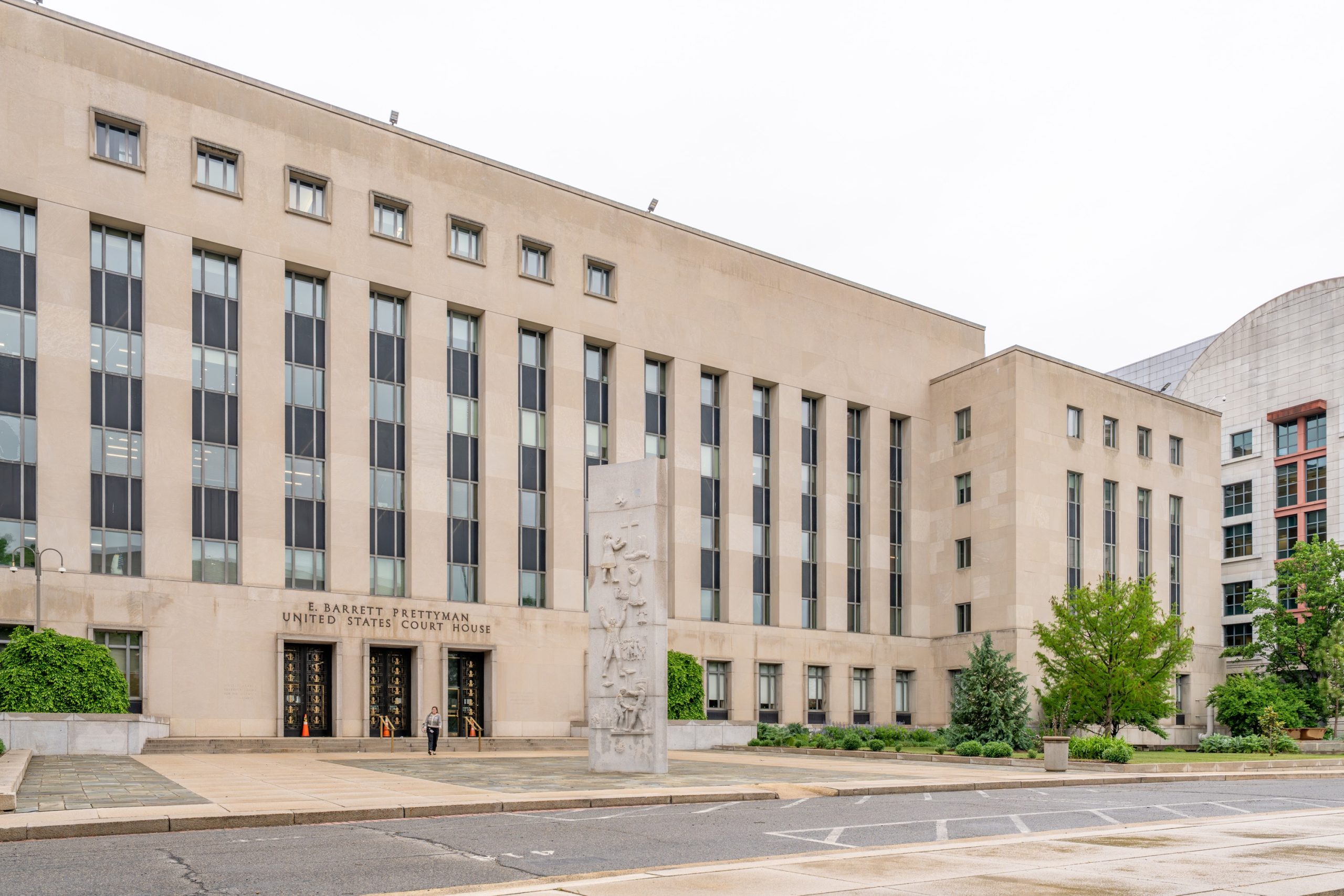
A federal judge in Washington ruled Tuesday that administration officials may not enforce the president’s Sept. 18 decision revoking the White House hard passes of CNN, MS NOW and Politico journalists while the lawsuit proceeds. The order is preliminary, and it does not bind the president himself. Judge Timothy J. Kelly found the plaintiffs, the three news organizations and three individual reporters, likely to succeed on claims of due-process violations, retaliation and viewpoint discrimination.
The ruling comes in the lawsuit Cable News Network, Inc., et al. v. Donald J. Trump, et al., filed in the U.S. District Court for the District of Columbia. Kelly was appointed by Trump.
What the judge ordered
Kelly granted the outlets’ motion for a preliminary injunction, a court order that lasts while the case is decided. His one-page order says the defendants, “except for President Trump,” along with their agents, representatives and anyone acting in concert with them, may not execute, implement or enforce the Sept. 18 decision to revoke the White House hard-pass credentials held by employees of CNN, MS NOW and Politico.
The order says that keeps the status quo in place since the temporary restraining order of Sept. 24, a short-term emergency order. The opinion describes the new order as extending the relief already granted, and says it preserves the status quo while the case goes forward.
What the order does not cover
The order binds the other defendants and those working with them. It does not bind the president personally, and it does not order him to do anything.
It is also about hard passes and the White House press area. The order does not mention access to the Oval Office or Air Force One. CBS News reports that a separate case, involving The Associated Press, deals with that kind of access: an appeals court allowed the president to restrict the AP’s access to the Oval Office and Air Force One, and has not yet ruled on the legal merits.
How the ban unfolded
The plaintiffs are the three news organizations and three individual hard-pass holders who work for them. The judge, citing the plaintiffs’ reply, said the action reaches 78 reporters at three news organizations. The court’s opinion lays out the sequence.
- Friday, Sept. 18. At 3:04 p.m., Trump posted on Truth Social that he was “proud to announce that, effective immediately,” he was “banning” CNN, MS NOW and POLITICO “from the White House.” Asked later for a particular reason, he said, “No . . . it’s really just cumulative stories over the last two years. . . . [T]hey purposely write negative news. And they do that because they want to try and diminish the Republicans and a Republican administration.” He later added that he would “love it” if the three outlets “could straighten themselves out.”
- Saturday, Sept. 19. According to the opinion, which relays the complaint, several reporters who hold hard passes allege that they reported for work, were told their passes had been deactivated or disabled, and were denied entry by the Secret Service.
- Monday, Sept. 21. The outlets issued a statement and gave the government their complaint. Trump posted in response. The plaintiffs sued and asked for a temporary restraining order the same day.
- Tuesday, Sept. 22. The White House Press Office sent unsigned letters, not on letterhead, giving notice of a determination to revoke the passes. The letters listed three to six “reporting incidents” per organization and set a Sept. 25 deadline, at 5:00 p.m., to contest the decision. Otherwise, the letters said, the decision would be final.
- Wednesday, Sept. 23. Kelly held a hearing on the request for a temporary order.
- Thursday, Sept. 24. Kelly granted the temporary restraining order, finding a likely due-process violation and ordering the passes returned. He set a $1 bond. The order said its result was “dictated by the application of well-known D.C. Circuit precedent.”
- Friday, Sept. 25. The plaintiffs’ lawyer replied that, given the order, further response to the letters was not warranted at this time.
- Saturday, Sept. 26. Trump shared an article about the case asking why “perpetrators of FAKE NEWS” should have access to “a very sacred place.”
- Sunday, Sept. 27. Attorney General Todd Blanche, in a television interview, said that “the complete misinformation and the inaccuracy and the one-sided news” at some point become “a national security issue.”
- Monday, Sept. 28. Trump gave an interview to Time magazine. Asked why Americans should believe he respects the free press, he said, “I believe in a free press,” and also, “I haven’t had a good story on CNN for years.” The plaintiffs moved for a preliminary injunction the same day. The government opposed it, and Kelly held a hearing Oct. 8.
- Tuesday, Oct. 13. Kelly issued his 26-page opinion and the order.
The three legal grounds
Due process. Under the Fifth Amendment, the government cannot take away a protected interest without fair procedures. Binding D.C. Circuit decisions, Sherrill v. Knight in 1977 and Karem v. Trump in 2020, treat a White House hard pass as that kind of interest. The government conceded that those cases hold that “White House reporters have protectable due process rights in their hard passes.” Under them, a reporter must be told in advance what conduct could lose the pass and what the penalty would be.
Kelly found the plaintiffs likely received no such notice. Two of the reporters’ passes had been renewed after they published articles that the Sept. 22 letters later cited. The judge said a January 2026 White House Press Office post and the federal statute on publishing classified information did not supply adequate notice.
The judge noted that the plaintiffs have since been given some form of notice and a chance to be heard, though the record is silent about the outcome. He still found success likely because the precedents require notice of the standard and the sanction before the conduct, and the Sept. 22 letters came after it.
The government argued at least five times that the two precedents were wrongly decided. Kelly wrote that “that is a matter above this Court’s pay grade.”
First Amendment retaliation. The government may not punish the press for what it publishes. Kelly wrote that “it is likely that President Trump’s revocation of Plaintiffs’ hard passes is the sort of action that would deter a reasonable reporter or news organization from publishing stories to which he objects.” He also wrote: “The revocation of Plaintiffs’ hard passes matters a lot as to how, whether, and to what extent they can do their jobs.” He found the president’s own statements point to a likely causal link between the coverage and the ban. The government argued that the ban was not chilling because there was no sign the outlets had stopped their critical coverage, and it relied on a Fourth Circuit case, Baltimore Sun Co. v. Ehrlich, about a governor’s refusal to speak to two journalists. The court answered that the test is objective, that the action here reaches 78 reporters and three major news organizations, and that it cuts deeper into a reporter’s ability to do the job than a decision not to speak to a reporter.
Viewpoint discrimination. The D.C. Circuit has held that the White House press area is a nonpublic forum, a place the government may limit access to if the limits are reasonable and not aimed at suppressing a point of view. Kelly wrote that “President Trump likely banned Plaintiffs from the White House because he believes that their reporting is generally inaccurate and biased against him.”
The government’s stated grounds
The Sept. 22 letters accused the outlets of falling short of “the standards of professionalism and decorum” expected of those given access, of “trafficking in verifiable falsehoods about national security and other issues” and of “publishing sensitive or classified information.” The Justice Department argued the president would have reached the same decision anyway on the national-security ground.
In its opposition, the government argued that “access to the White House is a privilege, not a right” and that individuals do not have a constitutionally protected liberty interest in access to the White House complex. It acknowledged the D.C. Circuit’s Sherrill decision but said it was wrongly decided and expressly reserved the right to argue so on appeal.
CBS News reports that at the Oct. 8 hearing the judge pressed a Justice Department lawyer on why the government’s argument in court appeared to differ from the president’s public statements, and called due process “the biggest hurdle” for the department.
The national-security argument and the judge’s limits
The government argued that the ban rested on national security as well. Kelly wrote that this is “an interest the Court takes seriously,” and the opinion does not question the deference courts give the government’s national security determinations in many contexts. He was not persuaded on the facts, though. He wrote that the record suggests “national security” was “merely a post-hoc justification for the decision,” an after-the-fact justification, even if that was not dispositive.
His reasons: national security was not mentioned in the Sept. 18 announcement, and the Sept. 22 letters appear to conflate protected speech with national security concerns. A declaration from the Defense Department press secretary said little about the White House decision and addressed three reporting incidents, one for each news organization. The president did use the phrase “national security” in posts days later, which the court read as another way of describing the outlets’ alleged inaccuracy and unfairness.
Separately, in weighing the equities and the public interest, the court noted that the defendants “chose not to submit any other material, classified or unclassified, under seal or ex parte” in support of that interest. “Ex parte” means without notice to the other side.
Kelly also set limits on what the ruling means. He wrote that “no one should interpret the Court’s decision to suggest that President Trump’s concerns about accuracy and fairness in the media’s reporting are unfounded.” He added that “Presidents have criticized the media along these lines since time immemorial.” The opinion also says the government is not powerless when its true aim is to protect national security from unlawful disclosure of classified information.
The $1 bond and the denied stay
The plaintiffs must post a $1 bond by Oct. 19, as the federal rule that requires security for an injunction provides. That is the same nominal amount set for the temporary order.
The government asked the court to pause any injunction while it appeals, known as a stay pending appeal. Kelly called that “a perfunctory, two-sentence request for the Court to stay any injunction pending appeal” and said the government had not shown the requirements for a stay were met. The district court therefore granted no pause.
What remains unclear
- The administration’s response. No White House or Justice Department statement on the ruling has been reported.
- An appeal. No notice of appeal or stay request to the D.C. Circuit has been reported. Trump said last month, according to CBS News, that the Justice Department would appeal if Kelly ruled against him.
- Reporters’ return. It remains unclear whether reporters from the three outlets are back in the building.
- The TV pool. Fox News reported that on Sept. 21 Fox News Media, ABC, CBS, CNN and NBC agreed to suspend pooled coverage of the president, the small group of outlets that share camera and print coverage of presidential events. No end date has been reported.
What comes next
The case goes on. The preliminary injunction stays in place while it proceeds, and a preliminary injunction can generally be appealed, unlike a temporary restraining order. The first steps to watch are any White House or Justice Department response and whether the government appeals. In its brief, the government reserved the right to argue on appeal that Sherrill was wrongly decided. No appeal has been reported.