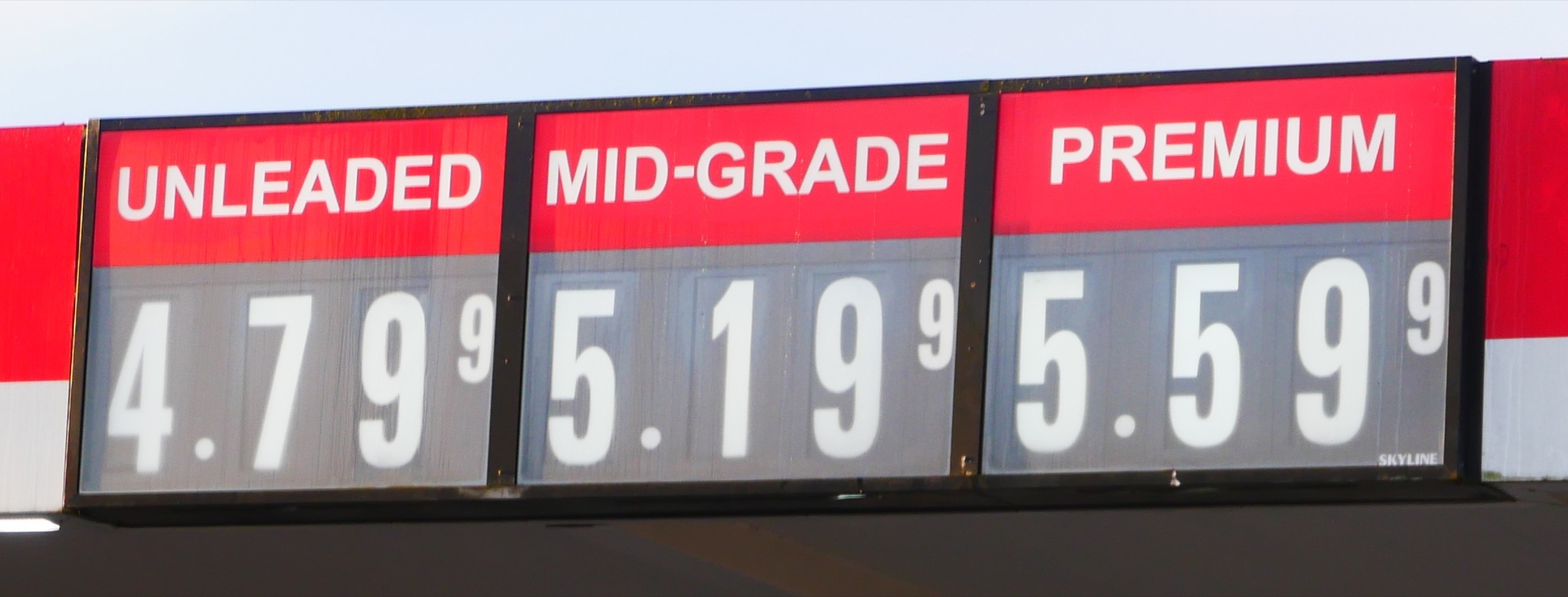
Consumer prices rose 3.7% in September from a year earlier, up from 3.4% in August and above the 3.6% economists had forecast. Gasoline jumped 9.1% in the month and accounted for more than half of the monthly increase, the Labor Department’s September Consumer Price Index showed Wednesday, Oct. 14.
The Consumer Price Index is the government’s measure of how much the prices consumers pay change over time; CBS News describes it as tracking a basket of commonly purchased goods and services.
The 3.7% figure against the forecast and the month before
The Bureau of Labor Statistics, part of the Labor Department, reported that the headline, all-items index rose 3.7% over the 12 months ending in September. CBS News reported that economists surveyed by FactSet expected 3.6%, and that inflation had held at 3.4% for two months before this report.
On a month-to-month basis, the index rose 0.6% in September after 0.4% in August, according to the BLS.
Calculated from BLS index values, September’s annual rate is the highest since May, when it reached 4.2%. The earlier months of the year looked like this, calculated from BLS index values:
- January: about 2.4%
- February: about 2.4%
- March: about 3.3%
- April: about 3.8%
- May: about 4.2%
- June: about 3.5%
- July: about 3.4%
- August: about 3.4%
What drove it: gasoline, then energy
The Labor Department said gasoline, which rose 9.1% in September from August, made up more than half of the monthly rise, CBS reported. Over 12 months, gasoline is up 34.2%, and the broader energy category is up 20.4%.
Energy as a whole rose 5.2% in September after rising 2.1% in August, according to the BLS.
CBS wrote that inflation has risen sharply since the start of the year due to soaring energy prices, sparked by the war in Iran and Russia’s war with Ukraine.
Beyond energy: core prices, airfares and shelter
The “core” index, which the BLS labels all items less food and energy, rose 0.3% in September and is up 2.6% over 12 months, compared with 2.4% in August and the 2.5% economists expected. Energy, by comparison, is up about a fifth over the same 12 months (20.4%).
Airline fares were up 22.4% from a year earlier, according to the CPI report, CBS reported. Experts noted that increases in shelter and used car costs also pushed up the core figure, and that the rise shows price pressures broadening into categories beyond energy, a sign that inflation remains sticky. The BLS reported that shelter rose 0.4% in September and 3.2% over the year.
The BLS food index, which covers restaurant meals as well as groceries, was unchanged in September and up 2.5% over 12 months. Food at home, the grocery part of that index, fell 0.1% in September and rose 1.8% over 12 months, according to the BLS summary.
What households see at the pump
The 9.1% is September’s monthly change in the gasoline index from August. The $4.33 is a different kind of number: AAA reported that the national average for a gallon of gasoline was $4.33 on Wednesday, up from $2.98 before the war started, CBS reported. CBS says pump prices have cooled slightly in recent weeks but remain elevated.
Diesel averaged $6.29 a gallon after hitting a record high in late September. CBS noted, as a general matter of how diesel costs work, that higher diesel prices raise the cost of moving goods around the country, which often leads to higher prices for everyday items such as groceries. That is not a measured grocery change: according to the BLS summary, food at home fell 0.1% in September.
Wall Street analyst Adam Crisafulli, head of Vital Knowledge, said in a note to investors, as quoted by CBS News: “Energy prices being so high for so long is starting to seep into the broader economy.”
Two ways of counting: adjusted and unadjusted
The BLS reports the monthly change on the seasonally adjusted index, which is adjusted for regular seasonal swings, and the annual change on the unadjusted index. The 0.6% monthly rise is the seasonally adjusted figure, and so is the 9.1% gasoline change. Before seasonal adjustment, gasoline rose 6.5% in September, according to the BLS summary. CBS does not say which of the two the Labor Department’s “more than half” statement refers to.
What it means for Social Security and the Fed
The Social Security Administration announced on Oct. 14 a 3.6% cost-of-living adjustment for 2027, a figure carried in its release and in news coverage of it. According to coverage of the program, the adjustment is set from the Consumer Price Index for Urban Wage Earners and Clerical Workers, known as CPI-W, averaged over July through September and compared with the same three months a year earlier, rounded to the nearest tenth of a percent. The 2026 adjustment was 2.8%, according to that coverage.
The BLS reported that CPI-W rose 3.9% over 12 months in September. Because the adjustment averages July, August and September, and the all-items annual rate was 3.4% in July and August, the 3.6% sits below September’s 3.9% CPI-W rate. That single month is not the benefit figure.
In September, the Federal Reserve raised interest rates for the first time since 2023, bringing the federal funds rate, its benchmark interest rate, to between 3.75% and 4%, CBS reported. Fed officials signaled they expect to raise rates again later this year. The central bank has two meetings left, Oct. 27-28 and Dec. 8-9.
Economists say the report could put pressure on the Fed to act this month, CBS reported. Stephen Brown, chief North America economist at Capital Economics, said in a report that the data could prompt the Fed to raise rates this month rather than wait, with markets shifting to a 50% chance of that, up from 20% before the data. That figure is one economist’s reading of market pricing.
David Royal, chief finance and investment officer at Thrivent, said in an email, as quoted by CBS: “Today’s hotter-than-expected CPI report shows that inflation is still well above the Fed’s target, and that the current rate-hiking cycle isn’t likely to end anytime soon.”
What is known and what is not
Confirmed in BLS series values and the CBS text: the 3.7% annual rate, the 0.6% monthly rise, the 9.1% seasonally adjusted gasoline jump, and the 2.6% core rate.
Announced by the Social Security Administration, per its release and news coverage of it: the 3.6% cost-of-living adjustment for 2027, which we cover in our Social Security COLA article.
Not known from the reporting:
- The president’s comments. CBS also carries a video about the president’s comments on the report. The comments are not reproduced here.
- The exact gasoline contribution. The Labor Department said “more than half” of the monthly rise. A precise share in percentage points was not available.
- The October comparison. The all-items series has no October 2025 value, because federal funding lapsed in 2025 (the BLS footnote reads that data are unavailable due to the lapse in appropriations). What that means for the 12-month figure in the October 2026 report is not known.
- Whether the Fed acts this month. No decision at the Oct. 27-28 meeting has been made.
What comes next
The BLS scheduled the October Consumer Price Index for release on Tuesday, Nov. 10, at 8:30 a.m. Eastern. The Fed meets Oct. 27-28, before that report arrives.
CBS reported that the September figures were released just weeks before Americans vote in the midterm elections, and that a CBS News poll released earlier this month found nine in 10 Americans say prices are the most important factor shaping their views of the economy.