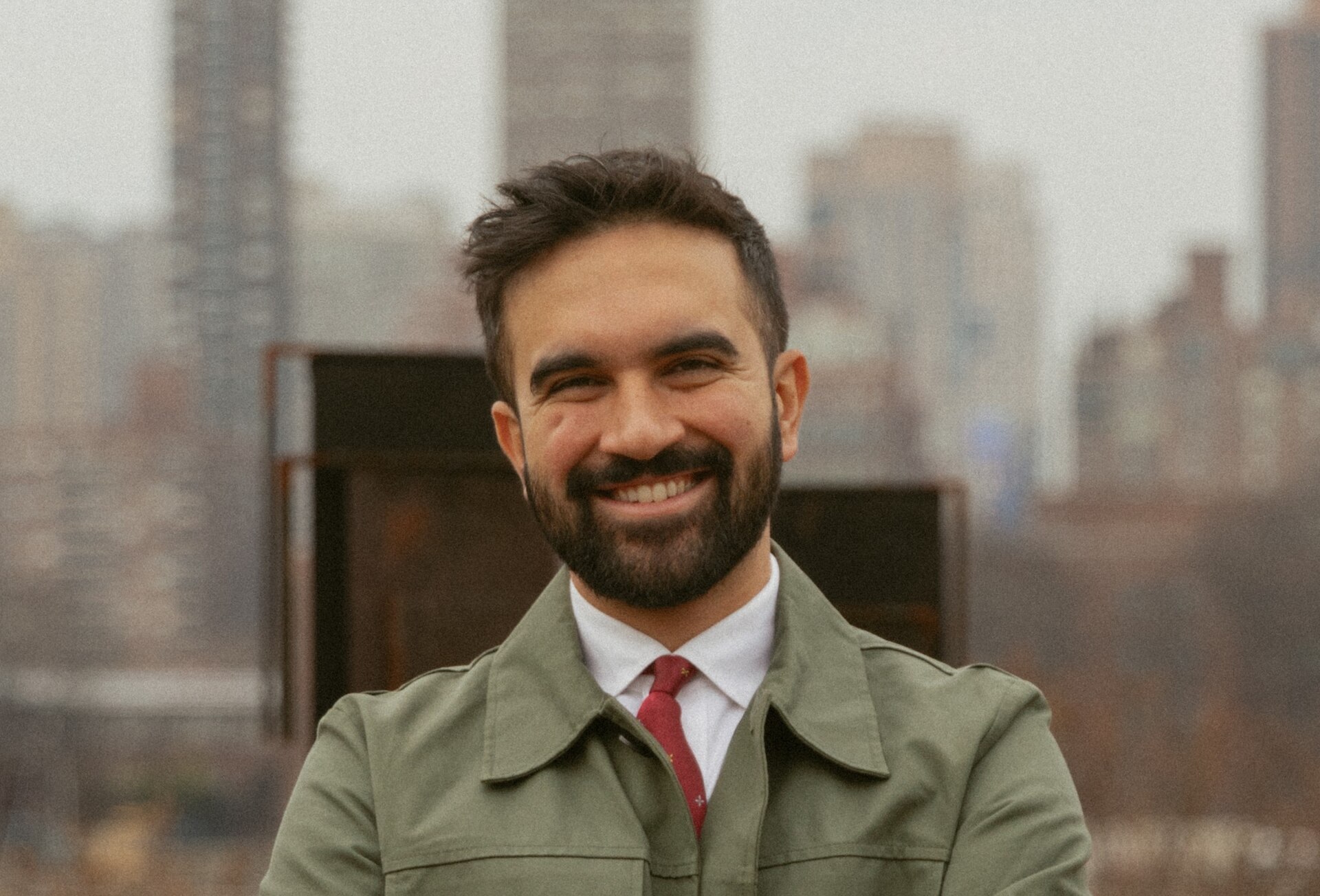
Zohran Mamdani is not running for the United States Senate. He is the mayor of New York City — the 112th, sworn in on January 1, 2026 after defeating Andrew Cuomo — and no reporting ties him to any Senate bid, now or planned.
The freshest and most direct link between his name and “Senate” in searches this week is Michigan: progressive Abdul El-Sayed just won the state’s Democratic Senate primary, and Mamdani spent Wednesday, August 5, celebrating the result, batting away a jab from the Speaker of the House about it, and sidestepping one question about his own role in what comes next.
Key facts
- Running for Senate: no. Mamdani is the mayor of New York City, and no reporting ties him to a Senate bid, now or planned.
- Michigan primary winner: Abdul El-Sayed, who defeated Rep. Haley Stevens in the Democratic primary held Tuesday, August 4, 2026.
- How close: about one percentage point with nearly all ballots counted; the Associated Press did not call it until Wednesday morning, more than 12 hours after polls closed.
- What comes next: El-Sayed faces Republican Mike Rogers on November 3 for the seat of retiring Democratic Sen. Gary Peters.
- Outside spending against El-Sayed: $60 million by Mamdani’s own count. Al Jazeera also put it above $60 million; ABC News quoted El-Sayed himself putting it at $70 million.
- Endorsement: none on the record. Mamdani congratulated and praised El-Sayed, and did not answer the endorsement question.
Why the Michigan result matters
The seat is one Democrats hold today and must defend in November, and it carries weight well beyond Mamdani: Michigan is widely viewed as a state the party has to win to have any realistic path to control of the Senate.
What Mamdani said
At a press conference in New York on Wednesday, Mamdani kept it simple: “I’d just like to congratulate Dr. Abdul El-Sayed on his victory.” He cast the win as part of something larger — “I am proud to be part of a movement of politicians and candidates who are looking to put working-class Americans back at the heart of our politics” — and summarized El-Sayed’s pitch as “money out of politics, money in your pocket, Medicare for all.”
He also pointed to the money arrayed against that pitch. The figure he reached for was $60 million in outside spending against El-Sayed’s campaign — his own number. It sits at the low end of what has been reported: Al Jazeera also put the outside spending above $60 million, while ABC News quoted El-Sayed himself putting it at $70 million.
A large share came from United Democracy Project, a pro-Israel super PAC affiliated with AIPAC, and even that piece is counted differently depending on who is doing the counting: City & State put the group’s spending for Stevens at nearly $32 million, while Al Jazeera credited AIPAC itself with more than $30 million.
One word was missing from all that praise: endorsement. Congratulating a candidate, praising him, even claiming him for your own movement is not the same thing as formally backing his campaign — and Mamdani did not answer the endorsement question either way. A formal endorsement is simply not on the record.
The “mini-Mamdani” exchange
House Speaker Mike Johnson greeted El-Sayed’s win with a post on X warning that America risks being overrun by what he called mini-Mamdanis if Republicans lose control of Congress. Mamdani declined the compliment on El-Sayed’s behalf: “I don’t think in any way this man is a mini-Mamdani,” he said, joking that El-Sayed “can lift a lot more than I can.” He added: “If those simple commitments and beliefs are what drive Rep. Johnson to these kinds of conclusions, I think it shows you how deeply out of touch the Republican Party is with the concerns of working-class Americans.”
Will he go to Michigan?
That is the question Mamdani left open. He did not campaign for El-Sayed during the primary, though New York allies did — Rep. Alexandria Ocasio-Cortez and former Rep. Jamaal Bowman campaigned for him in Michigan, and dozens of Democratic Socialists of America members traveled from New York for candidates the group backed.
Asked whether he would rule out going himself before November, Mamdani answered, “I’m here right now,” and said, “My focus thus far has been on New York City.” That was the whole answer. City & State and amNewYork read it as Mamdani saying he has no plans to campaign in Michigan; Jewish Insider heard a man who declined to commit and left the door open. Both readings are available because what he actually committed to was nothing.
The other threads tying his name to the Senate
Two older stories also connect Mamdani to the chamber, and a third thread is nothing more than talk. All of them may be feeding the same searches.
A Senate committee that opened an inquiry into him
In February 2026, Sen. Bill Cassidy, chair of the Senate health and education committee, opened an oversight inquiry into Mamdani over his decision to rescind an executive order that had adopted a formal definition of antisemitism. Cassidy warned that up to $2.2 billion in federal funding for New York City schools could be at risk over civil-rights compliance. What has come of the inquiry since is not clear from the available reporting — and in any case this is Mamdani being scrutinized by a Senate committee, not joining one, and it dates to the winter rather than this week.
A Senate race he weighed in on
In July 2026, Mamdani waded into Maine’s Senate race, joining Sen. Bernie Sanders and other Democrats in calling on the party’s nominee there, Graham Platner, to step aside after a former partner accused him of sexual assault – an accusation, not a proven or adjudicated finding. “I believe that it’s time for him to drop out of the race,” Mamdani said. Platner announced the end of his campaign on July 8 and formally withdrew on July 11.
A Senate race that is nothing but talk
Pundits and Republican critics have speculated about Mamdani one day challenging Sen. Chuck Schumer in 2028. That is speculation only — Mamdani has announced nothing of the kind, and in April 2026 he flatly ruled out running for president.
None of it changes the basic answer. Mamdani’s connection to the United States Senate in August 2026 runs through other people’s races — the one he is cheering in Michigan, the one he called on a candidate to quit in Maine, and the committee inquiry aimed at his own City Hall.
Timeline: Mamdani and the Senate in 2026
- January 1, 2026 — Mamdani is sworn in as New York City’s 112th mayor after defeating Andrew Cuomo.
- February 2026 — Sen. Bill Cassidy opens an oversight inquiry into Mamdani over the rescinded executive order on the definition of antisemitism, warning that up to $2.2 billion in federal funding for New York City schools could be at risk.
- April 2026 — Mamdani flatly rules out running for president.
- July 2026 — Mamdani joins Sen. Bernie Sanders and other Democrats in calling on Maine Senate nominee Graham Platner to step aside after a former partner accused him of sexual assault.
- July 8, 2026 — Platner announces the end of his campaign.
- July 11, 2026 — Platner formally withdraws.
- August 4, 2026 — Michigan holds its Democratic Senate primary; the race is too close to call on the night.
- August 5, 2026 — The Associated Press calls the race for El-Sayed. Mamdani congratulates him at a New York press conference, rejects House Speaker Mike Johnson’s “mini-Mamdani” label, and does not answer the endorsement question.
- November 3 — El-Sayed faces Republican Mike Rogers in the general election.