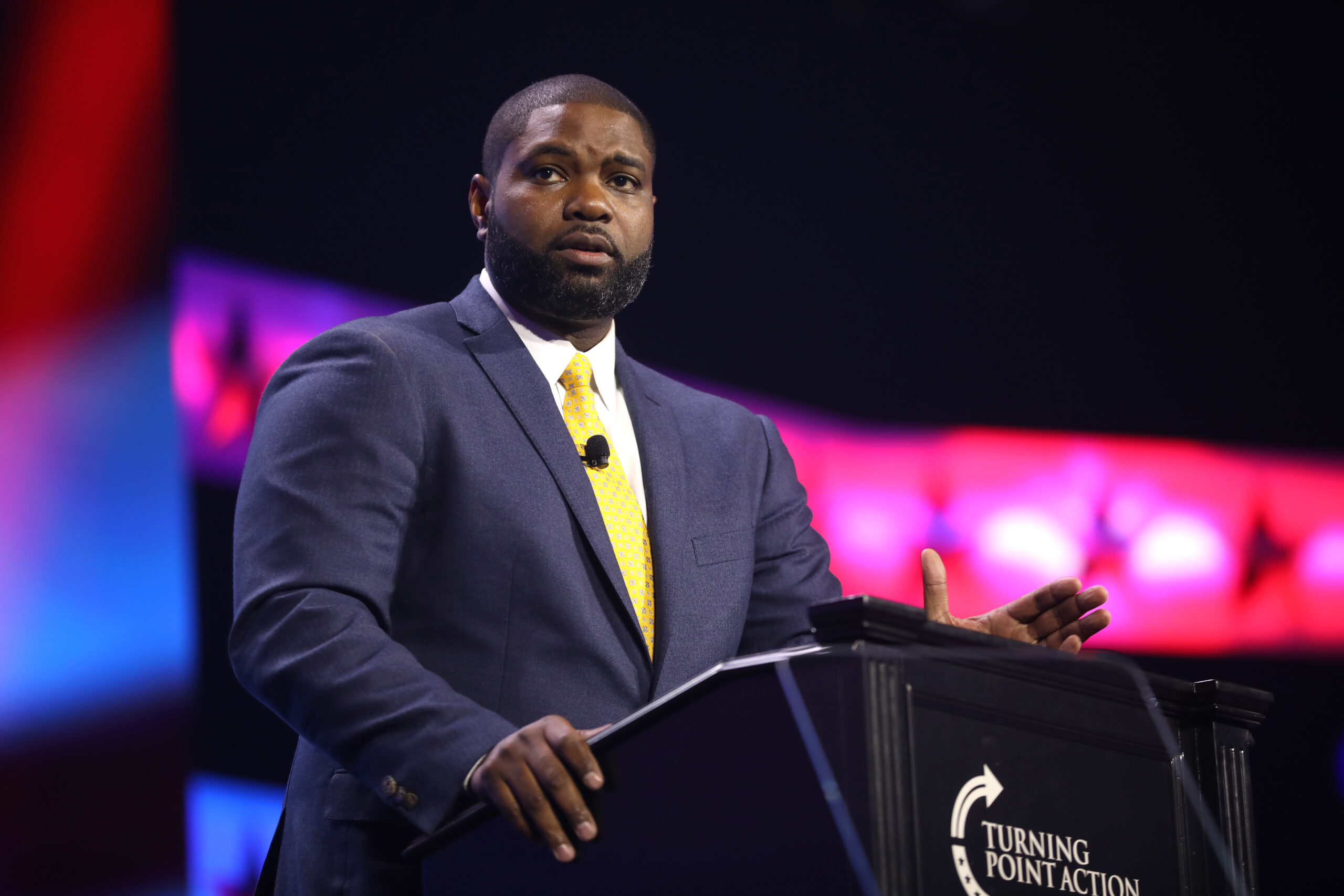
Florida voters went to the polls Tuesday, August 18, 2026, in primaries for governor, a U.S. Senate special election, and every U.S. House seat in the state. By Wednesday, most of the marquee races had been decided, setting up a November 3 general election that will pick the state’s next governor and decide who fills the remainder of former Senator Marco Rubio’s term in the U.S. Senate.
Key facts
- Primary date: Tuesday, August 18, 2026 — general election is November 3, 2026.
- Governor (R): Byron Donalds won with about 48%, ahead of Lt. Gov. Jay Collins (~25%) and investor James Fishback (~10%).
- Governor (D): David Jolly won with about 60%, running with Gwen Graham as his lieutenant governor pick.
- Senate special election (D): State Rep. Angie Nixon defeated Alexander Vindman roughly 56% to 44%, despite raising under $1 million to his more than $16 million.
- Senate special election (R): Sen. Ashley Moody won with about 80%.
- FL-7: Challenger Ryan Elijah defeated incumbent Rep. Cory Mills roughly 47% to 34%.
- Vote counts: These are near-final, unofficial returns — about 98 to 99 percent of precincts reporting in most statewide races — not Florida’s official certified canvass. Anyone who wants the state’s own precinct-by-precinct numbers can check the Florida Division of Elections website once certification is complete.
The governor’s race: Donalds vs. Jolly in November
U.S. Rep. Byron Donalds, who had President Trump’s early endorsement, won the Republican primary to succeed term-limited Gov. Ron DeSantis. Unofficial returns put him at roughly 48 percent, well ahead of:
- Lt. Gov. Jay Collins — appointed to that office by DeSantis in August 2025 — at around 25 percent
- Investor James Fishback at about 10 percent
- Former House Speaker Paul Renner close behind
The Associated Press called the race for Donalds. His win was widely expected: pre-primary polling had shown him leading by double digits.
On the Democratic side, former Republican U.S. Rep. David Jolly — now running as a Democrat, with former Congresswoman Gwen Graham as his running mate for lieutenant governor — won his party’s nomination with roughly 60 percent of the vote, comfortably ahead of Dayna Marie Foster and a field of five other candidates.
Donalds and Jolly will face each other on November 3. If Donalds wins in November, he would become Florida’s first Black governor.
DeSantis himself is off the ballot because Florida’s constitution limits governors to two consecutive four-year terms; he was first elected in 2018 and reelected in 2022. First lady Casey DeSantis had been discussed as a possible candidate earlier in the cycle amid pressure from donors, but that talk faded after Trump endorsed Donalds, and the governor said publicly that she was not seeking the office. She did not appear on the ballot.
A Senate upset: Nixon outlasts Vindman’s millions
The Democratic primary for the U.S. Senate special election was widely described as a major upset. State Rep. Angie Nixon, a Jacksonville legislator aligned with the Democratic Socialists of America who raised under $1 million, defeated retired Lt. Col. Alexander Vindman, who had raised more than $16 million, by roughly 56 percent to 44 percent. CNN, NBC News and Bloomberg were among the national outlets that described the result as a major upset given the enormous gap in campaign funding.
On the Republican side, incumbent appointed Sen. Ashley Moody won her primary comfortably, taking roughly 80 percent of the vote against Chris Gleason, Ernest Rivera and Neelam Taneja Perry.
Nixon and Moody will meet in November to decide who serves out the remainder of Rubio’s Senate term.
Cory Mills loses in FL-7 amid investigations
In Florida’s 7th Congressional District, Republican incumbent Cory Mills lost his primary to Ryan Elijah, a former local television news anchor. He still faces an open House Ethics Committee investigation. ABC News has also reported, citing multiple unnamed sources, that the Justice Department is investigating Mills in part over his finances; Mills has said neither the DOJ nor the FBI has officially confirmed such an investigation to him. Neither matter has been resolved. Separately, a Florida judge did rule on one matter: in 2025 a Columbia County judge granted a restraining order sought by a former girlfriend, writing that he did not find Mills’s testimony about the allegations to be truthful; that civil order later expired. Vote returns had Elijah ahead by roughly 47 percent to 34 percent, with more than 95 percent of the expected vote counted. Trump, who had endorsed Mills in the past, left him off a later endorsement list.
Other notable House results
In the 19th District — the seat Donalds is vacating — conservative media executive Jim Schwartzel won a crowded, expensive Republican primary against ten other candidates, including Trump-endorsed Catalina Lauf and former U.S. Representatives Madison Cawthorn and Chris Collins. Both Cawthorn and Collins had relocated to the district to run. Returns had Schwartzel at roughly 29 percent and Lauf at roughly 22 percent.
In the 20th District, a majority-Black seat reshaped by the new congressional map, Democratic incumbent Debbie Wasserman Schultz won renomination, holding off former Broward County Mayor Dale Holness, teacher and activist Elijah Manley, former Rep. Sheila Cherfilus-McCormick and rapper-activist Luther Campbell.
Why the map looks different this year
This was the first major election held under a newly redrawn Florida congressional map. DeSantis called a special legislative session on redistricting; lawmakers passed the new map in late April 2026 and DeSantis signed it into law on May 4, reworking 21 of the state’s 28 U.S. House districts. The new lines are widely described in news coverage as designed to favor Republicans, and are projected to produce a 24-4 GOP (the Republican Party) advantage in Florida’s House delegation. Voting-rights groups, including Common Cause, the Campaign Legal Center and Equal Ground Florida, have challenged the map in court as an unconstitutional partisan gerrymander. So far, courts — including the Florida Supreme Court, which declined to intervene in a 6-1 ruling — have allowed the map to stand for this year’s elections, and the underlying legal challenge continues.
Two separate, localized controversies surfaced during the primary season: a deceptive-mailer scheme involving fabricated news headlines in the 24th District’s Democratic primary, and an alleged fraudulent Republican voter-guide scheme in St. Johns County. Neither has been shown to affect the statewide vote counts reported here.
Timeline
- 2018 — Ron DeSantis is first elected governor of Florida.
- 2022 — DeSantis is reelected to a second term, now term-limited.
- Late April 2026 — Florida lawmakers pass a newly redrawn congressional map, reworking 21 of the state’s 28 U.S. House districts.
- May 4, 2026 — DeSantis signs the new congressional map into law.
- August 18, 2026 — Florida holds primaries for governor, the U.S. Senate special election, and every U.S. House seat.
- November 3, 2026 — General election decides the governor’s race, the Senate seat, and the House races.
Down-ballot races
Down the ballot, Republican incumbents held onto both statewide Cabinet nominations up this year: Blaise Ingoglia for Chief Financial Officer, and Wilton Simpson for Commissioner of Agriculture. Democrats picked their own nominees for both seats — Annette Taddeo for CFO, Joey Mendoza Atkins for Agriculture Commissioner. Reported vote shares were about 61% for Ingoglia, 69% for Simpson, 66% for Taddeo and 60% for Mendoza Atkins.
What happens next
The general election is November 3, 2026. Voters will choose between Donalds and Jolly for governor and between Moody and Nixon for the Senate seat, alongside the winners of Florida’s U.S. House primaries. Litigation over the new congressional map is ongoing, though it did not stop this year’s primaries from going forward under the new lines.