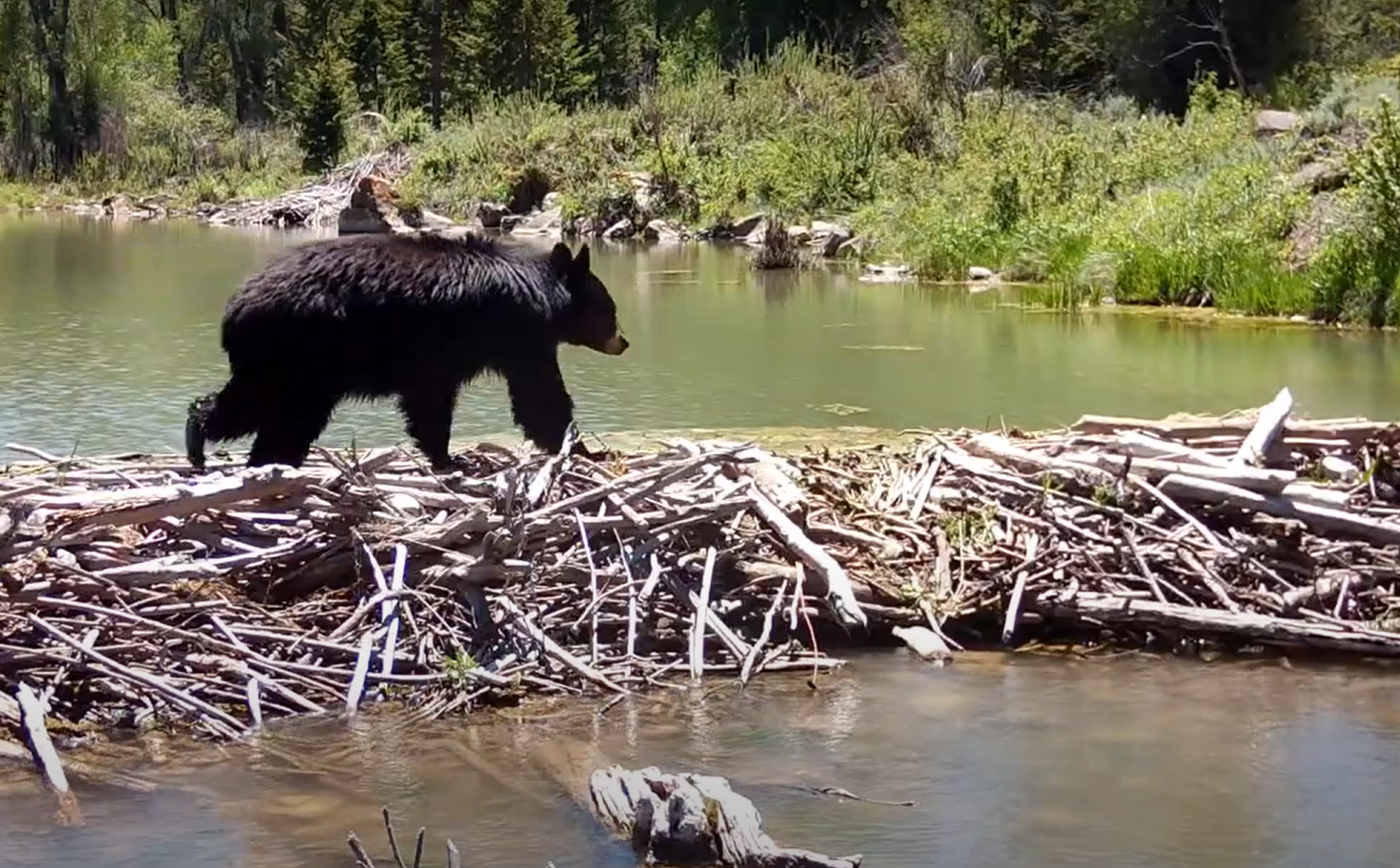
A roughly 250-pound black bear climbed into an unlocked, parked car in central Colorado Springs and couldn’t get back out. It was trapped inside for several days in the summer heat before anyone found it dead, and Colorado Parks and Wildlife’s Southeast Region publicized the case around August 18, 2026, with a blunt message to drivers statewide: lock your car.
Key facts
- A roughly 250-pound black bear got trapped inside an unlocked, parked car in central Colorado Springs.
- It was stuck for several days in summer heat before it was found dead.
- CPW publicized the case around August 18, 2026.
- CPW says a locked door alone likely would have sent the bear looking elsewhere instead of getting stuck.
- Statewide bear sighting and conflict reports hit 6,129 from January 1 through August 13, 2026 — nearly double the 3,115 reports over the same period in 2025, and already more than the 5,299 reports logged in all of 2025.
- Colorado’s House Bill 26-1342 took effect August 12, 2026, with fines up to $5,000 for a third or subsequent offense when someone knowingly leaves food or trash where bears can get to it.
How the bear got trapped
CPW says bears are dexterous enough to pull open a door that isn’t locked. Wildlife officers describe a familiar pattern behind these break-ins in general: a bear smells food, pulls the handle, climbs in, grabs what it wants and normally climbs back out and moves on. “Typically what happens is they pull the door open, get in, get their food, and then they leave,” CPW Wildlife Officer Travis Sauder has said, describing that general bear behavior rather than commenting specifically on the Colorado Springs case. The trouble starts if the door swings shut behind the bear — it can open a door from outside, but it often can’t work out how to release the latch and let itself back out, which is likely what happened to this bear: it got in, the door shut, and it couldn’t get back out. Local news outlets reported that it caused extensive damage to the interior while trying to get free.
What’s still unknown
Several basic details haven’t been made public:
- Exactly when the bear got into the car, or the precise day it died — its body went unnoticed for several days in hot weather before CPW publicized the case around August 18.
- The vehicle’s exact location, beyond “central Colorado Springs.”
- The owner’s identity, or whether they were cited, warned or fined.
A Colorado law that took effect around August 13, 2026, House Bill 26-1342, lowered the bar for citing someone who knowingly leaves food or trash where bears can get to it, with fines reaching $5,000 for a third or subsequent offense — though no report has said whether that law has anything to do with this particular case.
CPW’s advice to drivers
CPW spokesperson Joey Livingston reinforced the department’s message after the incident. The department’s Bear Wise program, at cpw.state.co.us/living-bears, tells drivers to:
- Lock every door.
- Roll the windows all the way up.
- Take out food, trash and other attractants — including pet food and anything scented.
CPW says the fix might have been that simple: a locked door alone likely would have been enough to send the bear looking elsewhere instead of getting stuck.
Other bear-in-car calls this summer
This isn’t the only bear-in-a-car call CPW has handled this summer, though an earlier one turned out very differently. On July 29, 2026, a separate black bear got trapped inside an unlocked car in nearby Manitou Springs. Firefighters freed that bear alive, and it ran off into Pike National Forest with no one hurt. CPW has also reported that a bear was removed alive from a vehicle in Littleton, near Denver, with the same warning to lock up. The Colorado Springs bear did not survive.
Why bear conflicts are rising this year
This isn’t just one unlucky bear. Colorado’s bears are having a rough year overall, with many struggling to find enough food in the wild. CPW logged 6,129 bear sighting and conflict reports statewide from January 1 through August 13, 2026 — nearly double the 3,115 reports over the same stretch in 2025, and already more than the 5,299 reports the state logged in all of 2025. CPW says 2026 is on pace for the highest statewide number of bear conflicts and sightings on record. CPW and news outlets point in part to a rough year for natural bear food: low mountain snowpack, late freezes and drought reduced the berries, nuts and plants bears normally eat, pushing more bears toward human areas looking for something to eat. It’s also happening during hyperphagia, the roughly August-to-October stretch when bears forage as much as 20 hours a day to build fat reserves before hibernation — a period when human-bear conflicts typically peak.