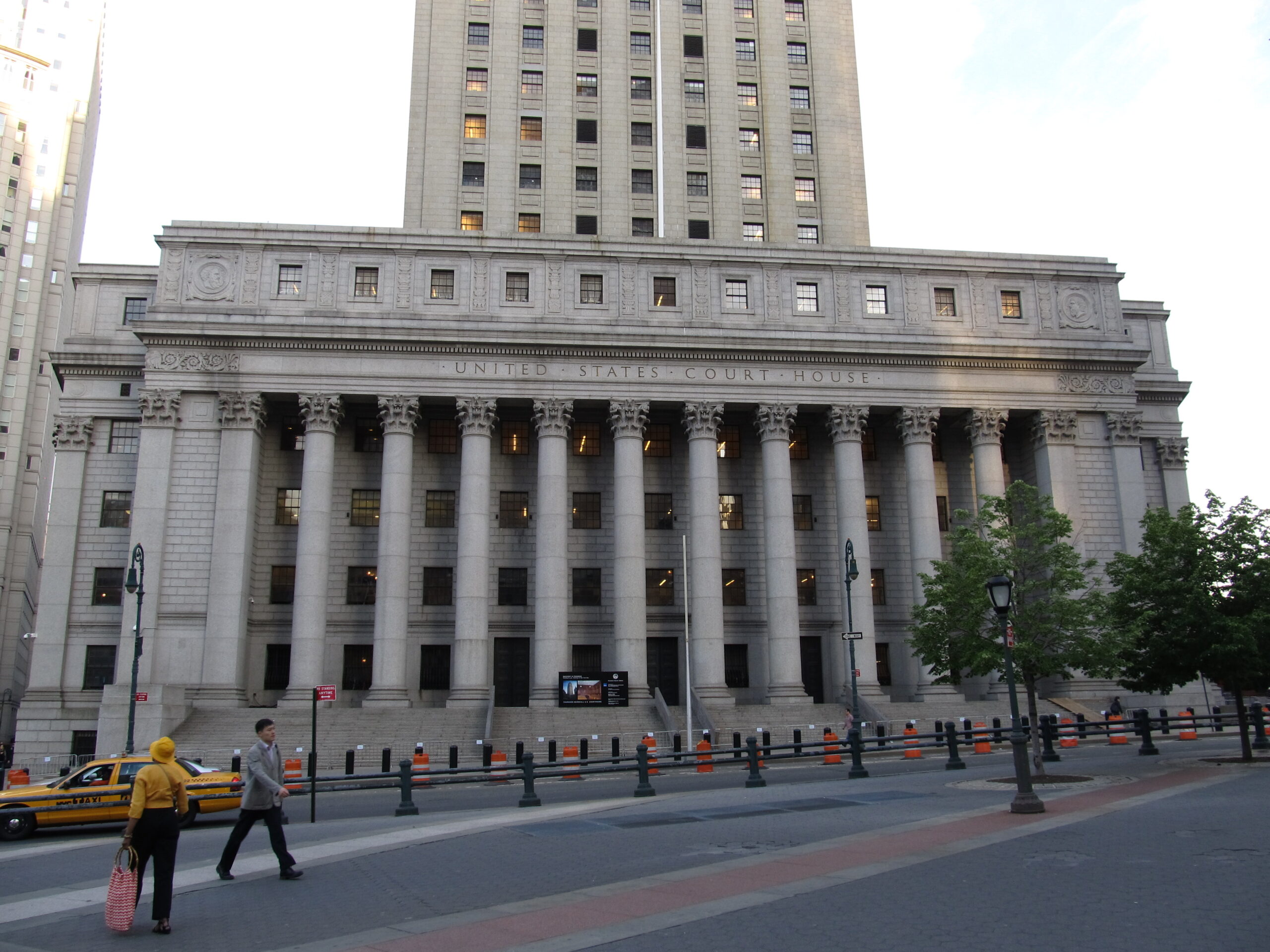
A federal judge in New York has thrown out a Trump administration policy that had suspended immigrant visa processing for people from 75 countries, ruling that the Secretary of State had no legal authority to impose the blanket freeze.
Key facts
- Ruling: A federal judge vacated the Trump administration’s 75-country immigrant visa suspension
- Judge: Jeannette A. Vargas, U.S. District Court, Southern District of New York
- Ruling date: Friday, August 21, 2026
- Policy took effect: January 21, 2026
- Legal basis: Violated the Immigration and Nationality Act of 1952; vacated under the Administrative Procedure Act
- Case: Catholic Legal Immigration Network, Inc. v. Rubio, filed February 2, 2026 in Manhattan federal court
- What’s next: Both sides must propose how to resolve what remains of the case by September 11, 2026
What the judge ruled
Judge Vargas ruled on Friday, August 21, 2026, that the policy was “contrary to law and in excess of statutory authority.” The opinion was also sharply critical of the government’s justification for the policy. She vacated the policy under the Administrative Procedure Act. A vacatur is a court order that formally cancels a government action, rather than simply blocking its enforcement in a single case.
The State Department announced the policy around January 14, 2026, and it took effect January 21, 2026. It directed U.S. consular officers to stop processing immigrant visas for nationals of 75 countries, including people who had already been found eligible with no reason on record to deny them. The State Department had said the pause was intended to prevent immigrants from countries it considered “high risk” from relying on welfare.
Judge Vargas found that approach violated the Immigration and Nationality Act of 1952, a federal law that bars discrimination based on nationality in the issuance of immigrant visas and limits the Secretary of State’s authority over how individual consular officers decide cases. In her ruling, she concluded that Secretary of State Marco Rubio had exceeded that authority by ordering blanket refusals for applicants consular officers had already cleared.
What the ruling means for visa applicants
Because Judge Vargas vacated the policy itself — rather than blocking it only for the people who sued — the ruling reaches everyone affected, not just the plaintiffs. It sets aside visa refusals that were based solely on the 75-country policy and directs consular officers to go back to evaluating those applications individually, under ordinary immigration-law standards, instead of turning people away automatically because of where they’re from. Public reporting has not established whether consulates have actually resumed processing those cases as of August 23, 2026.
A partial win for the administration
The ruling wasn’t a total loss for the administration. Judge Vargas also found that the policy did not need to go through the formal public notice-and-comment process that applies to some federal rules — a narrower, procedural point in the government’s favor that didn’t change the outcome on the core discrimination claim.
Which countries were affected
News coverage has named some of the countries covered by the suspended policy, including Afghanistan, Brazil, Egypt, Iran, Iraq, Nigeria, Russia, Somalia, Thailand and Yemen. Multiple news outlets put the full list at roughly 40% of the world’s countries, concentrated in Latin America, Africa, Southeast Asia, the Middle East and the Caribbean. No news organization has published the complete, official list of all 75 countries, and it’s not clear whether one has been made public anywhere at all.
The case behind the ruling
The case, Catholic Legal Immigration Network, Inc. v. Rubio, was filed February 2, 2026 in Manhattan federal court. The plaintiffs were the Catholic Legal Immigration Network (CLINIC) and African Communities Together, along with five people seeking employment-based visas and six U.S. citizens petitioning for family members. They were represented by a group of immigrant-rights and civil-rights legal organizations, including the National Immigration Law Center and the Center for Constitutional Rights. The National Immigration Law Center, one of the groups involved, called the ruling “a major victory for families, fairness, and the rule of law.”
Secretary Rubio has not issued a public statement responding directly to the ruling. In a general statement, a State Department spokesperson said the administration was “protecting the American people by upholding the highest standards of screening and vetting of visa applicants.” The department has not said publicly whether it plans to appeal, and no appeal had been confirmed as of August 23, 2026.
What happens next
Judge Vargas gave both sides until September 11, 2026, to propose how to resolve what remains of the case — a sign that, even though the policy itself has been vacated, the case is not fully closed.