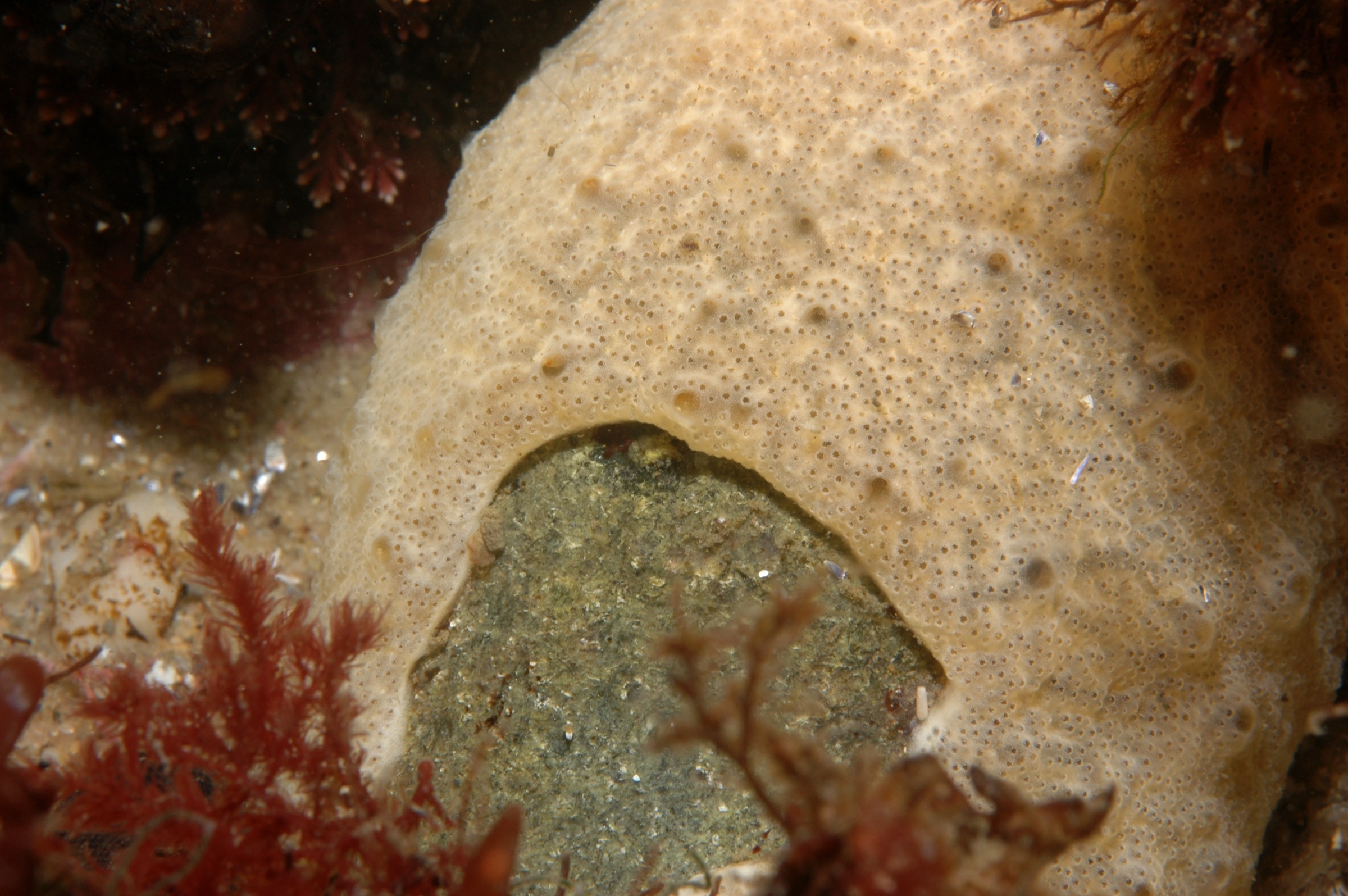
A six-year-old black Labrador named Sgiath from the Scottish Highlands has been named animal of the year by the International Fund for Animal Welfare (IFAW) for sniffing out an invasive marine creature, the carpet sea squirt, nicknamed “sea vomit,” the BBC reported.
The BBC said IFAW is giving Sgiath the award at its 26th annual Animal Action Awards ceremony on Thursday, Oct. 15. Her name is pronounced Skee-ah. IFAW’s programme page profiles Sgiath and Dr. Texa Sim among its honorees and describes Sgiath as believed to be the first dog in the world trained to detect the species, but it does not say which category she won. Only the BBC says she was named animal of the year, and IFAW had not published a winners list as of the morning of Oct. 15.
Some details differ between accounts. The BBC centers on Sgiath, while a Sept. 30 Good Good Good feature centers on Sim’s other Labrador, Uisge. No accuracy figures or study of the dogs’ finds have been published, so the claim that Sgiath is “always right” is her handler’s account.
What the dog does
Sgiath works at low tide with her owner, Dr. Texa Sim, a marine ecologist based near Glencoe. According to the BBC, she has found hundreds of colonies of the sea squirt.
Sim has had Sgiath since she was a puppy. As a pup, the dog was trained as a mountain rescue dog, and Sim wondered whether those skills could help with marine conservation work. Sgiath was then trained to recognize the scent of the carpet sea squirt. Sim said the project began as a proof-of-concept effort and “has exceeded every expectation I had.”
The two jobs ask for different behavior. To draw attention to a lost hiker on mountainous terrain, Sgiath is trained to bark and bounce around. Conservation work requires a quieter approach: Sim trains her to give what is known as a “passive indication” when she finds the sea squirt. “It’s a kind of a stillness, or a stare,” Sim said.
The sea squirt can be hard for people to see. The BBC said it can look like slime among seaweed and on structures such as pontoons and oyster cages. As Sim puts it, Sgiath can “dive down under the seaweed” at low tide. “She just does a survey with her nose, essentially, she can pinpoint exactly where it is, so it’s much easier,” Sim said.
Why the carpet sea squirt matters
The carpet sea squirt, formally named Didemnum vexillum, is an invasive species. The BBC reported that, if left uncontrolled, it can smother and kill native species. The BBC said marine experts believe it came from Japan and arrived on the shores of the south of England and Wales in 2008. It can appear in shades from orange to cream and has spread to several seaside locations across the UK. It reproduces quickly in the warmer summer months, and the BBC reported fears that it could spread further as seas warm.
A risk assessment from the Great Britain Non-native Species Secretariat gives the species an overall rating of high risk (medium confidence). The assessment says it was first detected in Holyhead, Wales, in 2008, which matches the BBC’s date, though it was probably already established in parts of England, with evidence of its presence in Devon from 2005. It says the native range is not conclusively known and is thought to be the north-western Pacific, possibly around Japan.
The assessment says the species spreads on vessel hulls, leisure craft, and shellfish stock and equipment. Its economic impact in Great Britain has not been quantified, the assessment says, but it rates the potential impact as major (medium confidence).
Dr. Martyn Kurr, a marine biologist at Bangor University, told the BBC that non-native “biofouling” species, which grow on boats and equipment, can outcompete native wildlife for nutrients. “These species also clog up aquaculture pens, marine infrastructure, and machinery such as boat propellors,” he said.
The BBC reported that controlling and cleaning up such marine invaders costs millions of pounds every year across Europe; it does not give a figure or a source. The risk assessment says the species is not currently causing much economic loss in Britain, though it could if it spreads, and that shellfish production could be lost.
What dogs add
Dogs’ scent detection is often used in conservation work on land, the BBC said, including tracking endangered species and helping investigate environmental crime. Kurr said scientists are only starting to realize that “these wonderful animals can smell changes in water that signal a marine invasion which otherwise might have gone unnoticed.”
Good Good Good quoted Sim as writing on an Instagram page for her dogs: “With their incredible noses, dogs are able to pinpoint targets much more effectively than humans, making them powerful allies in efforts to support species and conserve ecosystems.”
About the awards
IFAW’s programme page lists an Animal of the Year category among several others, including marine conservation and wildlife vet of the year, and says the ceremony is in London on Oct. 15. It says nominations came from around the world and were reviewed by IFAW staff and a judging panel of IFAW staff and executive team members.
What comes next
The BBC does not say what Sim and Sgiath plan to do next. Kurr said he is “very excited to see what other wonderful work we can do with sniffer dogs.”
Good Good Good quoted Sim on the same Instagram page: “We are developing the world’s first American slipper limpet and carpet sea-squirt detection dogs, showing that dogs can be vital even in the marine environment.” The same feature says Uisge is also training to detect slipper limpet, another invasive marine species, and dead bats that may be killed in collisions with wind farms.