A new species of wild cat, Leopardus tilcayo, has been formally described by an international team of researchers in the journal Current Biology, published Thursday, Sept. 17, 2026. The bigger finding underneath it: genomic analysis shows that what scientists have long treated as a single species, the tiger cat (Leopardus tigrinus), is actually five distinct species — and tilcayo, identified in the Bolivian Yungas, the cloud forest on the subtropical eastern flank of the Andes, is the newest of them and the only one that had never before been collected or even proposed as a separate animal.
The study’s own Highlights describe it as the “first discovery of a novel cat species in over a century” — a framing that is accurate but undersells the bigger result: the reclassification of the tiger-cat complex, the group of small, spotted cats long lumped together under one scientific name.
The tiger-cat complex has been unraveled gradually. In 2013, genetic work split off the southern tiger cat, Leopardus guttulus, as its own species. The clouded tiger cat, Leopardus pardinoides — first described by John Edward Gray in 1867 as Felis pardinoides — was not formally elevated to full species status until 2024. Tilcayo differs from both precedents: researchers say there was no museum specimen, and the animal had never been collected or proposed as a distinct species before this study. “We didn’t have specimens in museums,” said Tadeu de Oliveira, of the State University of Maranhão in Brazil, one of the paper’s authors. “It had never been collected before.”
The five species the study identifies are Leopardus tigrinus, L. guttulus, L. pardinoides and L. emiliae — all previously proposed and now genetically confirmed as distinct, though emiliae itself is not a new discovery — plus the newly described tilcayo. A newly described subspecies, L. tigrinus antisuyo, from the Peruvian Yungas, is not one of the five species. The findings emerged from an analysis of complete genomes from 38 individuals across the broader wildcat genus Leopardus, of which 26 represented the tiger-cat complex. Eight genomes came from museum specimens, which researchers used to genetically examine, for the first time, the type locality of Leopardus tigrinus itself in the Guiana Shield — not to sample tilcayo, which has no museum specimens. The study puts tilcayo’s divergence from its closest tiger-cat relative at roughly 1.4 million years ago.
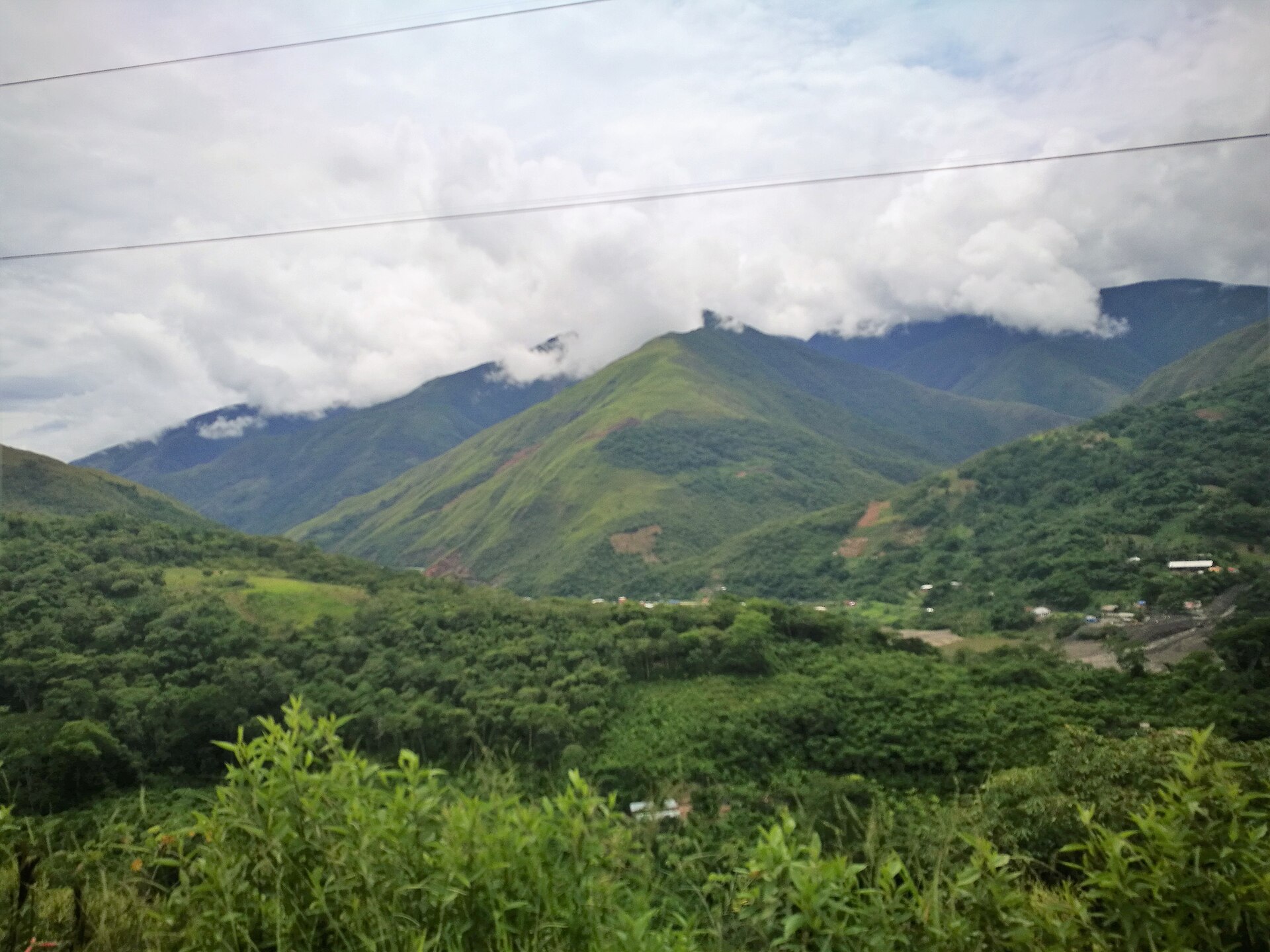
The animal’s discovery traces back to 2016, when a cat that had been kept as a pet by a local resident was brought to the Senda Verde wildlife sanctuary in Bolivia, mistaken for a domestic kitten. “I took a hundred pictures of it. I was so fascinated,” said Paola Nogales-Ascarrunz, a co-lead author of the study with Jonas Lescroart of the University of Antwerp. Nogales-Ascarrunz leads the Bolivian felid research and conservation program, Programa de Investigación de Félidos Bolivia. The animal, nicknamed Tigrino, didn’t look quite right for a known tiger cat. “If you look at the spots or the tail, they really don’t match,” Nogales-Ascarrunz said. That captive cat, still described as smaller than a house cat, became the species’ type specimen, the reference individual for the species. Its fur is light brown with irregularly shaped rosettes, Nogales-Ascarrunz said. The name tilcayo comes from a local name for the animal, according to the researchers.
Much about tilcayo in the wild remains unknown. Lescroart said the team’s information is “limited to the two live individuals that we examined, and a small number of camera-trap records.” Diet, reproduction, population size and the animal’s full geographic range have not been established. Even size is not settled precisely: National Geographic reported the type specimen at about 18 inches long and roughly 3 pounds, a figure other outlets have cited with modest variation, but researchers have not published a definitive measurement for the species.
The finding matters beyond taxonomy because conservation status is assessed species by species, not for a group. Today the IUCN Red List assesses the northern tiger cat, Leopardus tigrinus, as Vulnerable, and CITES Appendix I lists both the northern and southern tiger cats; the newly described tilcayo has not been assessed at all. Dividing the old single-species range among five species could change the picture for at least some of them. “If you think [the tiger cat] is a single thing from southern Brazil all the way to Costa Rica, you’re going to find it’s not endangered,” said senior author Eduardo Eizirik, of the Pontifical Catholic University of Rio Grande do Sul in Brazil. “But if we find that it’s not a single thing, but actually five things, each of them must be assessed separately.” Lescroart put the concern directly: species “currently considered ‘vulnerable’ under the single label of ‘northern tiger cat’ may increase to ‘endangered’ when assessed on their own.” No new assessment has been published yet — researchers are describing an expectation, not a new listing, and tilcayo has no IUCN status or population estimate, and its full range has not been mapped.
Outside researchers echoed the stakes. “Once three species become five species, each population is reduced,” said James Sanderson, founder of the Small Wild Cat Conservation Foundation, who was not involved in the study. Fabio Oliveira do Nascimento, a taxonomist at the Museum of Zoology at the University of São Paulo who also was not part of the study, summed up where the science now stands: “Our understanding of the natural history, evolution and taxonomy of the group has begun to become clearer, resolving long-standing questions while raising new ones.” De Oliveira noted a shared pressure across the group: “All of them are in habitats that are vanishing fast.” In the Bolivian Yungas specifically, threats to unprotected habitat include slash-and-burn clearing for cash crops and the illegal pet trade, according to the conservation group One Earth.
What comes next, in the researchers’ own account, is separate conservation assessment for each of the five species — Eizirik said each “must be assessed separately” — though no new assessment has been published. Basic facts about tilcayo’s range, diet and population remain unknown, and the researchers have given no timeline for filling in those gaps.