Killing or injuring an endangered species during logging, mining, construction or similar work is no longer illegal under the Endangered Species Act — even when the harm was foreseeable — unless whoever did it specifically intended to kill or capture that particular animal. That is the practical effect of two related but separate federal actions, both dated to Sept. 14, 2026, that together mark one of the most significant narrowings of the 1973 law’s core protection in decades.
The first action is a final rule published in the Federal Register on July 14, 2026 (Docket FWS-HQ-ES-2025-0034/NMFS-250411-0064), jointly issued by the U.S. Fish and Wildlife Service and the National Marine Fisheries Service. The rule’s own DATES section — confirmed independently through Federal Register API metadata — sets its effective date as Sept. 14, 2026, though some legal commentary has cited Sept. 8 or Sept. 12 instead. The rule rescinds the regulatory definition of “harm,” one of ten terms that together define illegal “take” of a listed species under the ESA. Since 1981 for land species and 1999 for marine species, “harm” had included “significant habitat modification or degradation” that kills or injures wildlife by impairing essential behaviors such as breeding, feeding or migrating — the legal hook that let regulators block logging, drilling and development projects that destroy habitat without anyone directly touching an animal. The new rule supplies no replacement definition; the Services state they “have concluded … that no replacement definition is needed.” Permits already issued under the old definition will not be reevaluated. The rulemaking drew roughly 358,000 public comments before its comment period closed in May 2025.
The second action is an internal FWS policy memorandum, dated Sept. 14, 2026 and signed by Director Brian Nesvik. Unlike the July rule, the memo was never filed in the Federal Register and has not been made public in full; it is known only through reporting by GBH, France24 and the Center for Biological Diversity, and no research for this article was able to obtain or independently verify its full text. According to that reporting, the memo instructs FWS staff to apply a four-part test before finding an illegal “take”: there must be an affirmative act; it must be intentionally directed at an animal; it must produce a direct and immediate effect; and that effect must fall on a specific animal, not a population or its habitat. Two examples attributed to the memo make the shift concrete: “A vessel that inadvertently strikes a whale has not taken it, because the vessel’s course was not set against the whale,” and “Felling a tree is not a take of the bats roosting in it unless the tree is felled for the purpose of killing or capturing them.” The Interior Department told France24 the memo is genuine, saying it “accurately reflects” FWS guidance following the July rule — a confirmation that the memo exists and is being described accurately, not a release of its text.
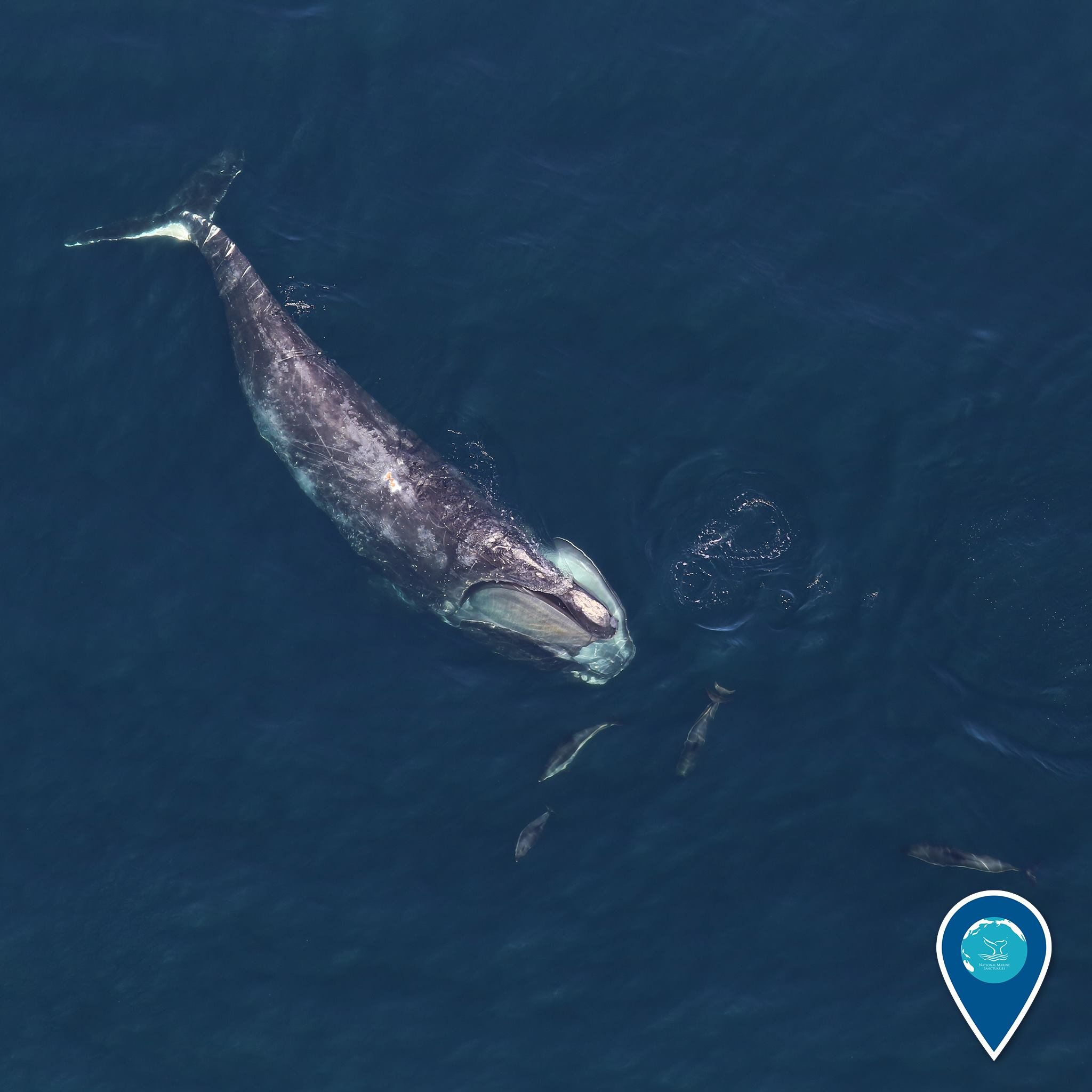
The vessel example is not hypothetical. The North Atlantic right whale, endangered since 1970, numbers only about 380 animals, according to NOAA Fisheries — up roughly 20 since 2020 in a third straight year of modest growth, with only about 70 reproductively active females remaining. Vessel strikes and entanglement in fishing gear are the whale’s leading causes of death and injury; NOAA says more than 85% of individually identified whales have been entangled at least once in their lives. Under the four-element test described in the Nesvik memo, a ship that unintentionally strikes and kills one of those whales would no longer meet the legal definition of “take,” because the strike was not “directed against” that whale specifically.
The approach is not new so much as it is a 30-year-old losing argument revived as policy. In Babbitt v. Sweet Home Chapter of Communities for a Great Oregon (1995), the Supreme Court ruled 6-3 that the habitat-inclusive definition of “harm” was a reasonable reading of the ESA, rejecting a challenge brought by logging and property interests. Justice Antonin Scalia dissented, joined by Chief Justice Rehnquist and Justice Thomas, arguing that “harm” should require “an affirmative act … directed immediately and intentionally against a particular animal,” not an act that “indirectly and accidentally” injures a population. The July rule adopts that dissent’s reasoning directly, and cites the Supreme Court’s 2024 decision ending Chevron deference, Loper Bright Enterprises v. Raimondo, as legal justification for departing from the 1995 majority opinion.
Reaction to the memo, once it drew public reporting this week, has been sharply critical among conservation groups. Brett Hartl, government affairs director at the Center for Biological Diversity, said the policy “stabs at the very heart of the Endangered Species Act by giving federal approval to the killing of some of America’s most beloved wildlife.” Erica Fuller, senior counsel at the Conservation Law Foundation, told GBH that “the only time that someone would actually be liable for a ‘take’ is if they directly and intentionally tried to kill a particular animal,” adding that “whether it holds up in court or not is still to be determined.” Gib Brogan of Oceana told France24 the policy “is going to cut the heart out of the Endangered Species Act.” Other prominent groups — Earthjustice, Defenders of Wildlife and the Sierra Club — have criticized the administration’s broader ESA rollback, but their on-record statements identified so far address the separate July “harm” rule, not the September memo specifically. No industry trade group has issued a statement about the take memo itself; the National Association of Home Builders did praise the July “harm” rescission in an August blog post.
The two actions currently face different legal fates. A coalition of 21 state attorneys general, led by California’s Rob Bonta with Maryland, Massachusetts and Washington as co-leads, sued the Services over the July rule around Sept. 9-10. Separately, Earthjustice, representing the Sierra Club and other groups, filed suit the day the rule was finalized. A third suit came from the Swinomish Indian Tribal Community and the Squaxin Island Tribe, who sued in federal court in western Washington on July 14-15, arguing the rule threatens treaty-protected Chinook salmon fishing rights in the Skagit River and Puget Sound and that FWS arbitrarily rejected the tribes’ request for consultation. All three suits allege violations of the Administrative Procedure Act for failing to give a “reasoned explanation” for reversing longstanding agency policy. Attorneys at Bracewell LLP, who advise regulated industry, have written that further “litigation raising facial and as-applied challenges” to the rule “is certain.” As of Sept. 17, no lawsuit has been filed specifically over the Nesvik take memo — it is simply too new for that to have happened yet, and whether it draws a separate legal challenge from the July rule is an open question.
It would not be the first time an attempt to loosen ESA protections ran into procedural trouble. In 2020, a federal court blocked an earlier administration from rescinding a different set of ESA regulations after finding it had skipped required notice-and-comment procedures. That case involved different provisions — species-listing criteria, not the “harm” definition — so it is not a direct precedent for this year’s rule. But it is a reminder that a rule’s substance and the process used to adopt it can be challenged on separate grounds, and that ESA rollbacks have not always survived contact with the courts.
Sources and further reading
- Rescinding the Definition of “Harm” Under the Endangered Species Act
- North Atlantic Right Whale species page
- Federal Register final rule PDF
- Department of the Interior Restores Clear ESA Enforcement by Rescinding Misguided “Harm” Definition
- California sues over Trump administration’s rollback of Endangered Species Act protections