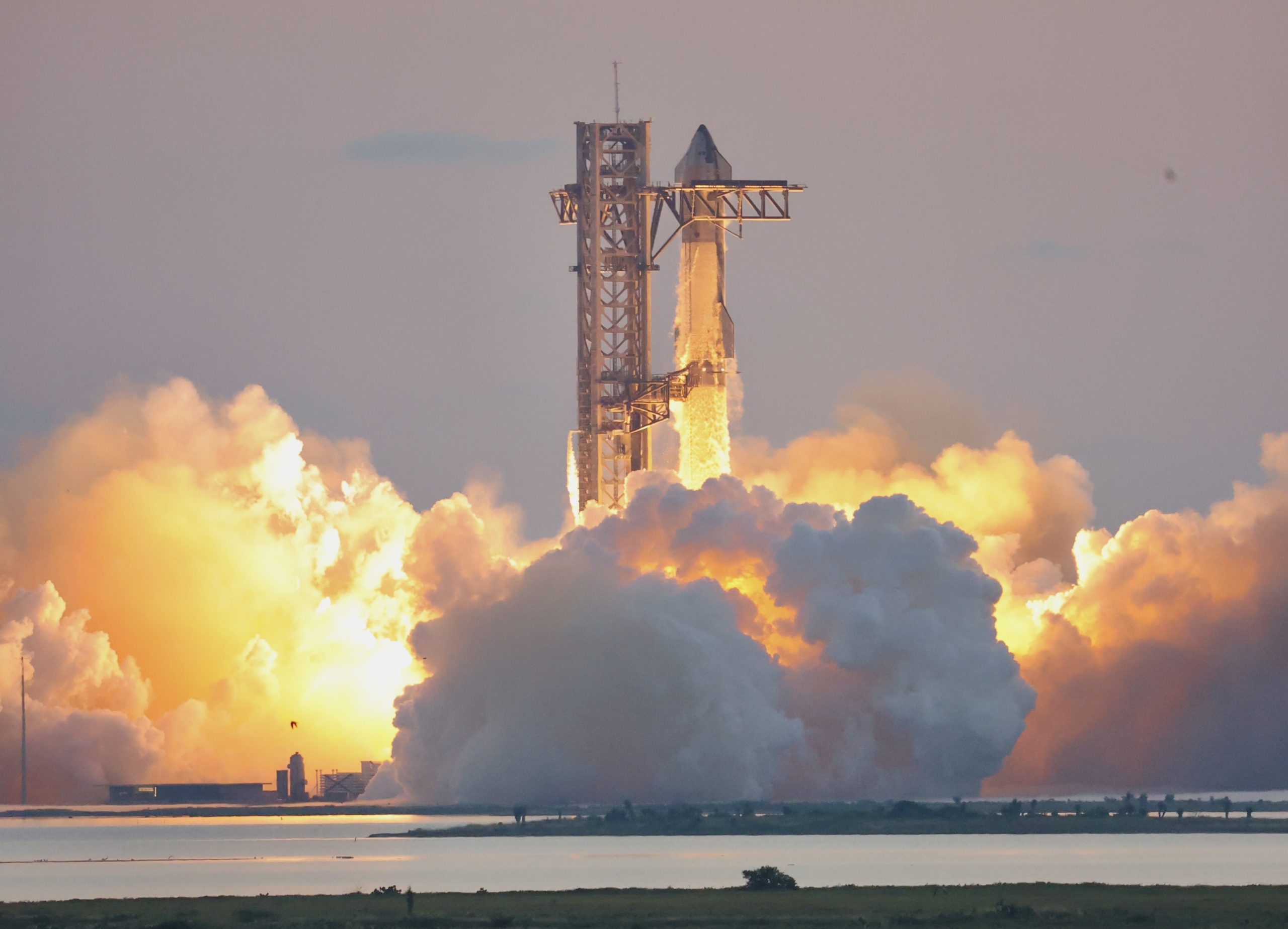
According to SpaceX’s launch page, the company is preparing to launch Starship’s 14th test flight as soon as Monday, September 28, “pending regulatory approval.” The flight would be the first time the company has tried to send Starship all the way into orbit around Earth after 13 earlier test flights, all of them suborbital by design.
When and how to watch
SpaceX’s launch page puts the 75-minute launch window opening at 7:15 a.m. CT (8:15 a.m. ET) Monday, from SpaceX’s launch site at Boca Chica in Cameron County, Texas, according to the FAA. A live webcast is set to begin about 30 minutes before liftoff on SpaceX’s website and on the company’s X account, @SpaceX, with coverage “planned to continue through splashdown.” The company cautions: “As is the case with all developmental testing, the schedule is dynamic and likely to change.”
Why orbit is the milestone
Every Starship flight to date has deliberately stopped short of orbit. SpaceX’s launch page describes past flights as having flown “passively safe suborbital trajectories to maximize public safety while allowing for maximum learning” — meaning the ship flew a path that would fall back to Earth even if it lost control, rather than circle the planet. Flight 14 “is planned to be the first to send Starship into orbit,” which the company frames as the gateway to the next phase of making Starship “fully and rapidly reusable.”
What has to happen, step by step
SpaceX’s published timeline puts stage separation at 2:22 after liftoff, when the ship lights its engines before separating from the booster. The Super Heavy booster then performs a boostback burn to turn back toward its landing area, followed by a landing burn at an offshore point in the Gulf of America. The ship’s orbital insertion burn begins around the 25-minute mark, but SpaceX says it will only execute that burn “after the flight control team has ensured there is sufficient redundancy on hardware critical to doing the subsequent deorbit burn at the end of the mission.” Satellite deployment follows, with all 26 Starlink V3 satellites released by roughly the one-hour mark. The deorbit burn comes roughly 8 hours and 52 minutes into the flight, slowing the ship so it falls out of orbit. Splashdown in the Pacific west of Chile is targeted for roughly 9 hours and 50 minutes after liftoff, following approximately six orbits.
What went wrong last time, and what changed
According to SpaceX, on Flight 13 the Super Heavy booster used all 33 engines on a boostback burn for the first time, but three center engines “showed signs of ice clogging,” cutting the burn short. The booster then attempted a landing burn with 8 of 13 planned engines reigniting before it made “a hard splashdown” in the Gulf. The booster flying Flight 14 carries “hardware modifications to improve filtering to the engines and software changes to enhance relight reliability,” and data recovered from “the Flight 13 Starship as it floated in the Indian Ocean” informed heat-shield changes for this flight.
The payload and heat-shield tests
Flight 14 would deploy 26 Starlink V3 satellites, the company’s launch page says, the first time it would deliver that version of the satellite to orbit. Each adds what SpaceX describes as 1 terabit per second of network capacity, or 26 Tbps in total — “~10x the capacity compared to a single launch of V2 mini Starlink satellites on Falcon 9.” Following on-orbit checkouts, SpaceX says, the satellites “should begin serving customers as soon as a few weeks after launch.” Three of the satellites carry cameras that will image Starship’s heat shield during flight, and two heat-shield tiles recovered from an earlier ship are set to fly again on this mission’s vehicle, “marking the first tile reuse for Starship.”
Weather and the regulatory caveat
A National Weather Service forecast for the Brownsville area issued Saturday night calls for a mostly sunny Monday with a high near 98 degrees and wind gusts to 21 mph; it lists a slight chance of showers and thunderstorms between 1 and 4 p.m., then a slight chance of showers after 4 p.m. — both after the morning launch window closes, though forecasts can change. The launch remains, in the words of SpaceX’s own page, “pending regulatory approval.”