The Federal Reserve raised its benchmark interest rate on Sept. 16, 2026, the first increase since 2023, pushing the federal funds target range up a quarter point to 3.75%-4.00%. The Federal Open Market Committee voted 12-0, with no dissents. In its statement, the Fed said the economy is “expanding at a solid pace,” with strong productivity growth and an unemployment rate that has “changed little,” but added that “inflation remains elevated” and that the increase “will support a timelier return to the Committee’s 2 percent goal.”
The rate had stood at 3.50%-3.75% since a cut last December. The new range takes effect Sept. 17.
For most people, the number that matters is not the federal funds rate itself but what happens next to a mortgage payment, a credit card bill, a savings account or a car loan. Here is what the primary sources actually show, category by category.
Mortgages
Freddie Mac’s Primary Mortgage Market Survey, the industry’s standard benchmark, put the average 30-year fixed rate at 6.95% as of Sept. 17, up from 6.76% the week before; the 15-year fixed rose to 6.26% from 6.09%. Other trackers show different numbers because they measure differently — Zillow-based readings cited by CBS put the 30-year at 7.37%, and an Optimal Blue reading had already crossed 7% on Sept. 15, before the Fed even announced, suggesting markets had partly priced the move in ahead of time. Mortgage rates and the Fed funds rate do not move in lockstep. Melissa Cohn of William Raveis Mortgage noted the disconnect can run either way: “In 2025, when the Fed was cutting rates, mortgage rates went up,” she said, “so who’s to say that in 2026, if the Fed raises rates, mortgage rates can’t come down?” Lisa Sturtevant of Bright MLS, in comments circulating in coverage of the decision, said the hike “will sharply squeeze affordability and sideline even more prospective buyers.”
Credit cards
Bankrate’s own tracking put the average credit card APR at 19.56% as of Sept. 16, below the record 20.79% Bankrate recorded in August 2024. Bankrate explains the mechanism directly: “Federal Reserve rate changes (up or down) generally pass through to customers within a month or two,” since most card rates are set as the Prime Rate plus a margin that typically runs 12 to 13 percentage points, and Prime moves with the federal funds rate. Other measures — a Federal Reserve G.19 figure of 22.15% for interest-accruing accounts in the second quarter, or LendingTree’s new-offer average near 23.82% — track different things and shouldn’t be confused with Bankrate’s broader average.
Savings and CDs
The national average savings account still pays just 0.64% APY, per Bankrate’s Sept. 17 data — far below what the best accounts offer. A CNN/KRDO analysis found the average online high-yield savings account among the five largest such providers running at 3.14%, with those rates expected to move up “within a month” of a Fed hike; CD yields in that same analysis ranged roughly 4.1% to 5% depending on term. No confirmed source has yet quoted a saver-side expert on how this specific increase will play out — the numbers above are the only firm anchor for now.
Auto loans
Citing Edmunds data, the CNN/KRDO analysis put the average new-vehicle loan in August at $44,658 financed at a 7% average rate, up from $43,597 at 6.8% in January. A quarter-point Fed move translates into only a small change on a typical loan — a few dollars a month on $40,000 borrowed. Joseph Yoon of Edmunds framed the more practical lever for buyers: “What car shoppers should keep their eye on is manufacturer incentive financing, where automakers have the ability to use low promotional rates to clear inventory regardless of broader economic impacts like rate hikes.”
On markets, the reaction unfolded over two days rather than in a single move. The S&P 500 fell 0.45% to 7,551 on the day of the decision, according to the Motley Fool, then rebounded roughly 1% the next day, per CNBC, a move partly tied to falling oil prices. The 10-year Treasury yield followed a similar pattern: it rose about 1-2 basis points to just above 5.00% (roughly 5.01%) on decision day, per Saxo Bank and CNBC, then eased back to about 4.95% the next session as bond-market pressure cooled, per CNBC. The 2-year yield rose about 7 basis points to roughly 4.74% on decision day. Gold, which had rallied toward a peak near $4,366 an ounce ahead of the meeting, pulled back to around $4,240 once the widely expected hike was delivered.
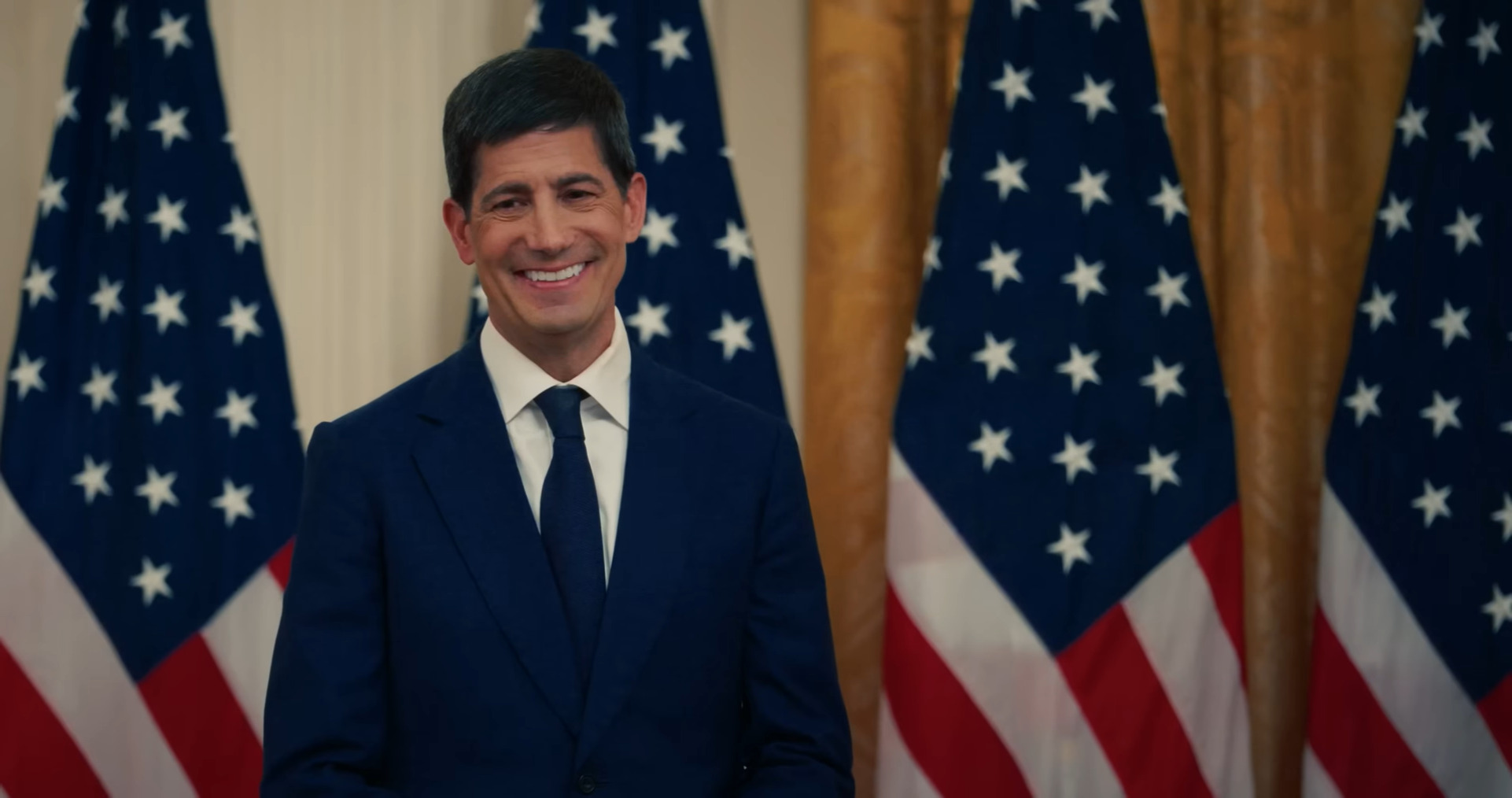
Fed Chair Kevin Warsh, in his third meeting leading the central bank, declined at his press conference to say whether more hikes are coming. “I’m not in the forward guidance business,” he said, adding he would not “pre-judge any future decisions.” The Fed’s quarterly projections show 16 of 18 committee participants expect at least one more hike this year, with a median year-end rate of 4.1% — but Warsh was clear that reflects colleagues’ individual views, not a commitment from him. On what is driving inflation, Warsh did not name a specific cause. Asked about a reporter’s reference to the Strait of Hormuz, he did not adopt it, saying only that the Fed “cannot affect any individual price, whether it be oil prices” or groceries. Separately, he cited “geopolitics … hot spots around the world” as one of three factors that had shifted since July, without naming a country, war or tariff.
The reversal was not sudden. Three FOMC members — Beth Hammack, Neel Kashkari and Lorie Logan — had already dissented in favor of a hike at the July meeting, the one immediately before this one.
President Trump said U.S. rates “should be 1%, or less,” and described telling Warsh, “you might as well vote with the board because it’s not going to matter.” White House deputy press secretary Kush Desai called the decision “a rather unfortunate” one “not backed by a particularly compelling economic case.” Asked what his message was to Trump, Warsh said, “I’ve got nothing for you on the discussion with the president.” Asked separately when he had last spoken with the president, he added only that Fed independence is “a two-way street” and that the Fed will “stay in our lane.”
The move follows similar reversals abroad: the European Central Bank hiked in June, its first increase in three years, and the Bank of Japan hiked the same month before holding steady in July. The Bank of England held its rate at 3.75% again on Sept. 17, voting 6-3, with three members backing an immediate rise to 4%.
Sources and further reading
- Federal Reserve issues FOMC statement
- Implementation Note issued September 16, 2026
- Minutes of the Federal Open Market Committee, July 28-29, 2026
- Transcript of Chair Warsh’s Press Conference, September 16, 2026 (preliminary)
- Summary of Economic Projections, September 16, 2026
- FOMC calendar, 2026
- Kevin Warsh sworn in as Chairman of the Federal Reserve Board of Governors