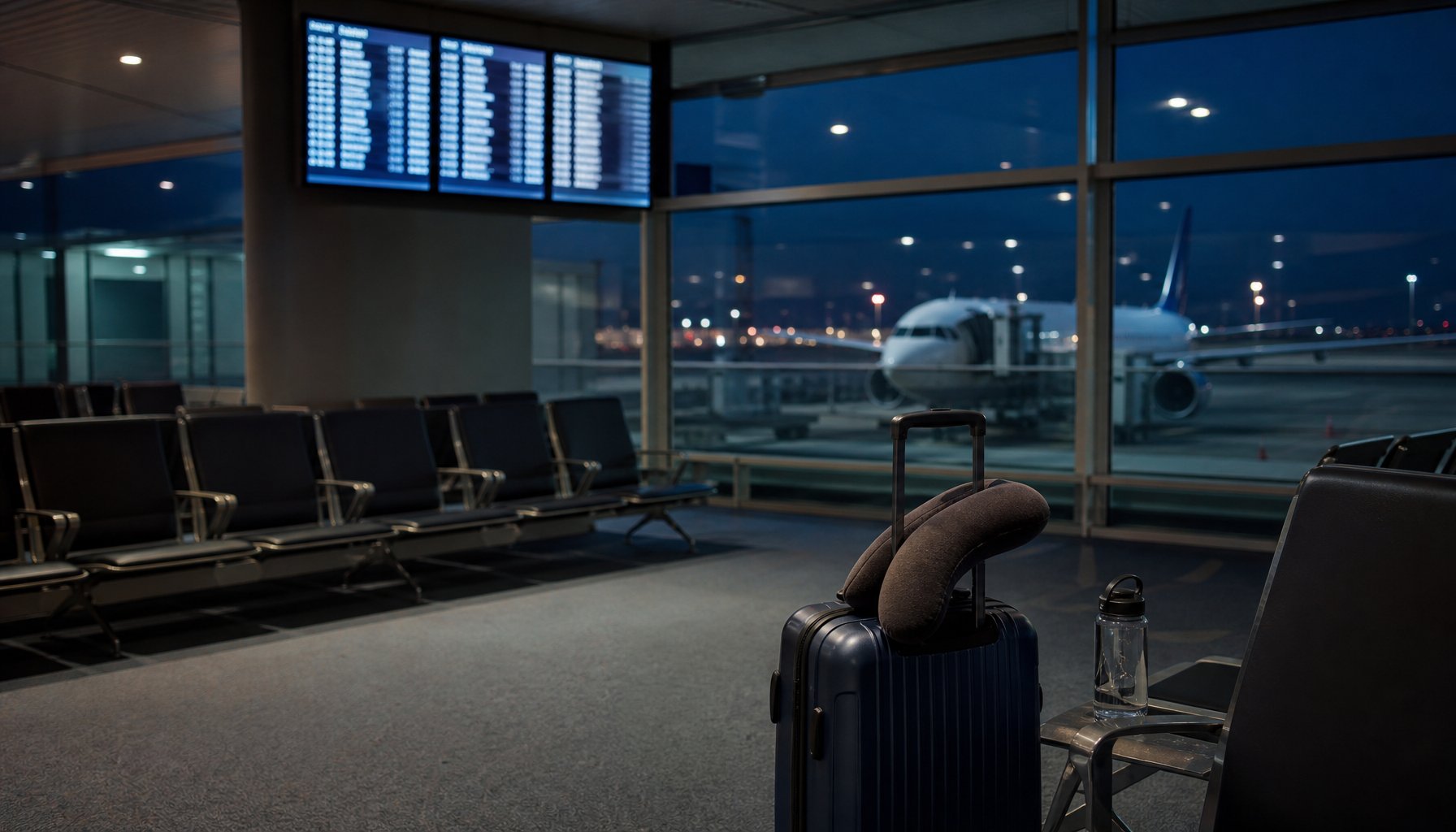
A Frontier Airlines flight bound for Atlanta ended up spending the night in Knoxville, Tennessee, last week — and passengers were left there not simply because of the storm that forced the detour, but because of a federal rule that kept the same crew from finishing the trip once they landed.
Key facts
- Frontier Flight 3409 was flying from Detroit to Atlanta when it diverted to McGhee Tyson Airport in Knoxville, Tennessee.
- The diversion happened on a Friday in September 2026, after severe weather forced an FAA ground stop at Atlanta.
- The Atlanta ground stop ran from about 12:08 p.m. to 1:30 p.m., with average delays of roughly 37 minutes and a longest wait of about 75 minutes.
- Passengers stayed overnight because the crew had reached its flight and duty-time limit under 14 CFR Part 117, leaving no legal way to continue to Atlanta that night.
- According to a statement attributed to Frontier, the airline offered a $150 voucher for ground transportation, a $100 voucher for future Frontier travel, and hotel vouchers “upon request”; other reporting described support as inconsistent, so the available reporting does not establish that this offer applied uniformly to every passenger.
- Across U.S. airports that weekend, a flight-tracking analysis recorded 2,919 delays and 118 cancellations, with Atlanta the hardest-hit airport at 502 delays and 30 cancellations.
Why the crew couldn’t finish the flight
Frontier Flight 3409 left Detroit for Atlanta on a Friday in September 2026 and diverted to McGhee Tyson Airport in Knoxville after severe weather made it unsafe to land at Hartsfield-Jackson Atlanta International Airport, according to a statement attributed to Frontier. Thunderstorms had triggered a Federal Aviation Administration ground stop at Atlanta that day — a temporary halt on flights allowed to land there — starting around 12:08 p.m. and lasting until about 1:30 p.m., with the FAA logging average delays of roughly 37 minutes and a longest wait of about 75 minutes. The storm was hitting far more than this one flight.
Once the plane was on the ground in Knoxville, the reason passengers ended up stuck overnight had less to do with the weather than with the clock. Federal aviation rules — the flight and duty-time limits set out in 14 CFR Part 117 — cap how many hours a flight crew can work before they must legally stop and rest. By the time Frontier 3409 landed in Knoxville, its crew had reached that limit. Under the rule, a pilot can push on to the nearest airport where a rested crew or relief is available, but cannot simply keep flying past the cutoff. That left Frontier with no legal way to fly the same crew on to Atlanta that night, so the airline canceled the flight instead. In a written statement, a Frontier spokesperson described the airline as “subsequently forced to cancel due to legal time constraints.”
That left passengers to spend the night in Knoxville. TheTraveler.org, which gathered accounts from travelers on the flight, described long waits to reach customer service and difficulty arranging hotel rooms and ground transportation on the spot, with the disruption stretching into Saturday for some travelers.
Two other Knoxville stories, and neither explains this one
McGhee Tyson has been in Frontier’s news before, for reasons that have nothing to do with Flight 3409. The airline had already paused its regular scheduled Knoxville-to-Denver flights out of the airport, with its last flight on that route on August 17, 2026 — described at the time as a temporary, seasonal hiatus over a different route entirely. Nothing ties that pause to this diversion; McGhee Tyson simply happened to be the nearest usable airport when Flight 3409 needed to land. Nor is this the same as an earlier viral moment involving Frontier and Knoxville, in which a canceled Orlando-to-Knoxville flight left 13 strangers to rent a van and drive the rest of the way, a trip that went viral on TikTok — a different flight, a different cause and a different route from Flight 3409’s storm diversion.
The diversion happened during a stretch of severe weather across the Southeast. A flight-tracking analysis published by NomadLawyer recorded 2,919 delays and 118 cancellations across U.S. airports that weekend, with Atlanta the hardest-hit airport in the country — 502 delays and 30 cancellations there alone — a reminder that Flight 3409’s overnight stop in Knoxville was one small piece of a much larger regional slowdown.
What Frontier offered — and what it didn’t have to
According to the statement attributed to Frontier, the airline offered affected passengers $150 vouchers toward ground transportation to their final destination, a $100 voucher for future Frontier travel, and hotel vouchers available “upon request.” It isn’t confirmed that every passenger on the flight received the same offer, and TheTraveler.org’s accounts of the night describe spottier support, with some travelers saying they had to arrange and pay for their own hotel rooms.
Here is the part that surprises a lot of travelers: none of that was legally required. Department of Transportation rules do not obligate airlines to pay for hotels, meals or other expenses when a delay or cancellation is caused by something outside the airline’s control — and weather is treated as exactly that kind of “uncontrollable” cause. Airline commitments to cover hotels and meals generally apply only to cancellations the airline itself is responsible for, and Frontier’s own record with the DOT does not include a commitment to hotel accommodations or travel credits for weather-driven disruptions like this one. Whatever help it gave Flight 3409 passengers was a courtesy, not an obligation.
Sources and further reading
- 14 CFR Part 259 — Enhanced Protections for Airline Passengers
- DOT to Propose Requirements for Airlines to Cover Expenses and Compensate Stranded Passengers
- 14 CFR Part 117 — Flight and Duty Limitations and Rest Requirements: Flightcrew Members
- Fly Rights
- faa.gov
- Airline Cancellation and Delay Dashboard
- 14 CFR 121.471 — Flight time limitations and rest requirements: All flight crewmembers