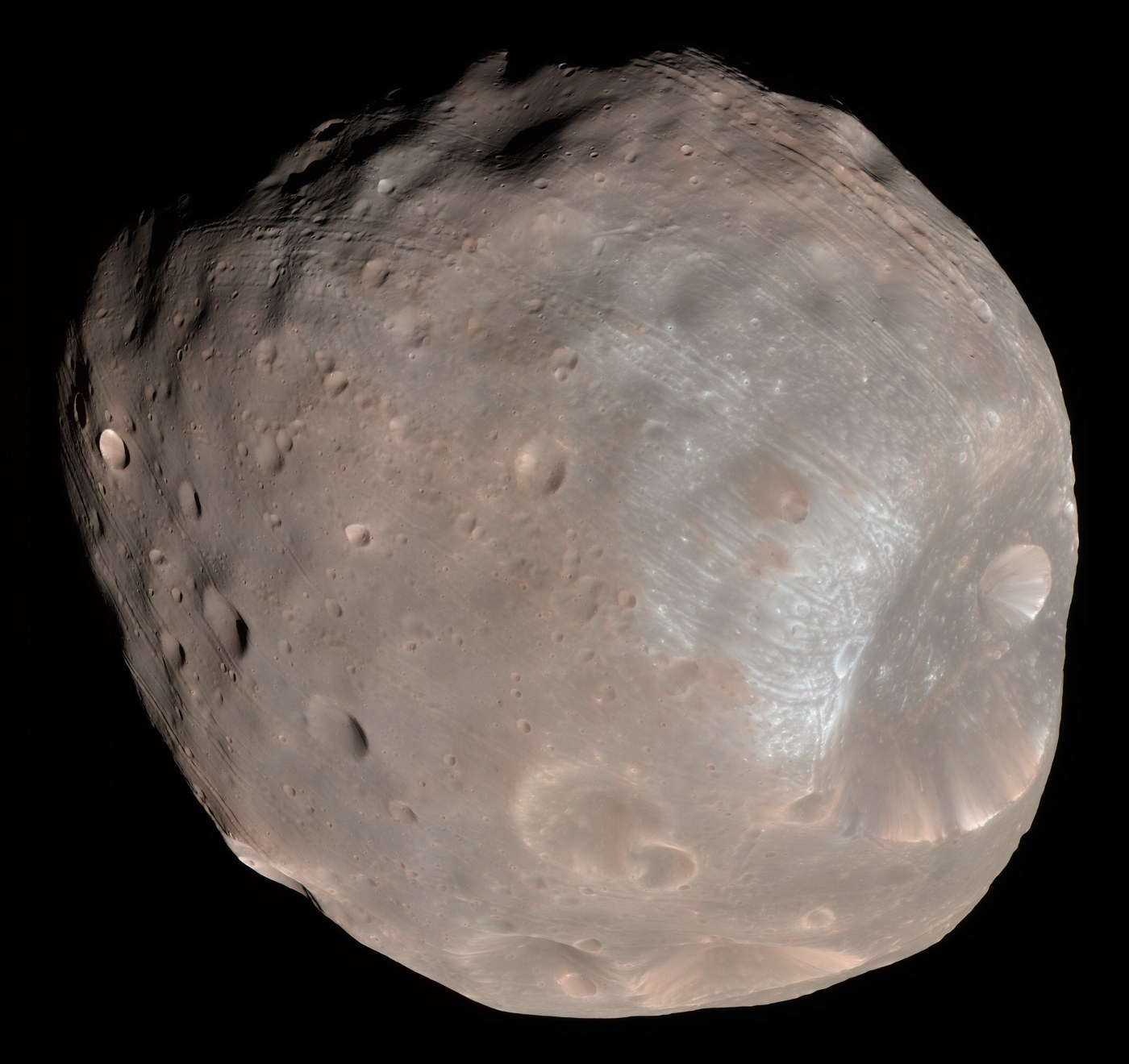
Japan’s space agency JAXA is targeting 3:41 p.m. EDT on Monday, Oct. 19 (4:41 a.m. Tuesday, Oct. 20, in Japan) to launch MMX, a spacecraft meant to land on Mars’ moon Phobos and bring a sample back to Earth, a return targeted for 2031. NASA is supplying an instrument, a sampler, communications support and funding for U.S. scientists, and it will curate about 15% of the total returned sample.
Every mission date in this story is a target. JAXA’s release of Aug. 20 and NASA’s page of Oct. 15 both give the same launch time, and neither reports a delay.
When and where the launch is planned
JAXA’s release lists the launch for 4:41:03 a.m. Japan Standard Time (JST) on Oct. 20, which is 3:41 p.m. EDT on Oct. 19. The rocket is an H3, flight No. 10, and it will lift off from the Yoshinobu Launch Complex at the JAXA Tanegashima Space Center in Japan. ESA gives the same plan: Oct. 19, or Oct. 20 in Japan.
The launch date is a target. JAXA has reserved Oct. 21 through Nov. 7, 2026, and says the launch time may vary within it. DLR, the German Aerospace Center, says the launch window to Mars extends until Nov. 7.
What MMX is meant to do
MMX stands for Martian Moons eXploration. JAXA calls it a “world-first sample return mission to the Martian sphere.” A sample return mission collects material from another world and carries it back to Earth for study in laboratories. MMX is led by JAXA, with NASA, the French space agency CNES, DLR and ESA taking part.
The plan, as the agencies describe it:
- Travel. The spacecraft heads to Mars. JAXA’s MMX site says approximately one year of travel, DLR’s page says approximately one year, and ESA’s page says it arrives at Mars around a year after launch. NASA gives arrival at Mars as August 2027.
- Survey. The spacecraft studies Phobos and Deimos, Mars’ two moons. JAXA’s MMX site says it will enter a “quasi-satellite orbit” around Phobos and begin detailed observations; CNES calls it a “quasi-orbit.”
- Landing, rover and sampling. JAXA’s mission page says two landings are planned, one for the rover and one for the main spacecraft: the rover lands first and observes the surface, and the main spacecraft then lands and collects the sample. ESA says the rover “will be deployed before the main spacecraft lands.” DLR says the mothership releases the rover into free fall toward Phobos, from about 40 meters, around the turn of 2028/2029. CNES describes the probe collecting samples once the rover has been set down. NASA says sample collection is “no earlier than December 2028.”
- Deimos and the trip home. CNES says the probe then flies by Deimos and releases a return capsule. The capsule is due to land in the Australian desert. JAXA says the return is targeted for 2031; NASA, DLR and CNES also say 2031. ESA’s page uses Japan’s fiscal-year label, JFY 2031, rather than a calendar year.
JAXA’s MMX mission page says the spacecraft will collect a minimum of 10 grams of sample from Phobos, and its home page says the goal is to return more than 10 grams. CNES calls 10 grams the minimum sample mass, and ESA says at least 10 grams. How much material the probe actually collects will not be known until it has done so.
ESA says MMX will be the first mission to collect detailed measurements of both moons and to land on Phobos to bring a sample back. ESA also says it will be the first mission to return to Earth after visiting Mars.
Why Mars’ moons matter
Phobos and Deimos are small and irregularly shaped. DLR gives Phobos’ maximum diameter as just under 27 kilometers and Deimos’ as 15 kilometers. Where they came from is unsolved. DLR calls the origin “an unsolved mystery,” and CNES says scientists still debate it.
There are two leading ideas. ESA describes them this way: the moons “may be asteroids that were captured into orbit by Mars’s gravity, or they may be the remnants of debris thrown into orbit after a large object crashed into young Mars.”
NASA’s Tom Statler put it similarly: “Phobos and Deimos may be the remains of a massive impact on Mars that sent material into orbit around the planet, or they could be ancient asteroids that were captured by Mars’ gravity billions of years ago.”
ESA describes what each answer would mean. If the moons are impact debris, ESA says they would record the conditions on young Mars. If they are captured asteroids, their makeup would differ, and ESA says that could help clarify how compounds such as water were carried around the Solar System. Statler said having the answer “will help illuminate that early era when Earth and the other inner planets may have been acquiring much of their water and organic compounds.”
Which origin is right is not known. Samples from Phobos are meant to help answer it.
What NASA is contributing
NASA’s page lists several pieces:
- MEGANE. The Mars-moon Exploration with Gamma rays and Neutrons spectrograph, pronounced meh-GAH-nay after the Japanese word for eyeglasses. According to NASA, it measures neutrons and gamma rays coming from the surface to determine its elemental composition. NASA says the Johns Hopkins Applied Physics Laboratory developed it.
- The Pneumatic Sampler. Called P-Sampler, this is a technology demonstration that gathers surface material “using bursts of high-pressure nitrogen gas.” It complements JAXA’s C-Sampler, which NASA says “will extract cores from a few inches deeper.” NASA says Honeybee Robotics, a Blue Origin company, developed the mechanism.
- Communications and navigation. NASA’s Deep Space Network will support the spacecraft.
- Funding. NASA is paying for U.S. scientists on the mission’s science team.
NASA says its contributions were developed under its Discovery Program, which Marshall Space Flight Center manages.
NASA also says it “will obtain and curate about 15% of the total returned sample” at the Astromaterials Lab at Johnson Space Center in Houston.
NASA’s Nicky Fox said: “The samples from MMX will bring forth paradigm-shifting science on the Mars system for generations to come, especially as NASA prepares to send the first humans to Mars.”
The rover
The rover is called Idefix and is a French-German project. DLR gives 2029 for its landing on Phobos and says the release is expected around the turn of 2028/2029. DLR says it weighs 25 kilograms and is roughly the size of a crate of drinks, and that it rides between the probe’s landing legs. A DLR artist’s impression shows the rover released by the mothercraft, falling to the surface and righting itself. CNES describes a 100-day mission and says Idefix will attempt to drive on Phobos.
What is not known, and what comes next
Three things are open. Which origin of the moons is correct is unsettled. The exact amount of sample the probe collects is unknown, though JAXA gives a minimum of 10 grams and a goal of more than 10. And the launch date is a target that could move within the period JAXA has reserved.
The next thing to watch is the launch itself: 3:41 p.m. EDT Monday, Oct. 19 (4:41 a.m. JST Tuesday, Oct. 20), with Oct. 21 through Nov. 7 reserved by JAXA. If it flies, the spacecraft would reach Mars in August 2027, according to NASA, with sample collection no earlier than December 2028 and a return to Earth targeted for 2031.